








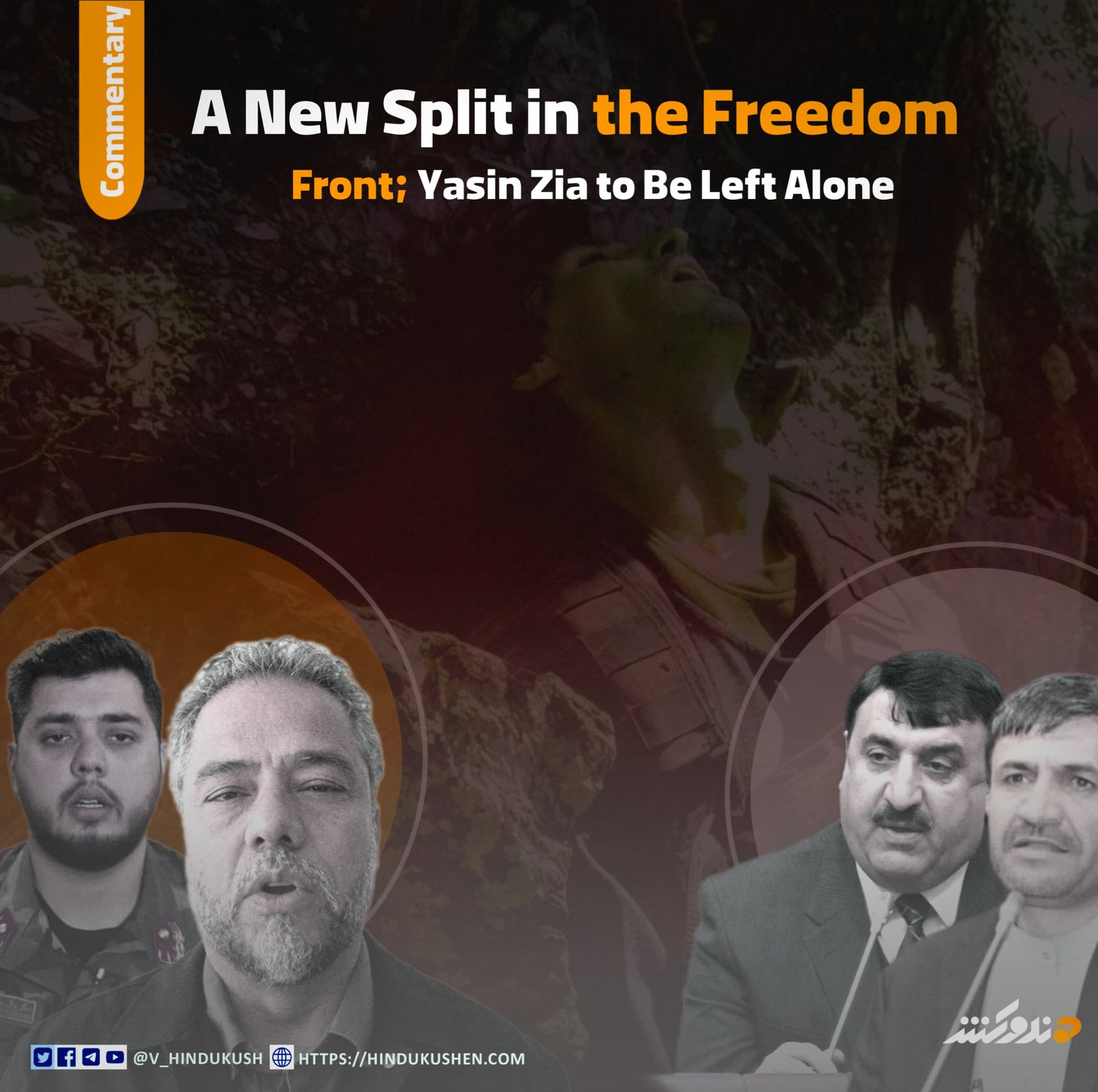
Recent changes among the so-called opponents fronts of the Afghan government indicate that competition and disputes over power have intensified more than before. The separation of Abdul Sattar Hussaini, Azim Mohseni, and Hikmatullah Barkzai from the ranks of the Freedom Front and the announcement of a new structure under the name of the National (!) Freedom Front of Afghanistan, indicates how deep the divisions are within these factions.
The opponents have faced—and continue to face—all kinds of challenges, but as it appears from their new structures, they have no intention of working together. Although this is not the first time that political and resistance-oriented groups have faced fragmentation due to internal differences, the formation of such separate factions at this sensitive stage presents a picture of political addresses that reflects the prioritization of personal interests, mutual rejection, and increasing discord.
On the other hand, the conflicting positions of the members of the new faction regarding this split have further complicated the issue. Regarding the announcement of the new group, Azim Mohseni has expressed his ignorance and neither confirms nor denies his presence in the group. It has become clear that the disagreements within the opposing factions have reached such a level that even decisions like this are made arbitrarily and among a limited number of individuals instead of through collective consultations, which in itself breeds disputes and distrust.
Such sudden splits and the dissemination of conflicting statements in the media have directly negatively impacted the trust of other members in the front, and it is natural that everyone becomes suspicious of the leader’s capabilities and intentions. This is because in the past, the Freedom Front was also host to such disputes, the causes of which included secret deals between Yasin Zia’s brother-in-law Safiullah Mohammadi and Fazal Rabi Khanzani in Chitral, ISI interference, and deep-seated disagreements.
The Freedom Front’s splits and other similar divisions point to a fundamental problem in the strategy of the Afghan government’s opponents; that is, they all sacrifice internal understanding and lasting cooperation for individual interests, personal preferences, and disagreements instead of pursuing great goals. All opponents lack transparent mechanisms and clear policies; as long as gaps exist, their political future will face even more serious challenges and complete distrust.


