








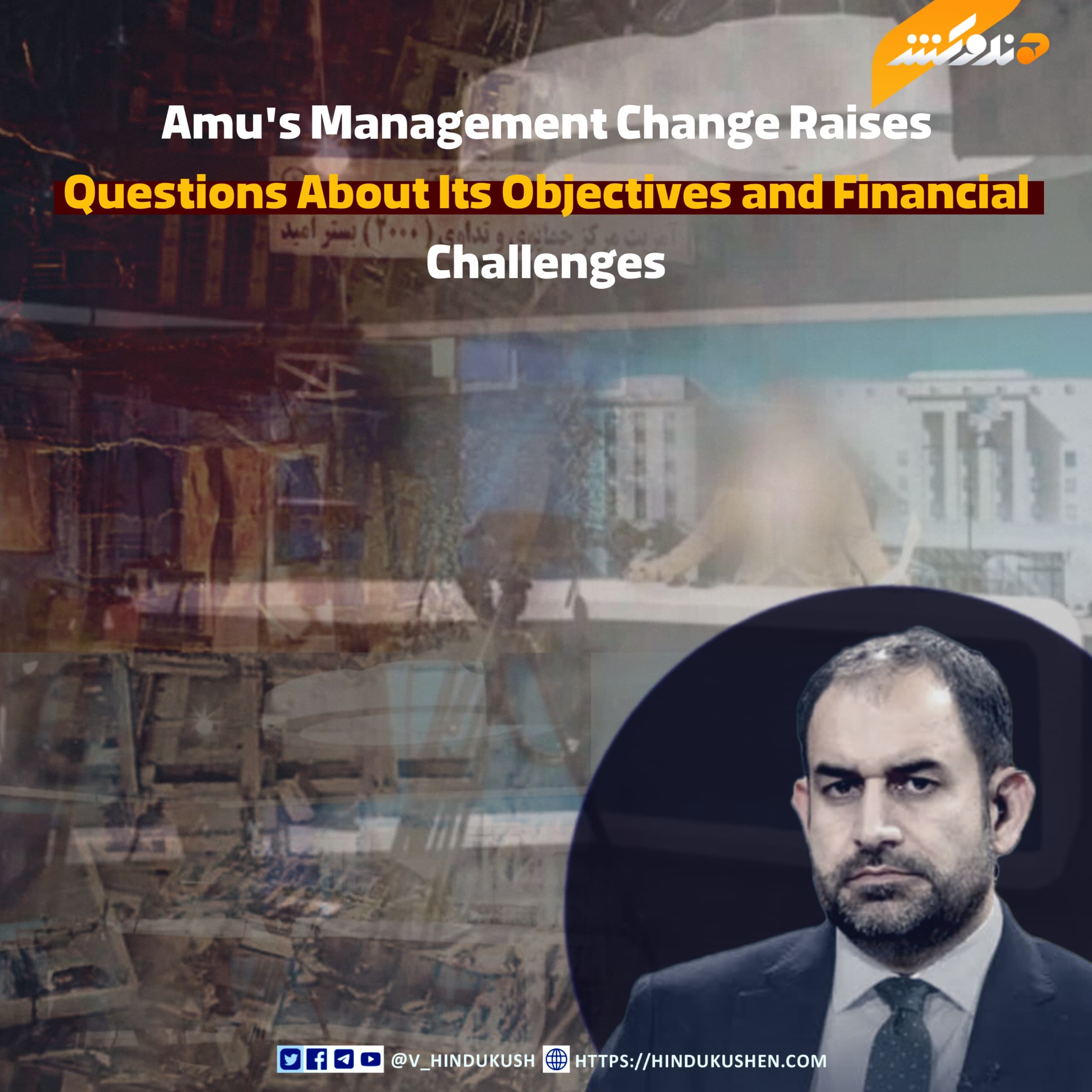
The departure and resignation of Sami Mahdi, the managing director of Amu TV, cannot be analyzed as an ordinary administrative change. Rather, it reflects deep challenges, disagreements, and fundamental problems within the internal structure of a media outlet that has been at the center of controversy since its establishment.
In the management of media organizations such as Amu, it is a widely accepted principle that disputes over financial matters and conflicts in political viewpoints often affect senior executives first. Therefore, Mahdi’s resignation, which may even described as a dismissal, made it clear that a serious rift had emerged between those running the outlet and its undisclosed financiers, making continued cooperation impossible.
Sami Mahdi’s ideological inclinations, his commitment to certain political groups such as the so-called Resistance Front and the divided Jamiat party, his close relations with other insurgent groups, and his previous work with Azadi Radio and several other media organizations allegedly funded to serve foreign interests, have long been cited by critics as reasons to question his impartiality at Amu. According to recognized media standards, when the head of a media outlet prioritizes propaganda in favor of armed or political opposition groups rather than serving the broader public interest, the outlet risks turning from an independent platform into a one-sided political tool.
From its inception until recently, Amu TV’s programming has focused less on strengthening national unity and more on promoting intellectual and ethnic divisions. This has seriously damaged public trust in the network and undermined its credibility.
The lack of transparency regarding Amu TV’s sources of funding has also raised serious and reasonable questions in the minds of many Afghans. At a time when media organizations around the world are facing economic difficulties, operating a network that produces costly programs suggests the existence of foreign and questionable sources of support. For this reason, many media analysts view Amu not as an independent media outlet but as a foreign-backed project financed to advance specific political agendas.
One of the network’s most notable actions viewed as contrary to national interests has been its adoption of inconsistent and problematic positions during sensitive and decisive moments. For example, when Afghanistan was facing a series of air and ground attacks by Pakistan’s military regime, Amu was dedicated for amplifying Pakistani narratives instead of serving as the voice of the Afghan people and aligned itself with circles that weakened the country’s defensive spirit. Such a stance has further intensified public questions regarding the political and financial interests behind the network.
The removal of Sami Mahdi from Amu TV marks the beginning of the failure of a media project that was allegedly created to weaken public morale and misrepresent the country’s achievements. The reality is that no matter how extensive a media outlet’s financial resources may be, or how much support it receives from foreign powers, it cannot secure a lasting place in society unless it remains aligned with the genuine concerns, identity, and national interests of its people. Otherwise, it will ultimately face internal divisions, decline, and failure.


