








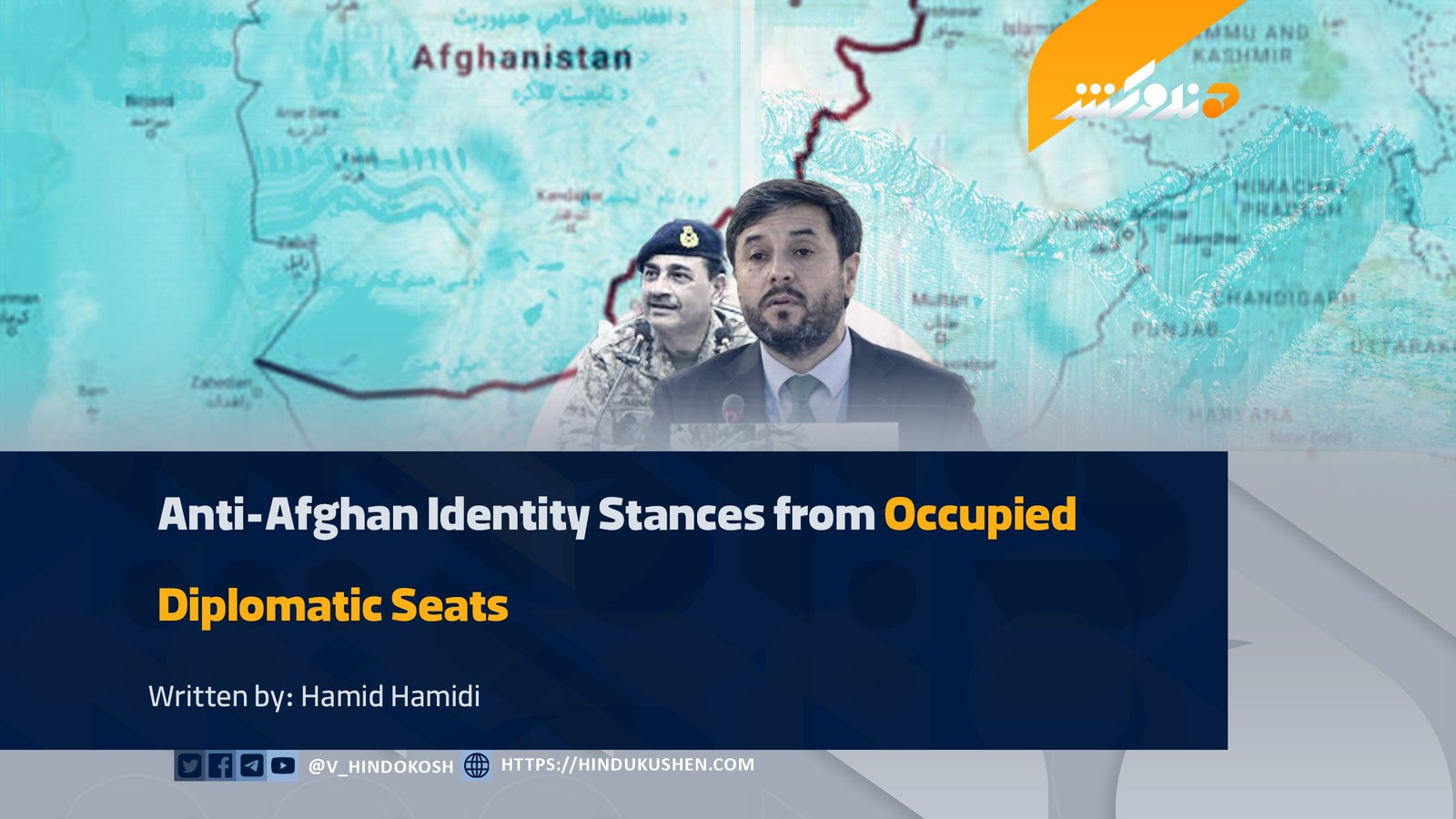
Written by: Hamid Hamidi
The preservation of national identity, citizenship, and geographical borders of every independent country forms the fundamental pillars of that nation’s survival and stability. When diplomats and foreign policy operators of a country are appointed in international organizations (such as the United Nations and others), their primary duty is to firmly defend their country’s national interests, laws, and the identity of its people. But after the recent changes in the Afghanistan, despite the new government’s authority, there are still individuals in international organizations who have remained and been imposed from the previous administration, whose stances often clearly conflict with the country’s national interests.
The seats in the United Nations and some other organizations that belong to the new Afghan government have not yet been granted. The individuals sitting in those seats have raised various perspectives and concerns regarding the crisis of national identity, the legitimacy of hypothetical borders, and the internal affairs of the country. These discussions have entered a very sensitive phase within the framework of citizenship standards and the demands of politicians beyond the borders.
Regarding the country’s cultural and legal stances in international institutions, some opponents who occupy diplomatic seats have risen in response to the demands of tribal leaders across the line (which, in reality, are the demands of many people there) and emphasize the legal standards of citizenship. On one hand, defending the distribution of citizenship based on the country’s legal and constitutional standards seems like a legal and logical action, but on the other hand, there is a concern behind their harsh reactions that historical and cultural ties are being overlooked, and it is interpreted that these so-called diplomats accept the imaginary line as an official border. This situation causes the erosion of identity feelings among the people on both sides of the line.
Another complex aspect of this issue is the role of the neighboring country’s intelligence and military propaganda networks, which ostensibly support the stances of such so-called diplomats. Such complex games are always played to weaken Afghanistan’s national identity and to keep the atmosphere of identity and political tension heated between the people of both sides. In such a sensitive environment, when representatives(!) of Afghanistan in foreign organizations taking stances that clash with the country’s historical aspirations and cultural ties, they consciously become part of the process of weakening this country’s identity.
Unfortunately, the signs of this identity crisis are not only seen in some diplomatic circles but also in the ideological inclinations of certain former political and parliamentary figures abroad. In some meetings with foreign countries, they make claims that the cultural and religious values of the majority of society are obstacles to stability. The dissemination of such ideas, which target the historical and shared values of a nation, indicates that there is a serious problem with the values and identity in the intellectual realms of former politicians, and this thot directly harms unity and the cultural cohesion among the people.
The perspectives of such politicians are essentially the result of the misguided compromises of previous political eras. In a regime where appointments and representation were often based on ethnic, regional, and party transactions instead of strengthening national institutions, individuals reached the high echelons of decision-making and diplomacy who lacked deep ideological alignment with Islamic and Afghan values. When the voice of the country is trapped in the forefront of such viewpoints on the international stage, it is natural that the supreme interests and identity of the nation are sacrificed for personal and collective opinions on international platforms.
In conclusion, the ongoing discussions about identity, citizenship, and stability require more caution and flexibility than ever before. In order to save society from this serious identity crisis, it is essential that national values, historical ties, and the identity of the people are not used as tools for personal interests and foreign political games. Those individuals who, in disagreement with the current government of Afghanistan, consider themselves representatives, and others who call themselves political activists, must understand that the cultural identity of the country and all its foundations are the main pillars of national unity. In the international arena, the most important mission of a diplomat is to create a proper connection between legal balance and the aspirations of the Afghan people, not to create conflicts between them.
Note: The articles, essays, and comments published by the Voice of Hindukush only reflect the views of the authors & writers and do not necessarily represent the agreement of the Voice of Hindukush.


