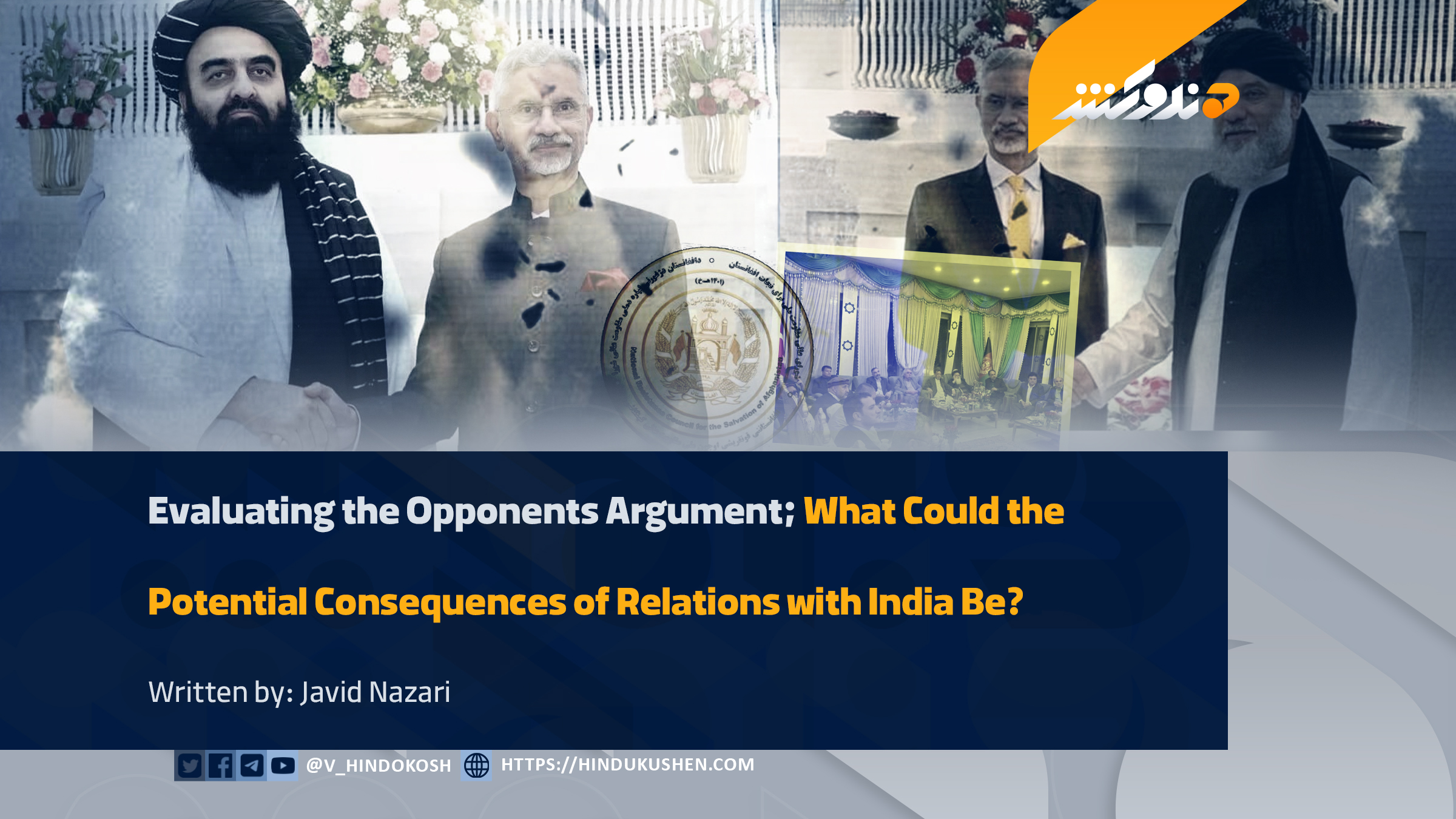
After the new government came to power, a number of countries, influenced by twenty years of Western propaganda and their allies and mercenaries, initially refused to normalize their relations with Afghanistan, claiming they were exercising caution in establishing ties with the new government.
One of these countries was India, a nation initially fearful of normalizing relations with Afghanistan. However, as the veil of negative accusations and propaganda lifted, the truth emerged, and India was able to surpass even those countries that had established relations with Afghanistan from the very beginning of the new government, all within a short period.
In the past few days, India has once again strengthened its relations with Afghanistan by handing over the Afghan embassy in Delhi to the new government; relations that have been beneficial to both sides and have countless advantages for both India and the people of Afghanistan.
In the meantime, just as this action pleased some, it also plunged others into a spiral of anger and dissatisfaction; those same infamous figures who are outwardly Afghan but have always served foreigners and have had no other concern than to secure the interests of their masters.
Accordingly, the Resistance Council, composed of some escaped figures from the collapsed Republic regime, responded to India’s action by issuing a statement warning that this move contradicts the objective realities of Afghanistan and that engaging with and recognizing the new government will have serious, negative, and irreversible security and social consequences at the regional and international levels, and that interactions with the true representatives of the people must continue.
Before addressing the council’s declaration, it must be acknowledged that the opposition of these figures to normalizing relations between India and Afghanistan has two main reasons:
First, these individuals not only see the normalization of relations between Afghanistan and India, but also the expansion of Afghanistan’s relations with other countries, as detrimental to their interests. This is because recognizing the current Afghan government and engaging with it would mean the complete marginalization of the government’s opponents, just as they are currently marginalized.
The second reason for these individuals’ anger at the normalization of India’s relations with Afghanistan and their vocal opposition to it thru any means possible stems from an order issued by their last haven, Pakistan. This is because, at present, opposition figures are nothing more than ineffective pawns in the hands of Pakistan’s ISI, and every word and stance they take is derived from the orders and commands of the Pakistani regime.
Regarding the matters mentioned in the aforementioned declaration, it should be noted that all these ridiculous warnings and claims are nothing more than the imagination of these individuals, as India itself is more eager than any other faction to secure its own interests. Therefore, if it felt threatened by Afghanistan and its current government, it would undoubtedly have severed its relations with Afghanistan much earlier, rather than seeking to expand its relations with this country more and more each day.
However, regarding their unjust claim to be the representatives of the Afghan people in this declaration as well, it must be said that this is not their first time; rather, from the emergence of these infamous parties until today, when they are spending their final days, they have always used such slogans against the Afghan nation, and every single page of their history is filled with betrayal of the soil and people of this land.
Indeed, if these infamous figures are the true representatives of the Afghan people, then why is it that not only India, but no other country is willing to engage in dialog with them on important and key issues in Afghanistan, and instead, they are only referred to as ineffective pawns.
Note: The articles, essays, and comments published by the Voice of Hindukush only reflect the views of the authors & writers and do not necessarily represent the agreement of the Voice of Hindukush.