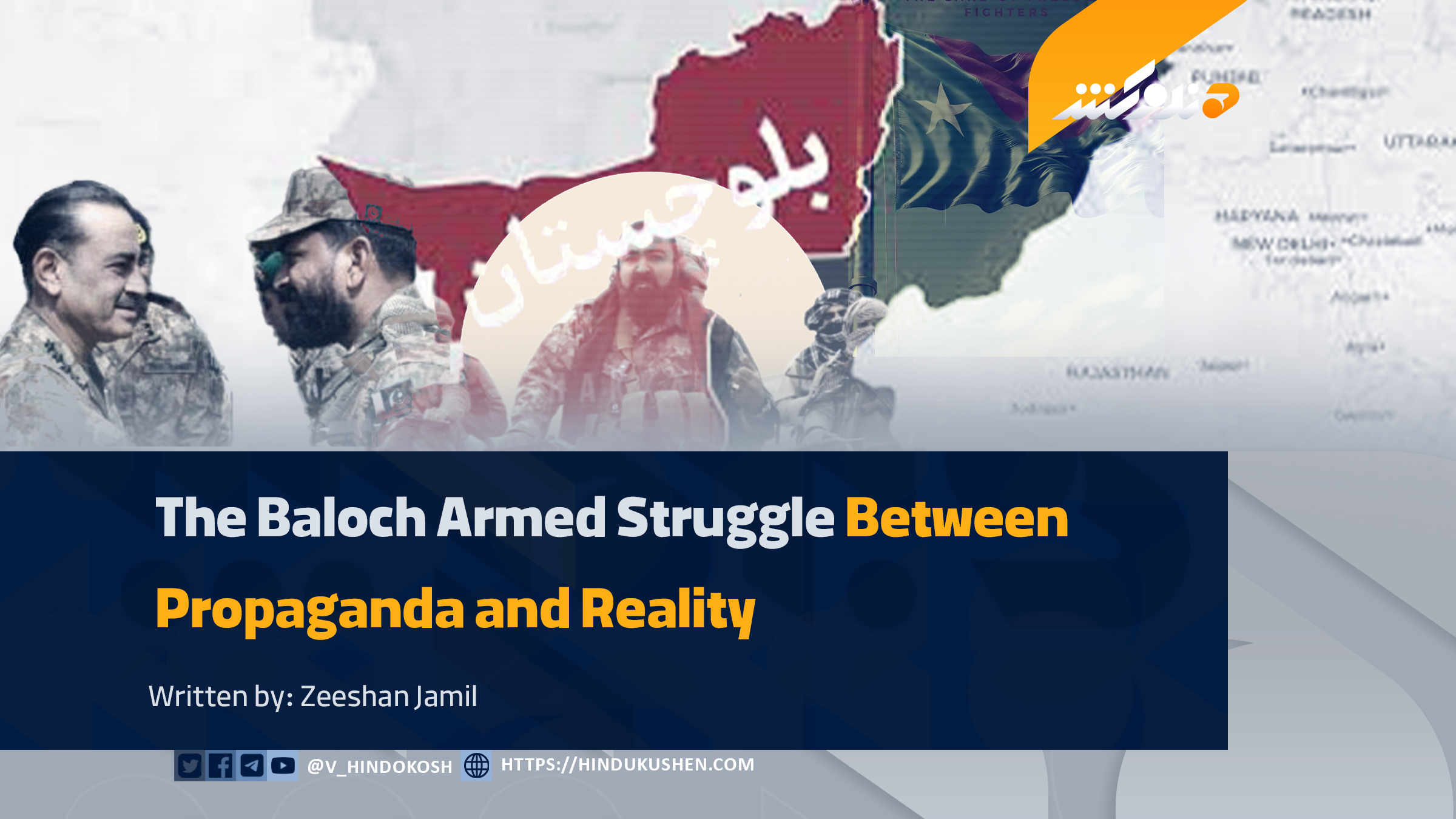
The ongoing situation in Balochistan is not merely a security issue or conflict; rather, it is a deep consequence of Pakistan’s oppressive policies that, for years, have kept the voice of entire people suppressed under the shadow of force, propaganda, and distortion. The Baloch resistance should not be viewed as a sudden or externally driven phenomenon; instead, it is the natural outcome of prolonged political injustice, historical deprivation, and countless acts of oppression. When a people are deprived of their basic rights and spend years under coercion, armed resistance becomes their only option for liberation.
Pakistani media and certain official circles attempt to portray this resistance as the product of “foreign conspiracies,” frequently naming Afghanistan in particular. However, these claims are repeatedly used to conceal internal failures. Ground realities show that the Baloch leadership and the main centers of decision-making are actively operating within Balochistan itself. Linking this struggle and a large armed movement to Afghanistan is neither a rational claim based on evidence nor consistent with the logic of realities on the ground.
In reality, the Baloch struggle is for the protection of their land, identity, and natural resources. These are resources that, over many years, have been exploited without the participation or benefit of the local population, while in return they have faced only military presence, operations, and pressure. Such policies have not only destroyed an atmosphere of trust but have also created a wide gap between the state and the people, one whose consequences are now visible to all.
Afghanistan, despite repeatedly being placed under the banner of such unfounded accusations, has in practice demonstrated its commitment to the principle of non-interference in the internal conflicts of other countries. Neither is the Baloch armed struggle being directed from Afghan soil, nor has the Afghan government supported this process. Accusations against Afghanistan are not established facts; rather, they are political and propagandistic slogans.
The presence of Balochs leader within Balochistan itself further reveals how contradictory earlier claims were. Those who previously named Afghanistan are now themselves reporting the emergence of the same figures within Pakistan. These shifts call into question the credibility of the official narrative and raise the question of why, under Pakistan’s military regime, truth is consistently sacrificed for propaganda.
Unless Pakistan resolves the Balochistan issue through political understanding and just dialogue instead of force and pressure, this conflict will never be resolved through a politics of accusations. The real solution to Pakistan’s security crisis lies in accepting the legitimate demands of the people, creating an atmosphere of trust, and correcting historical mistakes. Without this, every narrative will merely be a repetition of a failed policy, and nothing more.
Note: The articles, essays, and comments published by the Voice of Hindukush only reflect the views of the authors & writers and do not necessarily represent the agreement of the Voice of Hindukush.