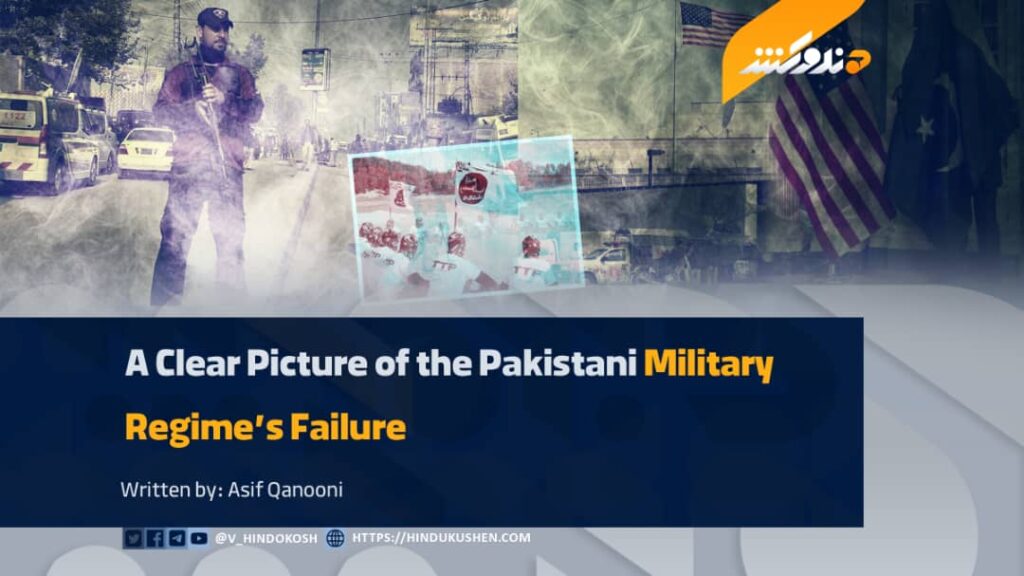





Written by: Asif Qanooni
The decision by the United States to close its consulate in Peshawar is not merely an administrative or cost-saving measure; rather, it is a powerful and meaningful political message about the severe deterioration of Pakistan’s security situation in the region. This decision reflects deep distrust within Western diplomatic circles regarding the unsafe environment in Pakistan. When such a global power does not consider the security of a strategic city like Peshawar safe for its diplomats, despite having political influence and a military presence in the country, it automatically signifies instability across Pakistan as a whole.
The political implications of this decision largely revolve around the gap between Pakistan’s foreign policy and its internal security. The Pakistani government has always tried to present itself to the world, especially to the United States and the West, as a responsible regime. However, the inability to guarantee the safety of diplomatic missions on its soil has called this claim into question. This move by the United States places a seal of distrust on Pakistan’s assertions and indicates that the military regime is no longer capable of ensuring the security of either its own citizens or foreign diplomats.
At the same time, the recent advances of the Pakistani Taliban and their approach to within a few kilometers of Peshawar city represent perhaps the clearest example of the failure of Pakistan’s military strategy. While the Pakistani army has attempted to conceal its internal shortcomings by making baseless accusations against Afghanistan and launching illegitimate attacks, the Taliban have effectively reached the streets of Peshawar itself. This contradiction has drawn a clear line through all the propaganda of a certain malicious circle within the Pakistani military and has exposed the humiliation of this hired clique before both the public and the world.
Criticism of this inner military circle has also intensified within Pakistan itself. Many are questioning how it continues to hide its failures by using the pretext of the TTP against a neighboring country, while in reality the main centers of that group’s activity are operating on this side of the Hypothetical Line (inside Pakistan), close to military installations. The fact that armed groups opposing the army can move so freely near a large and historic city like Peshawar indicates that Pakistan’s security institutions have failed to control these groups within their own home.
This situation portrays the Pakistani regime internationally as a military regime that is not only a threat to its neighbors but is also incapable of managing its own internal crises. When a regime cannot protect its cities from the risk of falling to armed groups, it naturally becomes known as an unreliable country for investment, diplomacy, and international relations. The world’s major powers now view Pakistan as a state that has lost control over the overall situation and crises within the country.
The closure of the U.S. consulate is a serious warning for Pakistan’s future. If Pakistan does not take practical steps to rebuild its own house and ensure internal security, rather than engaging in political games against Afghanistan, there is a risk that more regions could face isolation similar to Peshawar, along with growing international distrust. The time for false propaganda and narratives has passed, and in reality, Pakistan now urgently needs a fundamental change in its military policies to ensure the country’s survival.
Note: The articles, essays, and comments published by the Voice of Hindukush only reflect the views of the authors & writers and do not necessarily represent the agreement of the Voice of Hindukush.