








Written by: Mahmood Abadi
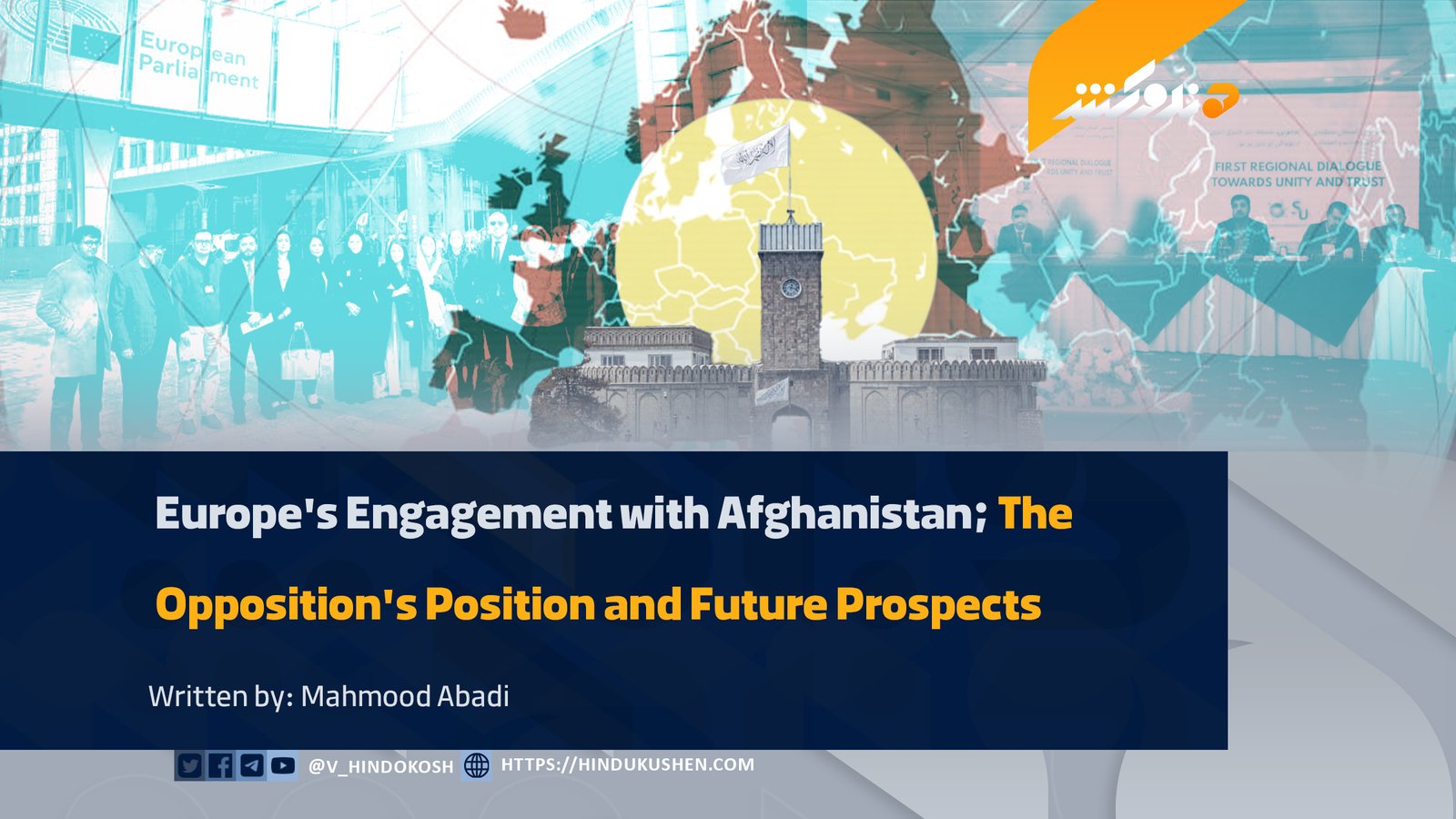
The recent Brussels meeting has brought about a change in the equation of Afghanistan’s foreign policy that seems impossible to overlook any longer. The European Union came to the negotiating table with an official delegation from the Afghan government and discussed ways to expand relations and pursue common issues. With this, it once again proved that the issue of Afghanistan cannot be resolved without the Afghan government.
This was not just a diplomatic meeting, but it also carried a clear political message. Afghanistan is an influential part of international relations, and the presence of the Afghan government is now a reality that cannot be overlooked or excluded from international calculations. The presence of the official Afghan delegation in the heart of Europe has made it clear that no matter how much opponents try to prevent this process thru emotions, propaganda, and political pressure, international politics does not determine its course based on slogans, but on realities.
When the government is able to find a way to engage in direct talks with Europe, it is not just a meeting, but also a sign of political presence, administrative stability, and the country’s ability to negotiate. In contrast, the reactions of the disgraced faces of the fallen republic and the enemies of the Afghan nation largely reflected anxiety, resentment, and political weakness. Beneath the soft language of concern, their main worry was that such interactions between the Afghan government and Europe would undermine their five-year narrative that Afghanistan would remain isolated from the world.
The Brussels conference practically demonstrated that the opponents’ propaganda had no effect. Their strategy over the past years has proven unsuccessful because they spent too much energy on slogans, meetings, statements, and continuous propaganda; however, they could not stop the international engagement process with Afghanistan. On the contrary, Europe’s acceptance of talks with representatives of the Afghan government shows that international politics is not subject to emotional pressure. If a government has the practical capacity to manage affairs within the country, the world engages and interacts with it as needed. This is a political advantage for the Afghan government and another significant defeat for the opponents.
Another major benefit of this interaction for the Afghan government is that it has brought the issue of Afghanistan back from the periphery to the center of decision-making. According to reports, the discussions during the meeting revolved around consular services and the regular contact of Afghans, and for the European side, this meeting was a way to address administrative and practical needs. When a government can open a direct line regarding its citizens, consulates, and relations, it is essentially a sign of strength and a strong presence.
The strong reactions of the opponents also seem weak under the shadow of this power. The criticisms from some organizations and a number of European figures are largely presented from the perspective of their values, but from each of their statements, it seems that the main reason for opposing the active presence of the Afghan government is political anxiety. They know that every direct meeting, every visa, and every official line works against the narrative they have been repeating for years.
The reactions of Halim Fedaee, Nasir Ahmad Faiq, Shukria Barakzai, and several European politicians after the Brussels meeting are, in fact, an acknowledgment of the political impact of the Afghan government’s engagement. If this meeting were worthless and ineffective, there wouldn’t be so many consecutive protests, statements, and concerns being raised. They try to interpret this interaction as legitimization and normalization, but they overlook the question that resolving issues related to Afghan refugees, consular services, security, and other joint matters is not possible without direct interaction.
So far, the opponents of the Afghan government have not presented any practical alternative or a plan that meets the needs of Afghanistan’s international relations. Therefore, their positions on this issue do not represent a practical strategy, but rather an expression of dissatisfaction with the political reality that the Afghan government has created thru engagement.
The opponents of the Afghan government are now facing a fundamental problem; they neither have an alternative to convince the international community nor a practical plan to change the course of Afghanistan’s relations. This interaction has shown that international politics is now moving forward based on practical engagement, administration, and accountability, rather than on propagandistic narratives and empty claims.
The recent interaction between Europe and Afghanistan was a positive, strong, and meaningful step for Afghanistan’s foreign policy. This interaction showed that the Afghan government has the ability to establish connections with important centers around the world. The country’s political presence is still important, and the long-term propaganda narrative of the opponents cannot stand against reality.
Note: The articles, essays, and comments published by the Voice of Hindukush only reflect the views of the authors & writers and do not necessarily represent the agreement of the Voice of Hindukush.


