








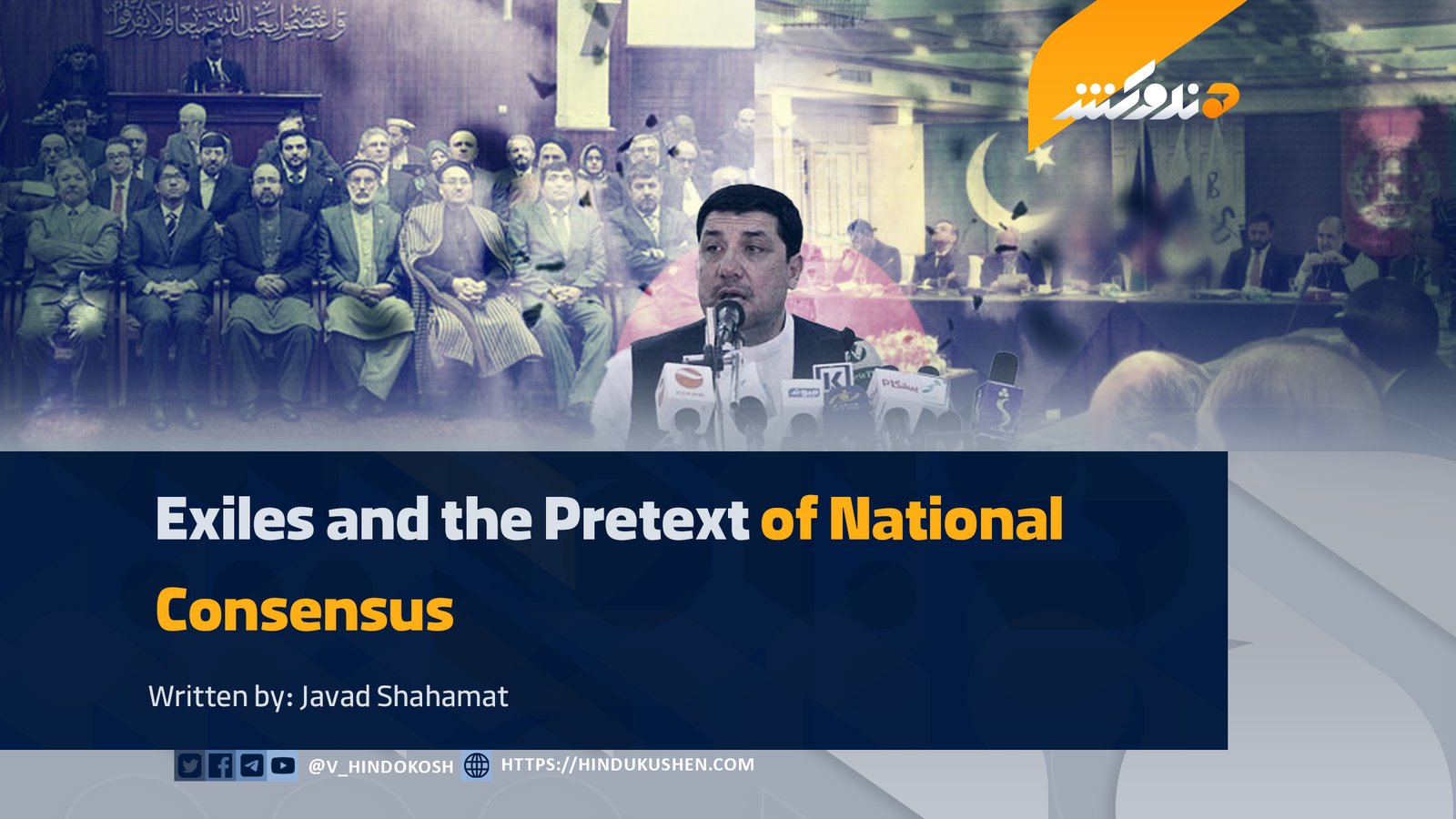
Written by: Javad Shahamat
Recently, some of the fleeing and defeated figures of the Republic are once again trying to secure a place for themselves in the political equations of Afghanistan by promoting the slogan of “National Consensus.” This is while these same individuals, in past years, not only failed to ensure the unity and stability of the country, but many of them, after the fall of the republic, instead of accepting responsibility for their failures, chose to leave the country and continued their political activities from abroad.
Ahmadullah Alizai, the former governor of Kabul during the Republic era, recently stated, referring to the existing tensions between the military regime of Pakistan and the Afghan government, that to prevent instability, the government should bring all segments and political movements of Afghanistan under the shadow of national consensus and understanding. But this statement is not just the view of one individual; from Ashraf Ghani to many former officials and lower-ranking figures of the Republic, they have repeatedly echoed the same slogan and spoken of “national consensus” as a solution to the problems.
The noteworthy point is that Alizai himself participated in a meeting hosted by an ISI-supported institution in Pakistan in September 2025, a meeting that also included several well-known figures opposing the Afghan government. Therefore, the proposal of the national consensus slogan by such individuals seems less like a concern for the country’s fate and more like an attempt to return to the political scene and gain a share in the power structure.
There is no doubt that the Afghan government, from the very first days of its establishment, has kept the door open for the return of all political figures and former officials, and has repeatedly invited them to return to the country. But many of those who today speak of national consensus have not only not responded positively to this invitation, but have also participated in meetings and programs in the past years aimed at exerting political pressure on Afghanistan and creating opposition fronts.
On the other hand, the fundamental question is to what extent these expatriates have reached a consensus among themselves? Those who today prescribe a national consensus for Afghanistan do not even agree among themselves on the most basic political issues. Dozens of movements, councils, coalitions, and meetings were held abroad, but none were able to establish a unified and acceptable position for all their members. Personal differences, political rivalries, and conflicting interests have turned them into a scattered and confused group.
Moreover, the people of Afghanistan have not yet forgotten the record of the republic. Widespread corruption, internal conflicts, political and security dependence on foreigners, and ultimately betrayal of the people’s cultural and economic assets are realities that have eroded public trust in many figures from that period. Therefore, whenever these individuals enter the arena with new slogans, they do not receive widespread public support.
It is also noteworthy that the proponents of the national consensus slogan usually do not mention Pakistan’s role in destabilizing Afghanistan, external pressures, Western sanctions, and other factors affecting the country’s situation when discussing Afghanistan’s problems. Instead, they seek a solution in restoring themselves and their like-minded individuals to the political scene. Whereas, if the goal is truly to defend the common interests of the people, there should be an honest and realistic discussion about all the factors influencing the situation in Afghanistan.
Therefore, what is today being presented by some expatriates under the title of “national consensus” seems more like an excuse to return to the political arena and compensate for past failures than a practical plan based on existing realities. Those who could not achieve consensus among themselves in the past and do not possess the necessary unity and cohesion today cannot erase the failures of the past from people’s memory by repeating this slogan.
Note: The articles, essays, and comments published by the Voice of Hindukush only reflect the views of the authors & writers and do not necessarily represent the agreement of the Voice of Hindukush.


