








Written by: Ahmad Sayad
After Afghanistan regained its political independence from global political players and their domestic lobbyists, and figures dependent on foreign powers, along with their masters, fled to foreign countries, some of these figures, alongside the clamor of military struggles, have turned to what they call civil struggles and discourse sessions and meetings.
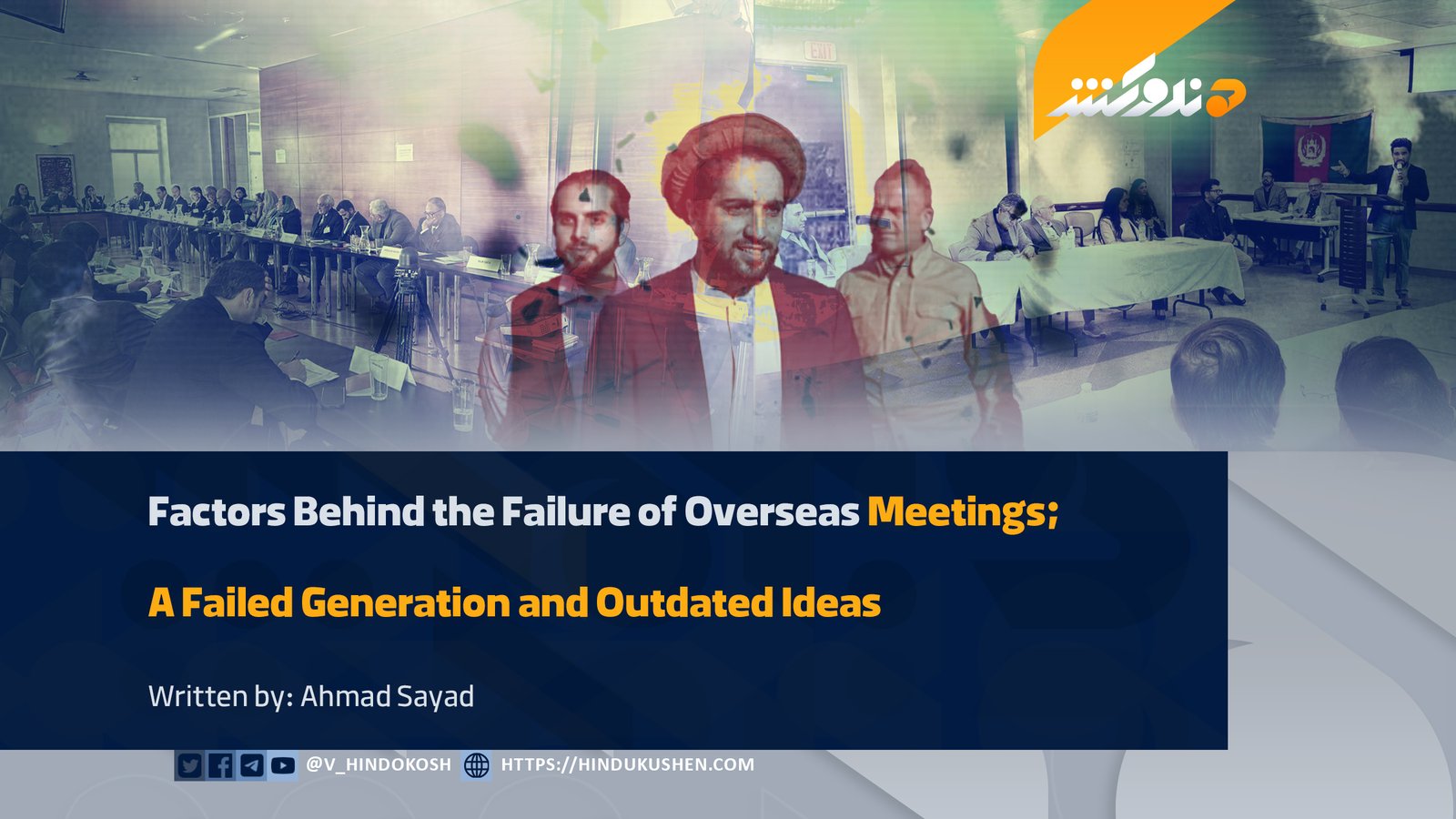
One of these meetings, which was held annually, was called the “Vienna” meeting; however, this year, unlike previous years, this meeting has not yet taken place. The reason for the postponement of this meeting, according to many observers and analysts, is its ineffectiveness and the lack of tangible results in the struggles of these movements; meetings that have been held for years, but their achievements have often been limited to a few speeches, statements, and commemorative photos.
For nearly five years, opponents of the Islamic regime in Afghanistan have been holding meetings in foreign countries, ostensibly to discuss strategies for fighting against the Islamic government and achieving the ideals of democracy, and to set policies. However, it seems that these meetings have not only failed to open a clear path for the opponents or outline a specific direction for their struggles, but have also shrouded their path in even more darkness and ambiguity, creating deeper rifts among some figures.
For this reason, the meetings that used to be held with great enthusiasm in the past no longer have the same motivation and fervor this year. The gatherings of the expatriate opposition are becoming increasingly less vibrant, and even among themselves, questions have been raised about the outcomes and achievements of these meetings.
A clear example of this is the series of meetings known as “National Dialogue,” the sixteenth of which was recently held in the United States. However, it is noteworthy that the criticism does not come only from outside these movements; some of the immigrants and participants themselves have also criticized the ineffectiveness of these meetings. This means that those who have attended such gatherings for years are now asking themselves what the outcome of all these meetings and discussions has been.
So the fundamental question is: Why do the overseas meetings become increasingly less significant, ineffective, and untrustworthy one after another?
The answer must be sought beyond “Vienna” and “National Dialogue.” The problem is not just a meeting; the problem is a failed political generation; a generation that had years of governance opportunities but ultimately failed and, after leaving Afghanistan, instead of reflecting on the past, took the same failed versions with them.
The faces and places have changed, but the thoughts are the same, the slogans are the same, and the old versions are the same. Meetings are held in foreign hotels, but without having a foothold in Afghanistan and their meetings aligning with the realities of Afghanistan.
On the other hand, internal conflicts, competition for leadership, and political share-seeking have also worn these movements out from within. Each group considers itself the true representative of Afghanistan; however, in practice, alliances fall apart one after another, and meetings end without any clear results.
However, on the other hand, the government of Afghanistan directly monitors the political, economic, and social realities of Afghanistan from within the country and strives to solve the problems and challenges of its people. There is a significant difference between someone who speaks about Afghanistan from the outside and someone who grapples with its problems from within.
Therefore, the diminishing significance of meetings like Vienna and the National Dialogue is not a coincidence; rather, it is a sign of political fatigue, a leadership crisis, a lack of practical plans, and outdated ideas among some of the expatriate opposition.
If they are truly seeking the future of Afghanistan, before holding the next meeting, they should hold a more important meeting; a meeting with themselves and ask themselves: why, after nearly five years of meetings and political efforts, have they still not been able to gain even a small foothold among the people of Afghanistan?
The problem cannot be solved by changing the venue, country, or title of the meeting; when the goal and thought are shaped by political trades and the self-interest of specific circles, and personal goals and interests are hidden behind empty slogans and the stirring of emotional nerves, the new meeting will not yield a new result.
Today, Afghanistan has entered a phase where past political narratives are no longer easily sellable. People are looking more at internal realities, goals, and the backgrounds of individuals rather than slogans.
Therefore, any political movement that wants to play a role in the future of Afghanistan must first learn from its past, reconstruct its thoughts, and align its goals and programs with the realities of Afghanistan; because past experiences have proven that any program not aligned with the culture and values of the Muslim people of Afghanistan, even if organized in foreign countries and with the help of foreign powers, will yield nothing but failure and disgrace.
Note: The articles, essays, and comments published by the Voice of Hindukush only reflect the views of the authors & writers and do not necessarily represent the agreement of the Voice of Hindukush.


