








Written by: Ebadullah Zafar
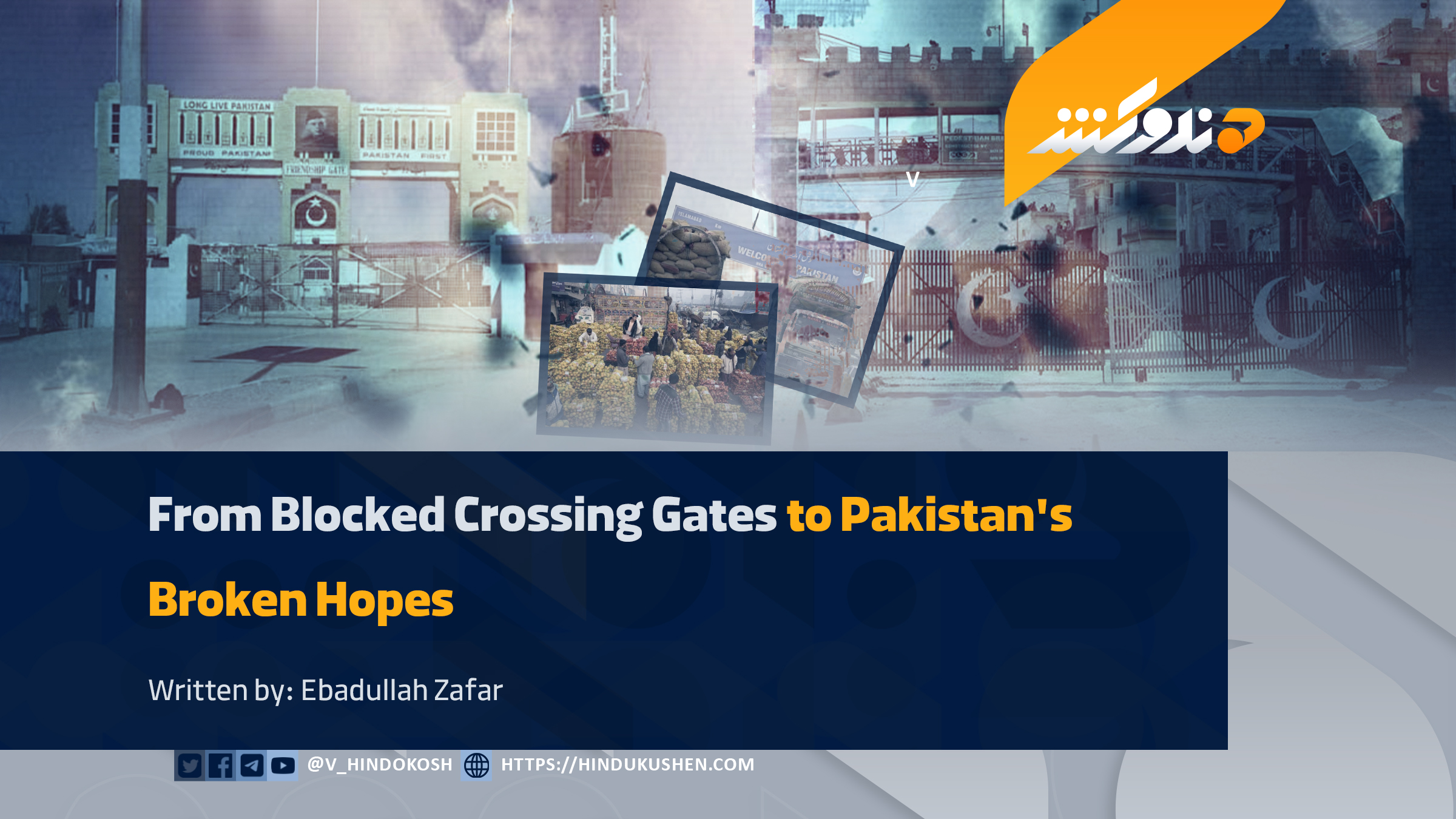
After the recent months of conflict and exchange of fire between the Pakistani military regime’s militias and the Afghan government forces, the Pakistani regime has once again resorted to its familiar tactic and closed the ways crossings between Afghanistan and Pakistan, hoping to impose its sinister demands on the Afghan government in this way.
The closure of the crossings not only brought great harm to the people of Afghanistan but also to the people of Pakistan; however, this regime, which holds the people of Pakistan captive, insisted on keeping the crossings closed only to please their Western masters and implement the projects entrusted to them.
Therefore the Afghan government officials, in order to prevent such incidents from happening again, began to consider creating an alternative to trade with Pakistan and entered into discussions with other neighboring countries; discussions that ultimately led to the creation of alternative routes and Afghanistan’s liberation from dependence on Pakistan.
The Pakistani military regime, by mixing economic issues with politics and blocking border crossings, attempted to put pressure on Afghanistan; an unattainable dream that has been constantly accompanied by direct and indirect threats regarding regime change in Afghanistan.
In this pre-failed project, opponents of the Afghan government, including those claiming to be part of the “Resistance Front” and the “Freedom Front,” are also heavily involved. Each has launched extensive online campaigns, speaking of changing the system in Afghanistan and nominating figures to lead the government after the current one.
In its latest actions against the current Afghan government, the Pakistani regime has launched extensive activities, including: closing ways crossings with Afghanistan, providing comprehensive support to opponents of the current system, and launching large-scale virtual campaigns under various titles in collaboration with opponents of the Afghan government.
It should be mentioned that while the closure of the crossings was detrimental to both sides in the early days, the Afghan government’s provision of alternative routes for traders and investors, as well as the arrival of the harvest and export season for Pakistani fruits, completely disrupted this regime’s calculations.
Yes! Just days after the crossings were blocked, as Pakistan’s fruit harvest season arrived, hundreds of fruit-laden trucks were met with closed crossing gates, resulting in billions of rupees in losses for Pakistani traders.
After facing public pressure, Pakistan was forced to request the reopening of the crossing gates; a request that was rejected this time by the Afghan government, as the government stated that the crossings would only be reopened if Pakistan provided a strong guaranty against the political use of these crossings.
And thus, the plan that the Pakistani regime had devised to exert pressure on the Afghan government, and which the Afghan government’s opponents referred to as a tool for regime change, backfired on them; not only did it leave behind heavy financial losses, but it also put unprecedented pressure on Pakistan’s authoritarian regime.
Note: The articles, essays, and comments published by the Voice of Hindukush only reflect the views of the authors & writers and do not necessarily represent the agreement of the Voice of Hindukush.


