








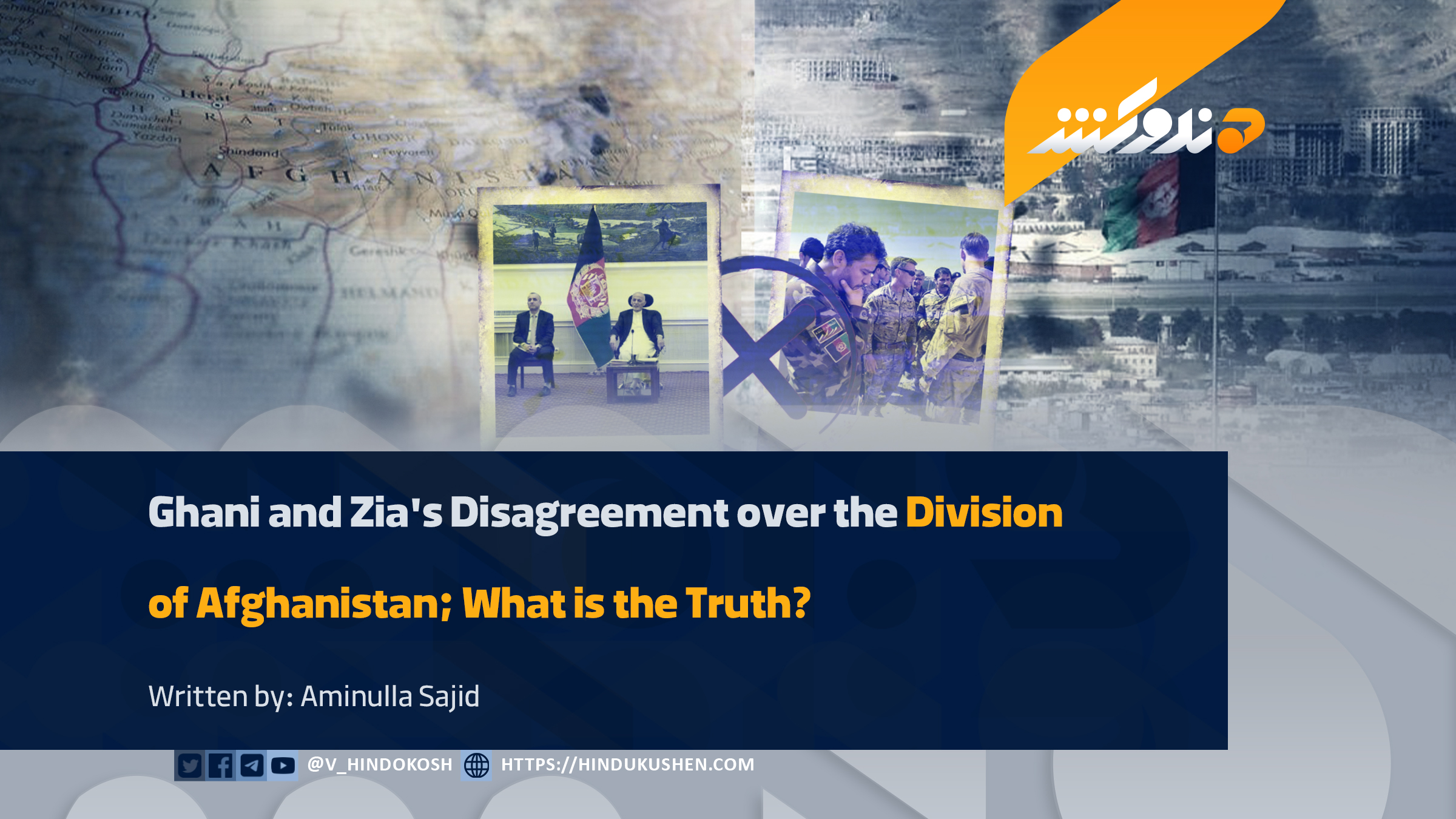
Written by: Aminulla Sajid
In recent months, with tensions escalating between the Afghan government and Pakistan, new discussions about the country’s stability and the consequences of this crisis have become heated in cyberspace and the media. Some figures associated with the collapsed republican structure and pro-Western groups analyze this situation as if Afghanistan is facing the threat of serious transformations, including division.
At the same time, Ashraf Ghani, the official of the overthrown republic, claimed in his recent speech that Afghanistan is facing a “serious threat of division.” This claim is made while, based on existing realities, unlike previous periods, today the entire geography of Afghanistan is under the control of a single government, and no group has a foothold within the country.
In contrast, Zia Yassin, leader of the “Freedom Front,” rejected Ghani’s remarks and emphasized that their goal is not division, but “freedom.”
However, when we compare the claims of these two figures with the current conditions and realities of Afghanistan, it is clear that both interpretations are based more on their personal misconceptions and miscalculations in the realm of imagination than on field realities.
Because Afghanistan today, unlike during the republic, is geographically and administratively unified. During the Republic era, even in the capital, several powerful figures and unaccountable armed groups effectively controlled and ruled over different parts of Kabul and other provinces, from western Kabul to Paghman, Pul-e Charkhi, and the east of the city. This dispersion of power had left Afghanistan in a fragile position, paving the way for fragmentation.
However, with the current government coming to power after 2021, the previous fragmented and dispersed structure disappeared, the country was saved from a dangerous disintegration, and for the first time in years, all provinces and cities came under the banner of a single system.
The current government of Afghanistan has created an environment where every individual from the Afghan nation feels that every corner of this country belongs to all Afghans. They can walk on any part of this land with peace of mind, without ethnic or partisan concerns, and breathe in the fresh, open air, experiencing a sense of tranquility, brotherhood, and solidarity.
In such a situation, talking about the imminent threat of disintegration does not align with the political and field realities of the country. On the other hand, some groups that today claim to fight for “freedom” from abroad have been operating under the shadow of foreign forces for the past two decades, and their deep political and financial ties to foreign actors are no secret to anyone. Such groups are trying to portray the current situation as “crisis-inducing” because they see the current structure as being against their interests and past position.
The reality is that such circles and groups, whose claims are greater than their own capacity and existence and who claim to be fighting for freedom, are not only not fighting for freedom, but are the very collars that were around their necks for twenty years under the chains of occupation and who lived under the shadow of the occupiers. Because the nature of slavery and servitude is so ingrained in them, they consider freedom a prison today. They hide behind the slogan of freedom to pursue their espionage goals and personal interests, and they are trying to imprison the Afghan nation again. Therefore, these groups have neither the real capacity to bring about significant political change nor a popular base within the country.
However, it must be noted that the people of Afghanistan have only recently tasted the sweetness of freedom, security, and peace, and they will fight with all their might against anyone who tries to restore the dark atmosphere of occupation or create a multi-governmental and fragmented situation in Afghanistan.
Note: The articles, essays, and comments published by the Voice of Hindukush only reflect the views of the authors & writers and do not necessarily represent the agreement of the Voice of Hindukush.


