








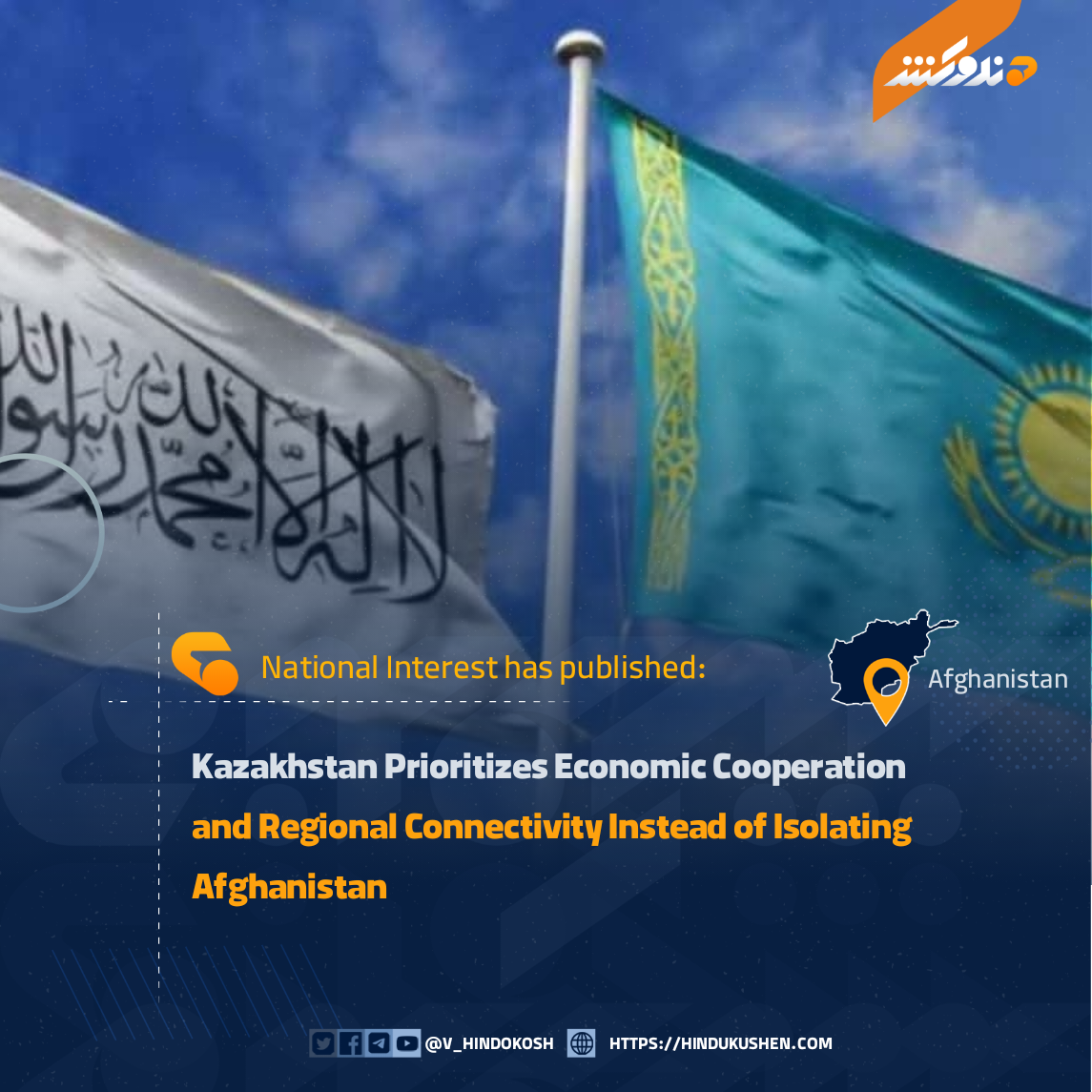
The National Interest has published an analysis saying Kazakhstan is prioritizing economic cooperation and regional connectivity over isolating Afghanistan. The report argues that five years after the new Afghan government came to power, the policy of isolation has failed to achieve its intended objectives and has instead worsened humanitarian and security challenges.
The analysis, written by Yerkin Tukumov and Aldeniz Gusseinov, says Afghanistan is expected to play a significant role in shaping Eurasia’s future. It argues that the central question is whether that future will be driven by geopolitical rivalry or by economic cooperation.
The authors write that, amid shifts in the global order and the weakening of international institutions, Kazakhstan views regional countries as the primary drivers of stability. As a middle power, it believes lasting regional security should be built through cooperation among neighboring states rather than through the involvement of external powers.
According to the analysis, Kazakh President Kassym-Jomart Tokayev has called for replacing the traditional “Great Game” approach to Afghanistan with a strategy centered on “Great Gain.”
The report says the policy of isolating Afghanistan since 2021 has not produced the results its supporters had expected.
It adds that Kazakhstan has chosen a policy of practical engagement with Afghanistan while stopping short of formally recognizing its government.
According to the analysis, Kazakhstan’s long-term objective is to help transform Afghanistan from an aid-dependent country into a productive economy and a key regional transit hub.


