








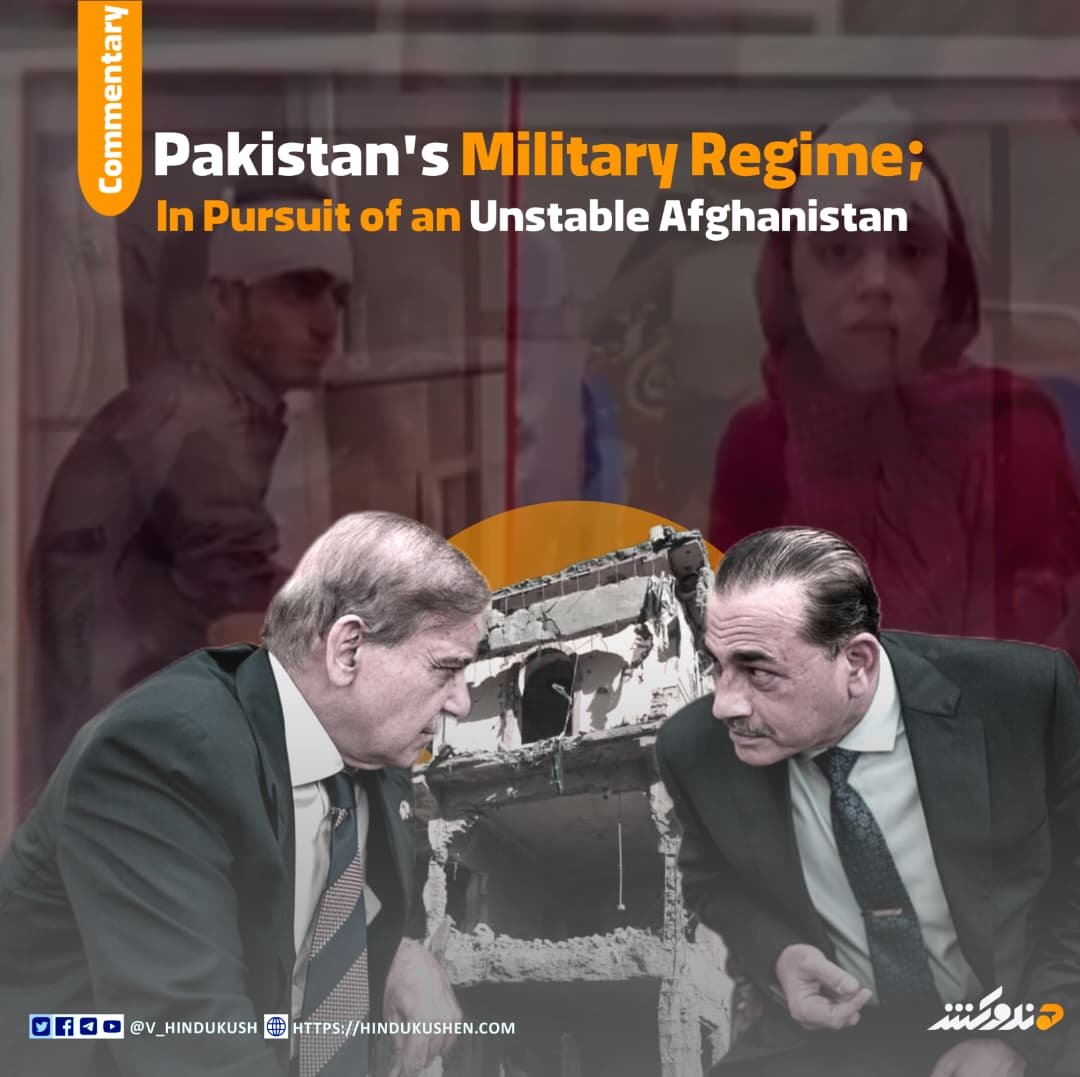
Once again, Pakistan’s targeting of innocent civilians, including women and children, in Afghanistan’s Paktia, Paktika, and Kunar provinces is deeply alarming and deserves strong condemnation. Islamabad seeks to use such indiscriminate airstrikes and military operations to conceal its internal security, political, and economic failures. Instead of addressing the root causes of insecurity and domestic crises within its own, Pakistan’s military regime shifts the blame onto others and resorts to an unsuccessful display of force.
When viewed through the lens of the region’s geopolitical realities, a fundamental question arises: Does Islamabad genuinely seek a peaceful resolution to these issues? The available evidence suggests that Pakistan cannot tolerate the existence of an independent and self-reliant Afghanistan and has consistently pursued the objective of keeping Afghanistan unstable, weak, and dependent on either itself or other powers. In Pakistan’s strategic outlook, stability only has value when it serves its own interests. Consequently, even when peaceful solutions are available, it continues to rely on military action.
The Afghan government has repeatedly presented constructive proposals for resolving disputes and has consistently emphasized diplomatic solutions to existing problems. However, Islamabad’s disregard for these initiatives demonstrates that Pakistan’s claims do not align with reality. When one side persistently rejects negotiations and instead chooses to violate the sovereignty of a neighboring country through military attacks, it indicates the existence of broader objectives. Escalating the crisis in Afghanistan may be part of hidden geopolitical arrangements and concessions granted to Pakistan by other global powers seeking to expand their influence.
Such irresponsible actions and the continuation of instability in Afghanistan directly threaten the security, economic interests, and stability of the entire region. The reality is that Pakistan’s military regime supports ISIS and other destructive militant groups within its own territory and provides them with safe havens. Yet, to prevent the international community from recognizing this reality, it shifts the blame onto Afghanistan.
The military regime is portrayed as deliberately maintaining control over these proxy groups in order to obstruct regional connectivity and stability on one hand, while on the other using the banner of combating terrorism(!) to secure financial and political concessions from the international community. This systematic concealment of facts and the targeting of Afghan territory serve only to divert international attention away from the actual centers of these militant networks, which are located inside Pakistan itself.
For Pakistan’s military regime, it is extremely difficult to openly acknowledge these real and concealed objectives before the world and its own people. As a result, it continues, under the slogan of fighting terrorism(!), to shed the blood of Afghan civilians. However, the time has come for the international community and the countries of the region not to turn a blind eye to these realities and to exert pressure on Islamabad to ensure security within its own instead of assigning blame to others, and to cease its aggression against the Afghan people.


