








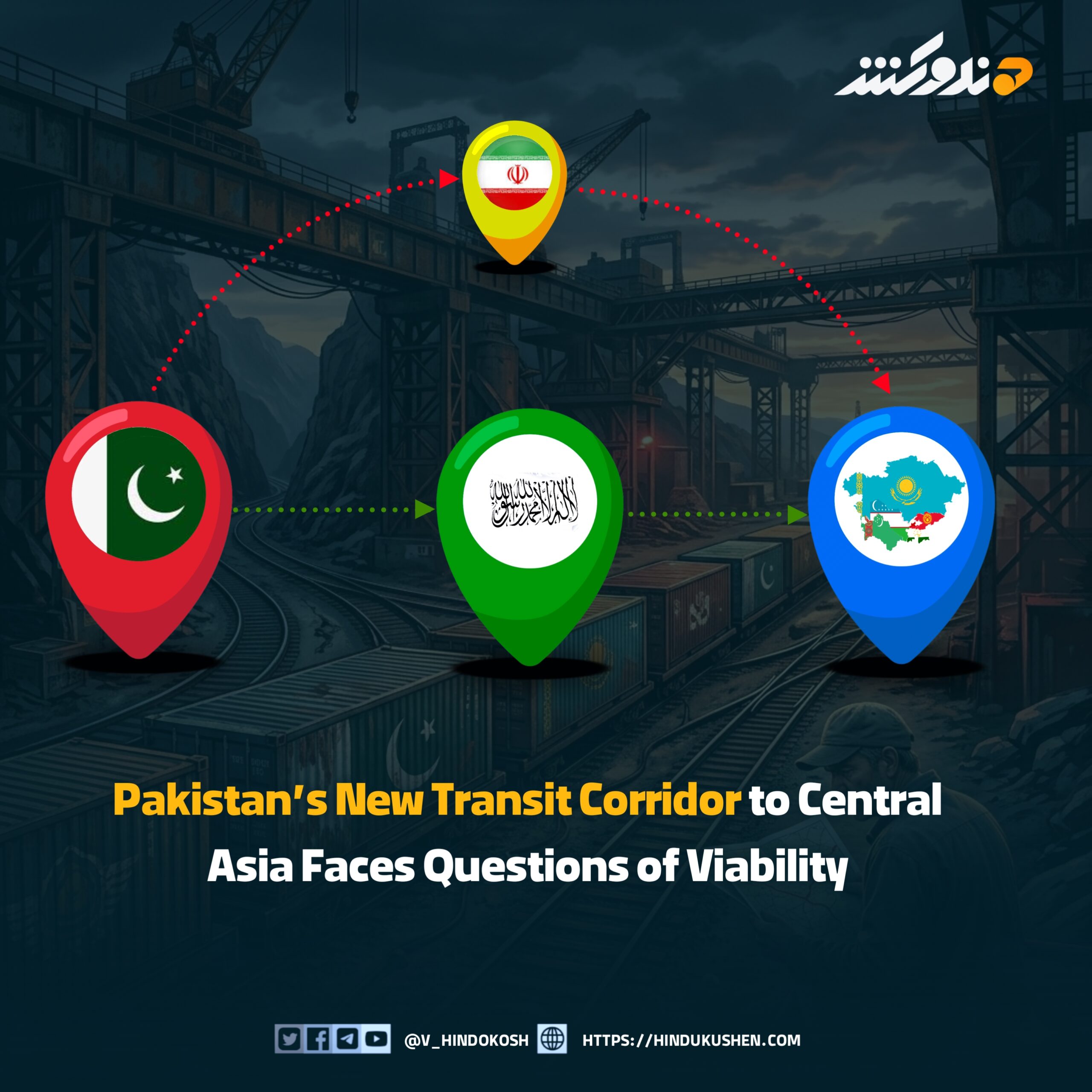
Pakistan has recently attempted to activate a new trade route to Uzbekistan via Iran, but following the announcement, experts and traders have raised serious concerns and doubts about its practicality and economic efficiency.
Researcher and legal expert, Nazeem Samoon, stated that this route starts from Karachi Port and passes through Iran and Turkmenistan to reach Tashkent, covering a total distance of around 4400 kilometers and taking at least 14 days.
According to him, in addition to this, due to differences in railway gauge, cargo must be unloaded and reloaded at several stages, which not only wastes time but also increases costs.
He believes that this long and complex route is not only unprofitable but will also impose a heavy financial burden on traders, adding that no rational trader would choose such a route that is longer, more expensive, and full of technical challenges.
Mr. Samoon further noted that, on the other hand, the Karachi–Peshawar–Kabul–Hairatan–Tashkent route via Afghanistan is approximately 2000 kilometers long and goods can reach their destination in just 5 days, making it significantly cheaper and faster.
He emphasized that Pakistan’s move is largely political in nature, aimed at presenting alternatives to routes through Afghanistan; however, in practice, this effort cannot replace Afghanistan’s geographical position and value.
He added that Pakistan, having restricted transit routes through Afghanistan on one hand and lost an important market on the other, is now trying to convince its traders through such impractical projects, but such measures will not change realities.
Nazeem Samoon concluded by stressing that Afghanistan remains the shortest, most economical, and most vital transit gateway between South and Central Asia, and Pakistan will eventually be compelled to embrace the principles of free trade instead of political pressure.


