








Written by: Zeeshan Jamil
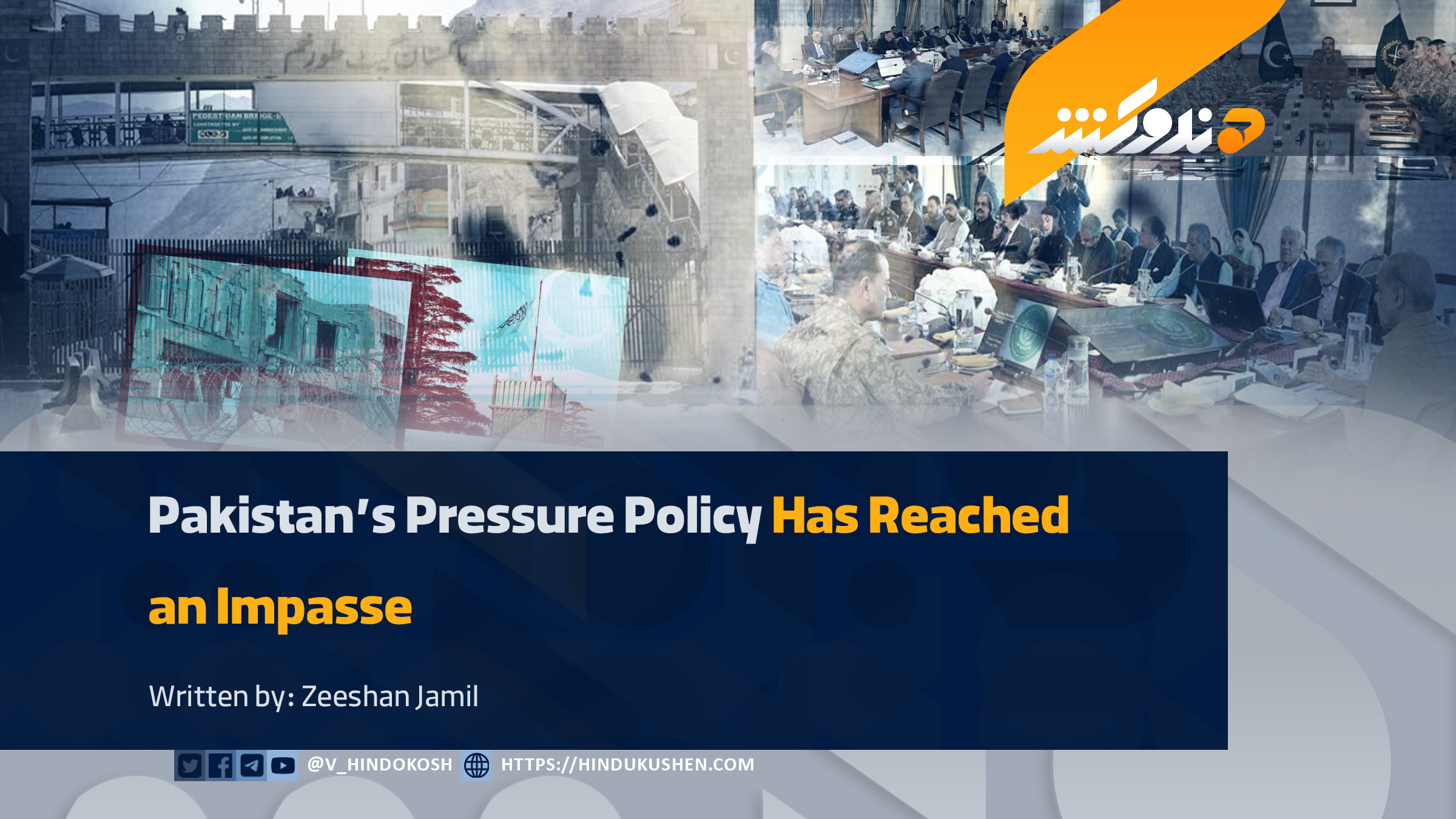
Pakistan and Afghanistan are situated in such a historic and geographic context that even a small security incident along the imaginary and hypothetical Durand Line can escalate into major political developments. Over the past two months, following the incursion into Afghan territory and the retaliatory operations carried out along the Hypothetical Durand Line, the issue further expanded. Subsequently, negotiations were held in Qatar, Turkey and later Saudi Arabia. In each round, Pakistan denied realities and retreated. Afghanistan, in response, announced a trade cutoff and made it clear that no trade route would reopen until Pakistan provided strong guarantees.
The Pakistani military regime had already suffered defeat on the military front, yet it continued to create avenues for political confrontation, showing various illogical reactions and resorting to coercion. This eventually led to a trade cutoff; occurring precisely at a time when Pakistan’s fresh-fruit season had begun. This decision truly increased pressure on the military regime, because the price of these rash decisions is paid not only by the army but also by the people. Ultimately, all these developments severely strained bilateral relations.
The recent clash in Spin Boldak is another fresh example of this long-standing tense relationship. As the Pakistani military regime failed to achieve anything through conferences, pressure tactics, and frantic moves, its last resort was yet again to break ceasefire commitments through conflict. They did this once more to mislead the Pakistani public and divert their attention. When Afghanistan responded, the Pakistani army, as always, abandoned its posts and called for a halt to the fighting.
A review of the history of tensions between the two countries shows that these problems are not new. Instead, they stem from years of political rivalry, competition for influence, and geopolitical disagreements. For this reason, even a limited skirmish is analyzed within the framework of broader strategic objectives rather than as an accidental event.
Pakistan’s regional strategy relies heavily on a policy of pressure. The country maintains a managed crisis under its control, which it uses for political leverage whenever necessary. Whenever Pakistan faces domestic political turmoil, economic difficulties, or international pressure, it uses conflict and incursions along the Hypothetical Durand Line as a quick pressure tool. Such clashes do not suggest that the military regime possesses significant power; rather, they aim to project an image of continuous strength and control; especially in situations where internal crises deepen. Fortunately, Pakistan’s long-practiced strategy of exploiting this manufactured crisis has now become risky, because Islamabad no longer holds influence over Kabul. Its dominance over Afghanistan has ended; Afghans may be patient, but they also possess strong memory and careful calculation.
Looking deeper into the matter, one finds that the imaginary Durand Line and Pakistan’s internal security issues are two major and longstanding drivers of these skirmishes. Pakistan seeks to portray the Durand Line as an accepted border by altering realities on the ground, while the people of Afghanistan do not recognize this imposed line as an official boundary. Additionally, the military regime attempts to shift the blame for its internal security problems onto Afghanistan. Whenever Pakistan builds new installations, imposes more restrictions, or increases military activity along the line, its goal is not merely security; it is gradually creating conditions for an undeclared official border. Meanwhile, it also ties domestic security issues to the matter.
The economic dimension has also long been a fundamental part of Pakistan’s political pressure strategy. Afghanistan previously depended heavily on Pakistani routes for imports and exports. Pakistan exploited this dependence as a political tool; sometimes blocking routes and sometimes allowing transit under strict conditions and high taxes. Now, however, Afghanistan meets its needs through other countries and is no longer dependent on Pakistani routes.
Pakistan neither genuinely intends full-scale war nor seeks complete stability. Instead, it maintains a constant pressure mechanism that it activates whenever required to achieve political and security objectives. Afghanistan’s solution lies in strengthening governance, ensuring internal stability, diversifying its economy, and developing alternative transit routes. The more Afghanistan frees itself from dependency on Pakistan’s monopolized needs, the weaker Pakistan’s pressure policy becomes, compelling Islamabad to move toward equitable engagement, mutual respect, and balanced relations.
Note: The articles, essays, and comments published by the Voice of Hindukush only reflect the views of the authors & writers and do not necessarily represent the agreement of the Voice of Hindukush.


