








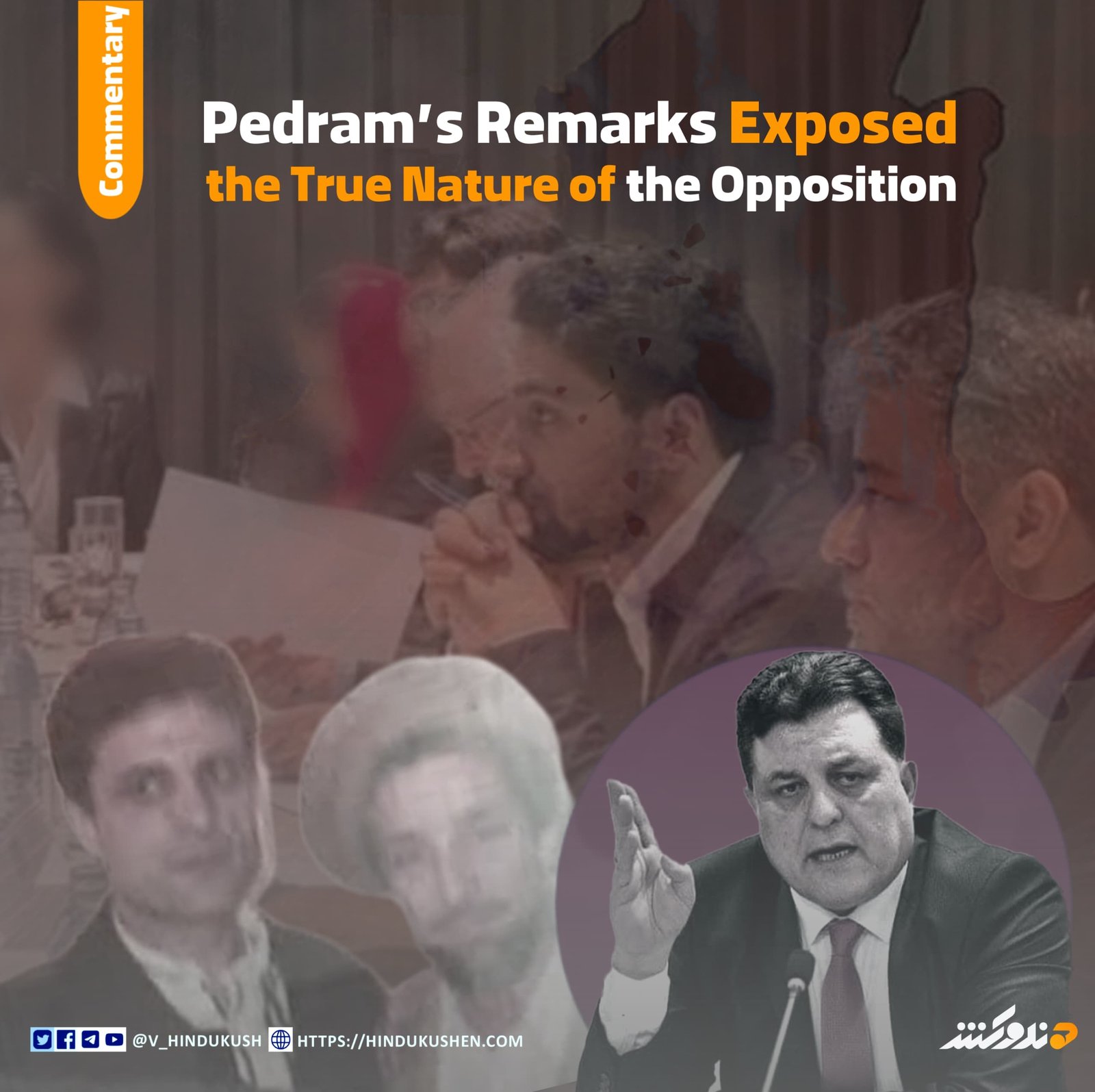
In recent days, a number of Pakistan-backed disruptors attempted to destabilize the region, but their efforts were thwarted and ultimately failed. However, the incident led to growing divisions and internal rifts among opponents of the Afghan government. Recent remarks by Abdul Latif Pedram, a former associate of Ahmad Shah Massoud and an advocate of a federal Afghanistan, clearly exposed the deep mistrust, disagreements, and fragmentation among the small opposition groups. He openly stated that Afghanistan’s freedom cannot be achieved by relying on foreign powers or from Europe. These remarks essentially highlighted the reality that these groups remain isolated on the margins outside the country.
Pedram’s statements demonstrated that opposition figures living abroad do not even trust one another and are incapable of taking any meaningful or transformative action on the ground. Furthermore, his acknowledgment that these groups depend on foreign countries, particularly Pakistan, for support and guidance seriously undermined their claims of independence and legitimacy. Pedram admitted that the Freedom Front’s limited attacks were coordinated from Pakistan-controlled Chitral and that such activities were linked to foreign intelligence networks. In Afghan society, dependence on neighboring countries, especially Pakistan, has long been viewed with strong disapproval. As a result, these weak activities further damaged the opposition’s reputation in the eyes of the public.
At the same time, the true nature of the opposition’s publicity campaign regarding Badakhshan was fully exposed. The active presence of Afghan government officials in Zebak district and other areas of Badakhshan, along with Pedram’s own admission, indicated that no significant clashes had occurred there and that the situation remained completely calm. The opposition’s claims were unfounded, and they resorted to circulating videos from conflicts in certain Arab countries in an attempt to attract media attention.
Public distrust of these defeated groups and political figures had already been evident, but from among the opposition, Pedram’s admission made it even clearer. He stated that the public has no confidence in either the Freedom Front or the Resistance Front. This acknowledgment serves as clear evidence that not only the Afghan people but also key figures within the opposition themselves have grown weary of propaganda campaigns and have become deeply disillusioned with foreign-backed and proxy efforts. As a result, the opposition’s major propaganda campaigns are increasingly being rejected and undermined from within.
If one considers the facts and Abdul Latif Pedram’s recent remarks, the fragmented, weakened, and foreign-backed nature of these proxy groups clearly exposes their subservience and internal divisions. Planning ineffective attacks from Pakistan, engaging in fruitless media propaganda, and facing a firm public response have all reinforced the perception that these groups pose no significant threat to the stability of the Afghan government, and that their so-called “struggle” depends almost entirely on foreign financial and intelligence backing.


