








Written by: Emal Joya
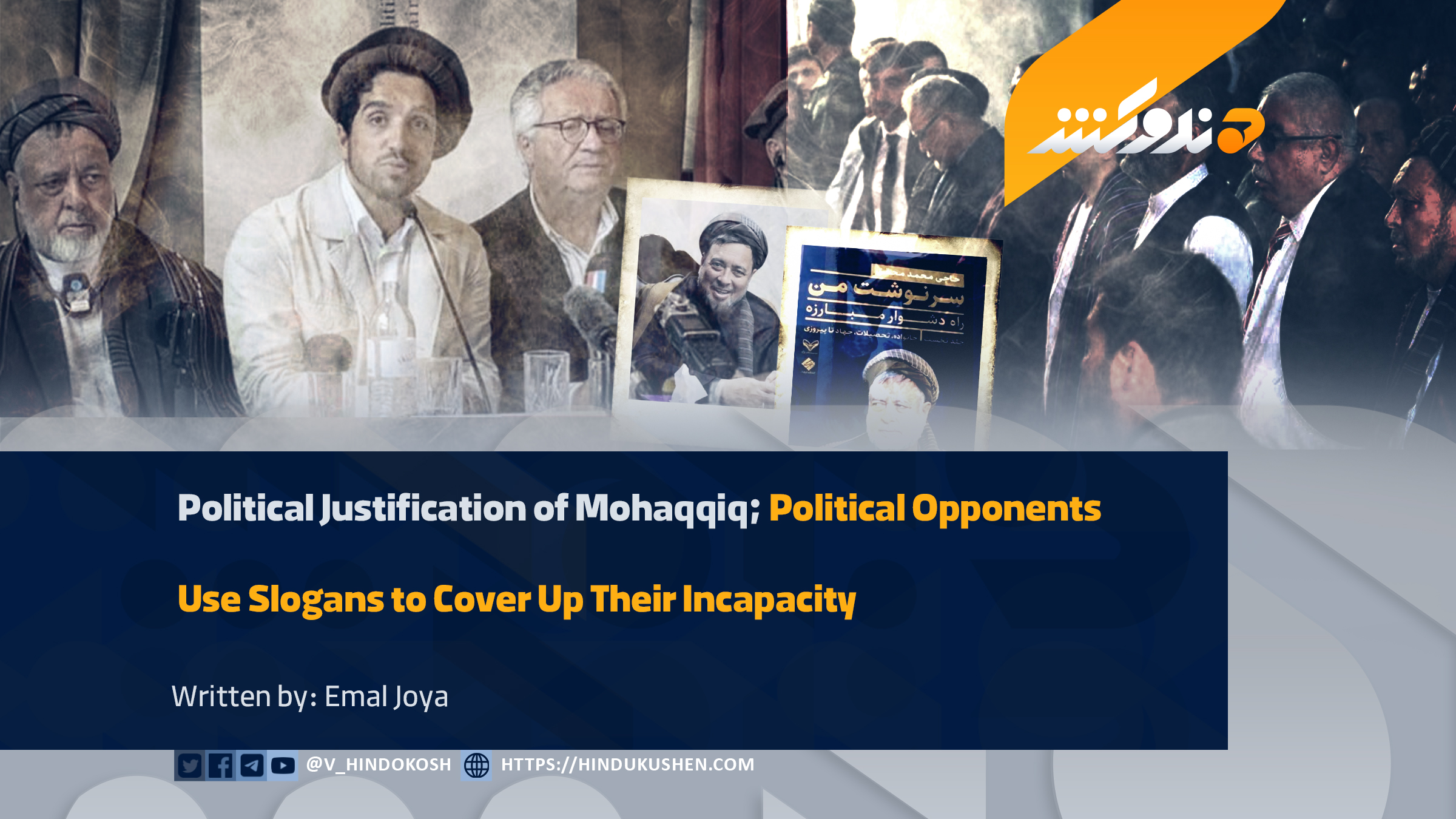
Mohammad Mohaqqiq, the leader of the Wahdat Movement, recently published a book of his memoirs titled “My Destiny.” In the preface, he stated that “the entire world, East and West, opposes the war against the current Afghan government and seeks a political solution.” The Afghan government is not sustainable and has been isolated from the international community for nearly five years, with all political parties united against the Afghan government. The international community should compel the Afghan government to talk to its political opponents.
“My Destiny” is a political apology under this title. Although this book is published under the name of memoirs, the main focus of the book is the justification of past political actions. The author downplays their role in the civil wars, blames others, and portrays themselves as a victim of circumstances, while the decisions of the Mohaqqiq and others like him led Afghanistan to civil wars, ethnic divisions, and fratricide.
Mohaqqiq added that the world, East and West, do not want to fight the current Afghan government. Since the world doesn’t want war, they themselves don’t have the capacity for war, they have fled the battlefield of war and politics, they don’t have any good political position, and they are now the very individuals who have been forgotten by the international community, then why should the Afghan government talk to politically isolated and powerless opponents?
Politics is based on power, not slogans; words only have meaning when the other side has legitimacy or a means of pressure. Legitimacy is derived from the Islamic Sharia revealed by Allah (Glory be to Him), while pressure arises from field power, popular support, or international guaranties. Political figures whose movements lack legitimacy, field presence, cohesive popular support, and international guaranties, and who pose no threat to the government, effectively have no tools to force negotiations. Even key figures in the government are unaware of them when speaking and sharing their opinions.
The side that the Mohaqqiq and other discredited politicians consider the opposing party currently controls power, administration, and security, meaning they are in a position of power, not distributing privileges. So why would the Afghan government make a forgotten issue a priority?
From all these developments, the truth emerges that the officials of the fallen republic, who are forming such opinions, meetings, assemblies, groups, and cliques, are driven by a thirst for power for a single purpose and are unwilling to lose the little influence they have gained. The people and tribes they had deceived for years, painting imaginary islands for them, are still indoctrinating them and claiming to be the fulfillers of their ideals, even tho the ideals themselves have changed, and the people are happy with and standing by this system.
The slogan “The world doesn’t want war” is a contradictory truth for them, not a positive advantage. The international community is neither capable of a new war nor of supporting another alternative. Your not wanting war is not a sign of the enemy’s strength, but of the world’s weariness and defeat. To fill this void, some political figures interpret this slogan to their advantage, even tho not wanting war also means having no alternative.
In politics, a call for dialog is considered a power when backed by force; otherwise, it is a clear sign of weakness, and the international community sees no compulsion. Officials of the new Afghan government are in place, and their opponents have fallen out of the equation, so the matter is clear. The Afghan government has no strategic need to talk to such individuals because they are neither forced to nor do they see any benefit from them.
Note: The articles, essays, and comments published by the Voice of Hindukush only reflect the views of the authors & writers and do not necessarily represent the agreement of the Voice of Hindukush.


