








Written by: Khalid Andarabi
Since the collapse of the republican regime, the space for opponents of the new Afghan government has become increasingly restricted every day. In contrast, not only neighboring countries but also regional and even European countries have adopted a different approach, choosing to engage with the Afghan government.
Meanwhile, Afghan government opponents who had found good buyers in foreign countries during the early days of the republic’s collapse, and whom some powers had employed, were discarded one by one as unusable tools after witnessing the incompetence and ineffectiveness of these notorious figures and the high level of hatred toward them among the Afghan people.
Recently, Tajikistan, which has also embarked on a path of engagement with the Afghan government, has followed the lead of other governments by expelling notorious figures of the republic from its country and acknowledging in recent meetings between official delegations of the two countries that no opportunity will be given to any opponent of the Afghan government to operate in that country.
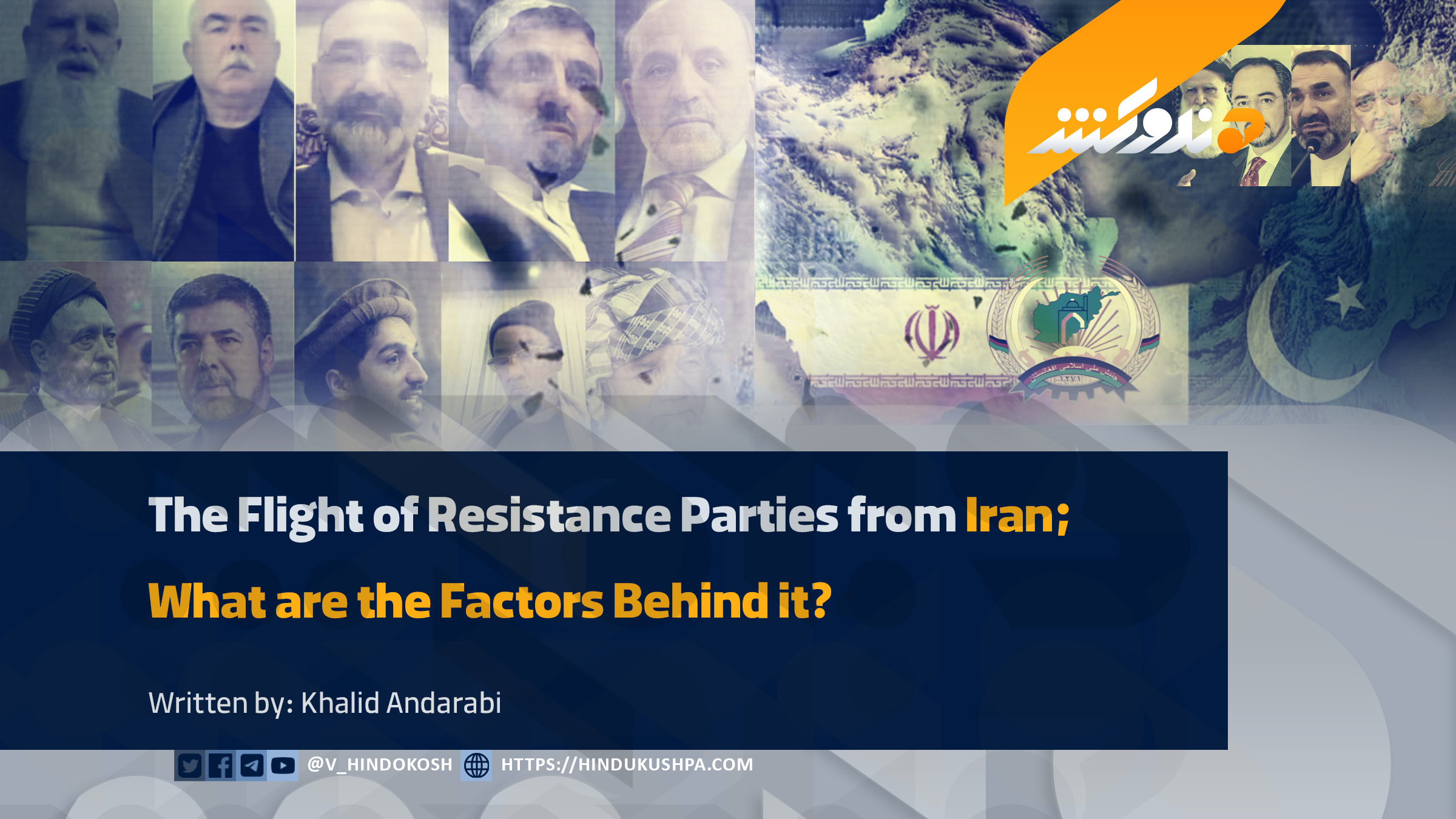
After “Voice of Hindukush” published reports about the transfer of the Resistance Front from Iran to Pakistan, media outlets are now reporting that Nizamuddin Qaisari, the current leader of the Junbish party, has also left Iran. Although the current destination of the Qaisari is unknown, analysts believe this journey will ultimately reach Pakistan.
Regarding the reasons for the departure of figures opposed to the new Afghan government from Iran, it can be said that this country has also apparently followed the path of other countries and wants to proceed thru interaction rather than confrontation with the Afghan government. For this reason, it has rejected the fleeing members of the collapsed republican regime and forced them to choose another country to live in.
On the other hand, it can be said that due to recent conflicts with Afghanistan, Pakistan is now seeking to gather the remnants of the republic and employs infamous figures who have been expelled from other countries; the very same people who once introduced themselves as enemies of Pakistan to gain popularity among the Afghan people, but have now put the yoke of slavery around their neck.
Regarding the hasty departure of warlords and republic defectors from Tajikistan and Iran, it can be said that the inefficiency of these figures, their inability against the new government, the hatred of the Afghan people toward them, and finally, Afghanistan’s balanced foreign policy with neighboring countries, the region, and the world, all led to the host countries gaining nothing but loss and damage from these individuals; a process that ultimately resulted in the expulsion of these figures.
Now that the Hezb Junbish party has also shifted its position and taken refuge in Pakistan, it can undoubtedly be said that the majority of figures opposing the current Afghan government have gathered under the shadow of Pakistan and are looking to Pakistan’s ISI for help and assistance. Among them is Abdul Rashid Dostum, a dark figure in the history of contemporary Afghanistan, a personality whose record is filled with nothing but corruption and depravity.
It’s worth mentioning that Dostum had also spoken proudly about repeating the crime of Dasht-e-Leili some time ago; a crime that was unique in its kind and considered one of the darkest chapters in the contemporary history of Afghanistan.
In summary, it can be said that the process of the collapse of the ranks of the opponents of the current Afghan government not only reflects the changing regional dynamics but also indicates that the era of exploiting the faces of warlords and failed politicians of the past has come to an end.
Note: The articles, essays, and comments published by the Voice of Hindukush only reflect the views of the authors & writers and do not necessarily represent the agreement of the Voice of Hindukush.


