








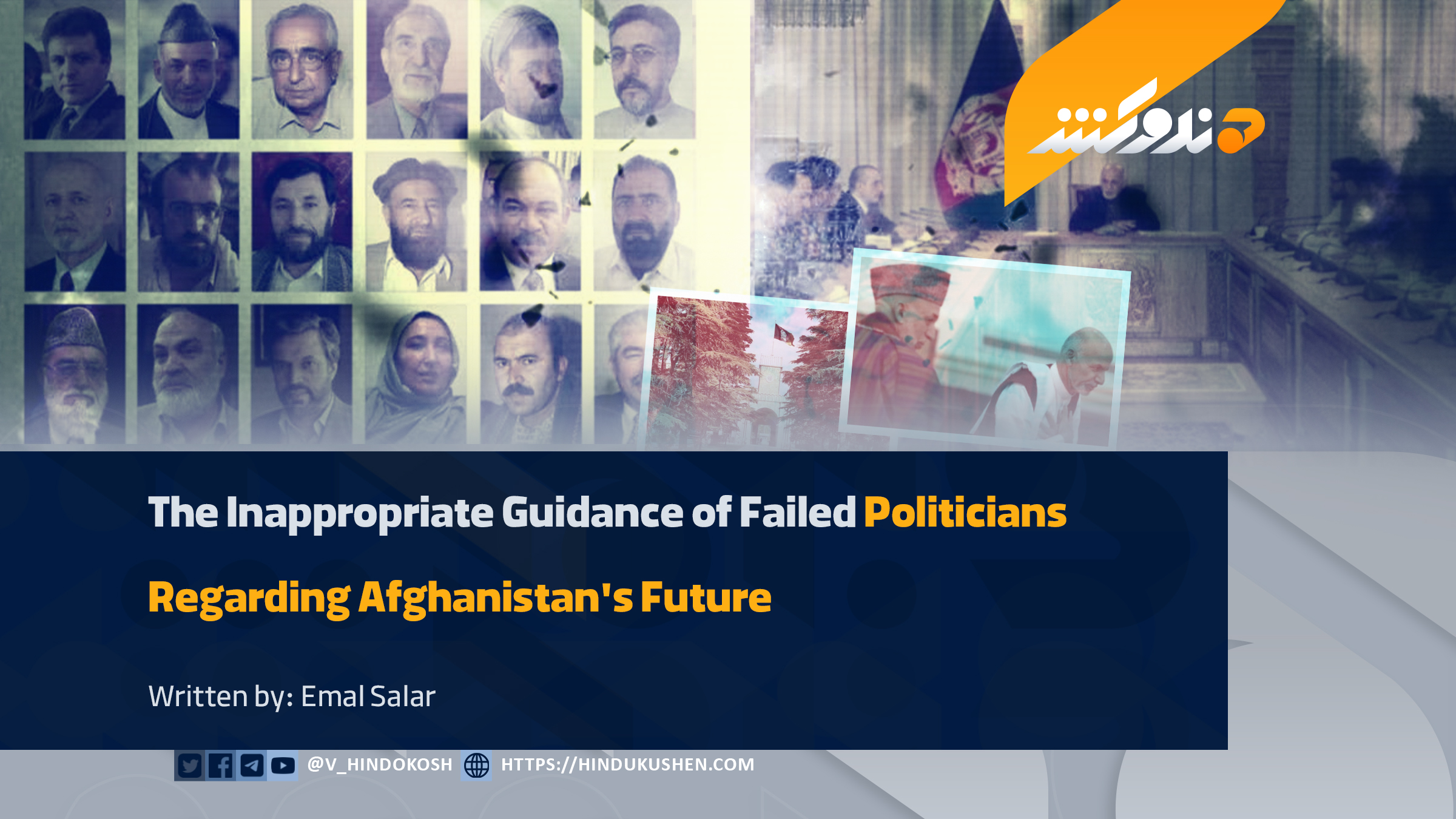
Written by: Emal Salar
Recently, Omar Dawoodzai, the CEO of a group called the National Assembly, presented a plan. He said, “I am presenting a plan for the ‘Third Republic’ for the future, a republic defined by the people and political groups.” He says that if Afghans do not unite under one umbrella, the current regime will continue, relations with neighbors will deteriorate, and Afghanistan will become even more isolated. He adds that Afghans inside Afghanistan are not powerful, but Afghans living abroad, due to their freedom, can take action in the best way to save Afghanistan.
Dawoodzai forgot that Afghans had experienced a system called the Republic for twenty years, a system that neither reflected the will of the people, created justice, nor protected the security and dignity of people’s lives. The corrupt republic was drowned by a regime of corruption, decisions made on the shoulders of foreigners, and the monopoly of a few limited circles. In the early days of the republic, the same old faces, the same old vicious circles, and warlords, along with NATO troops, entered the gates of the Arg, creating a form of government where the world’s top corrupt officials were considered to be these very authorities.
The First Republic, which was also a gift from Dawood Khan, did not harmonize with Afghan society. Citizens of both republics, which have changed their forms multiple times, are now making different proposals for governance. Omar Dawoodzai, who is now proposing the Third Republic, wants to present the same republic in a slightly altered version, which turned Afghanistan into a battlefield of insecurity, instability, and foreign interference for decades.
Dawoodzai’s version is no longer viable in Afghanistan because ideas have changed, the people have changed, the country has emerged from the flames of war, and the mindset has evolved in a positive direction. However, Dawoodzai’s thinking still contains the same old maps, the same versions created from foreign conferences, and the same expectation of good from bad. Dawoodzai offers old paths in the guise of new words, paths that the people do not traverse but rather flee from.
Dawoodzai presents old stories in a new light, as if the people have no memory, as if they have forgotten the failures of twenty years, and as if they have also forgotten the atrocities that left thousands of families in mourning. Dawoodzai thinks that with the rhymes of his words, he will create a magical scene and everything will change.
The most painful thing about all of this is that it presents a soft, hidden, and all-encompassing narrative about neighbors, especially Pakistan, which smells of whitewashing foreign policy in every sentence. Dawoodzai says the discussions at the Islamabad conference were to our liking; they should understand that participating in a proxy policy is an insult to the national will of the people.
Those who consider the Islamabad meeting a testament to their initiative should stop and understand that gathering small political crumbs from the table of foreigners is an insult to the nation’s dignity, not politics. This country is not built at conference tables; instead of drawing foreign maps here, we need a true map of the people’s will. Anyone who sits in the shadow of Islamabad’s meetings and then calls it independent politics should know that this is not a claim of independence but a testament to the slavery of proxy politics.
This nation is not dead; this nation has a conscience. Even Dawoodzai’s like mind were presented for sacrifice and selflessness at the borders of this country and on the Durand Line, against his will, and expressed their desire for martyrdom. The opposition should understand that the collision of your old skulls with the new thinking of the Afghan nation only strengthens the current Afghan government. This is also the height of humiliation for the opponents, who understand neither politics nor the pulse of the people.
Note: The articles, essays, and comments published by the Voice of Hindukush only reflect the views of the authors & writers and do not necessarily represent the agreement of the Voice of Hindukush.


