








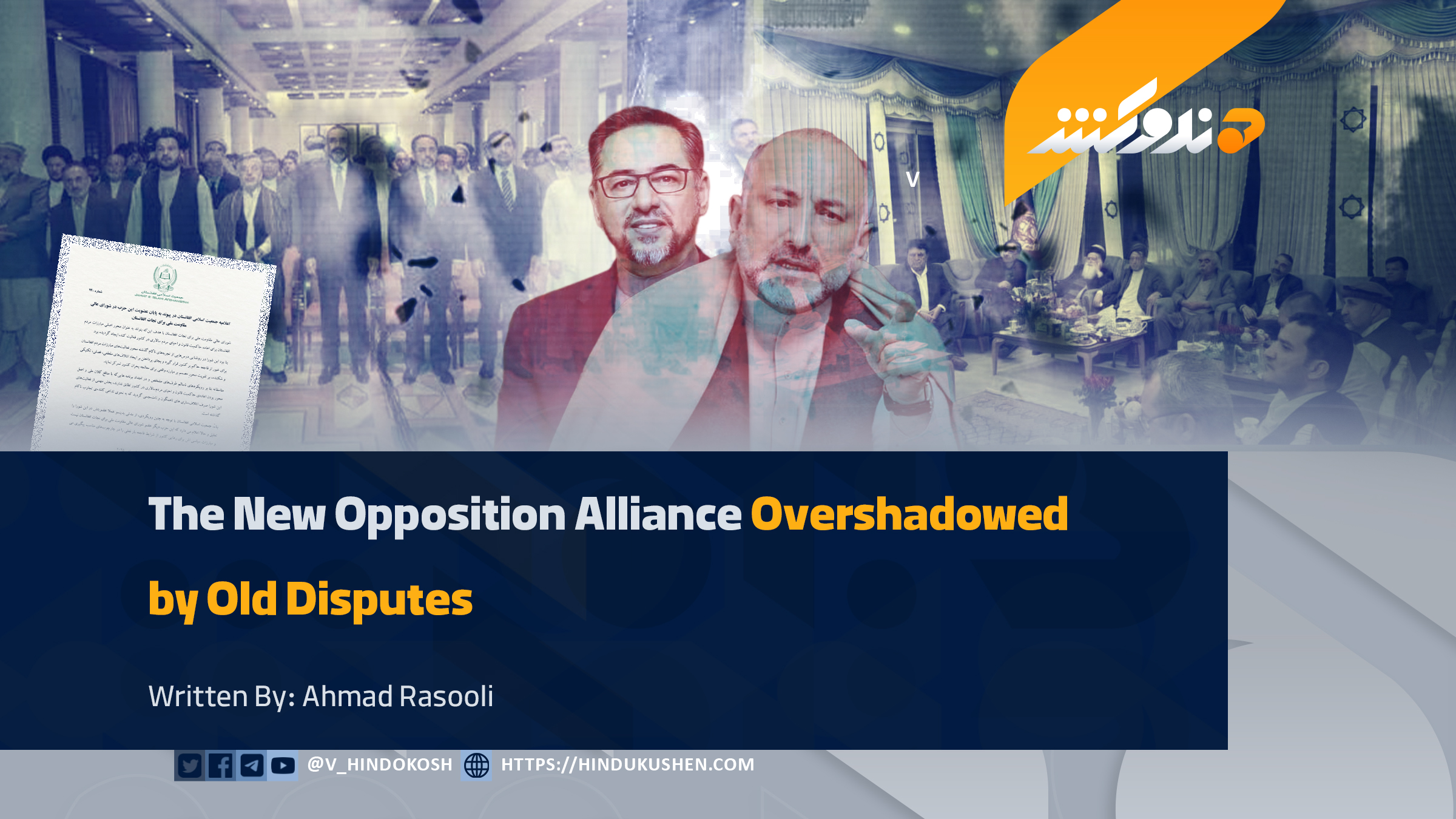
Efforts to form a new coordination framework among the Afghan government’s opponents have once again fallen under the shadow of political disagreements, and reports of its possible dissolution may soon reappear. Recent information indicates that the Resistance Council, the National Assembly, and the Movement for Peace and Justice are coming together under one umbrella based on a mutual understanding. However, simultaneously, the Jamiat Party led by Salahuddin Rabbani has separated from the Resistance Council due to the formation of this new alliance.
The deep rifts and disagreements among these groups from past years have once again become a central point of discussion. Although the formation of new alliances is intended to revive the efforts that the opposition initiated over the past four years under the banner of establishing an alternative political force, those attempts have repeatedly faced fractures and widespread disintegration in their early stages.
The Jamiat Party’s recent statement declared the end of its membership in the Resistance Council, citing the council’s lack of planning, its tactical and seasonal activities, and its approaches that are not aligned with national interests. This stance confirms that the longstanding disputes among the three major warlord-led factions remain unresolved and continue to undermine collective political action, as they have done consistently for a long time.
Differences over personal interests, political distrust, managerial weaknesses within the factions, and strategic shortcomings can all be considered the primary reasons behind the failure of joint opposition efforts. For the past four years, opponents have repeatedly tried to demonstrate – through forming alliances – that they can create unified structures capable of standing against the Afghan government. Yet, every time, disagreements have caused parties to withdraw from alliances, ultimately leading these structures to deadlock.
These internal contradictions among the opposition groups not only reflect differences in positions but also reveal clashes in their political trajectories. The Resistance Council seeks to position itself as the central axis of the new coalition movement, whereas Jamiat openly dismisses it as a failed structure. This situation illustrates the absence of a shared atmosphere of trust among the three groups and, above all, the lack of a unified vision; factors that significantly weaken the foundation of their coordination.
The formation of new structures among the opposition, followed by repeated separations, demonstrates that the current Afghan opposition suffers from deep divisions, widespread distrust, and persistent leadership disorder. Therefore, the new coalition efforts merely repeat past failures; for as long as these fundamental disputes remain unresolved, any declaration of coordination is nothing more than the beginning of yet another failed experience.
Note: The articles, essays, and comments published by the Voice of Hindukush only reflect the views of the authors & writers and do not necessarily represent the agreement of the Voice of Hindukush.


