








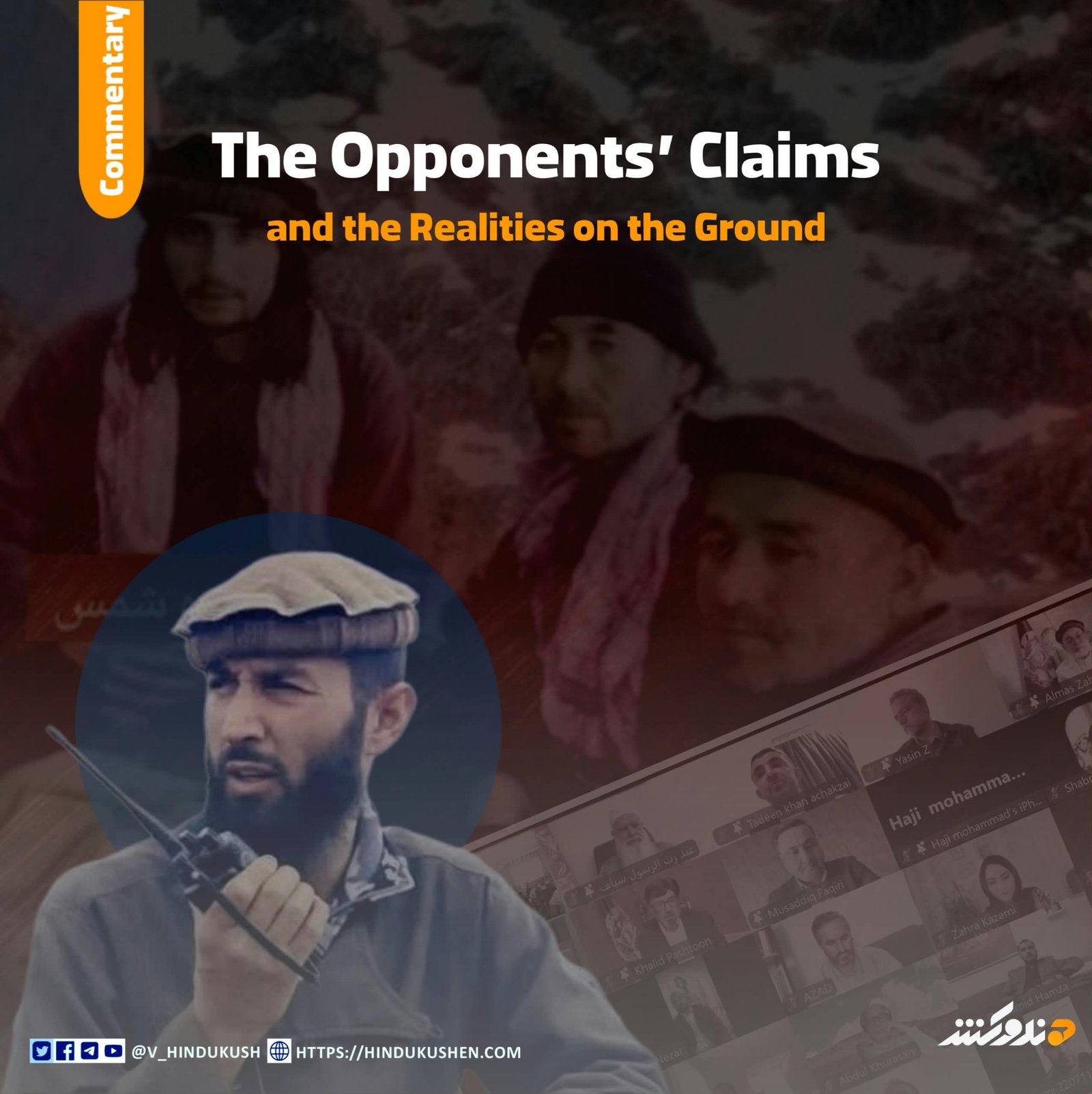
The recent statements made by some so-called leaders of the opposing groups during their latest online meeting are nothing more than a continuation of repeated and hollow claims. The assertion that the situation is supposedly out of control, or that the opponents have gained the upper hand over the Afghan government, is completely inconsistent with the realities on the ground—realities that the people closely observe every day. What kind of control over the situation is this, when key commanders such as Hasib Quwai-e-Markaz, Shams Kharabat, and Baba have been consistently eliminated, while their remaining hidden and malicious associates have either been killed or captured alive? Today, the entire country is governed under the umbrella of a unified and active central government. Yet the opponents merely claim, through empty slogans and online meetings held abroad, that they have created challenges.
The perspective of relying on war and insecurity, which the opponents have adopted, is completely failing. The common Afghan people have valued security more than anyone else and are no longer inclined toward proxy wars. Opponents believe that insisting on war and challenging security will instill fear in the people or put pressure on the Afghan government, but looking at the ground realities, their insistence on war can only be interpreted as a propaganda tactic. These same opponents, when they were in power, did not solve the country’s problems through logical interaction and dialog, but rather always created instability instead of stability, and the more chaos they caused, the happier they were.
The most interesting thing is that the opponents insist on planning for the future after the Afghan government, even though there are deep divisions and rifts among themselves that are increasing every day. The opponents even in this latest online meeting could not agree with each other and unite all the opposition members. Even many of the leading figures among the opposition did not attend this online meeting. Such opponents, who cannot even reach an agreement to participate in a simple online meeting, how will they plan for the future of a forty million people and an independent country?
The leaders of these proxy groups themselves live a comfortable and peaceful life abroad, only exerting themselves enough to boast in an online meeting every few months. Meanwhile, the sons of the people here are thrown into the jaws of death for their personal interests and privileges; Hasib, Kharabat, and Baba are recent examples. The contradiction between their actions and slogans has caused the public, and even members within their groups, to raise questions about this and lose faith in all their slogans.
The opponents do not seek stability in the country; that is why they emphasize war and believe that returning to stability, security, and a peaceful life is not in their interest. This is where their rigid thinking is evident. The opposition should first look at their own gatherings, how the others have turned their backs on them and have no spirit of agreement with them, so how will they accept their future plans? How will they help them so that their slogans do not remain just slogans? The opposition should at least look at the past five years of meetings, each meeting starting with imaginary slogans and ending with false claims, while in the practical field, there is nothing.


