








Written by: Rasheed Yousafzai
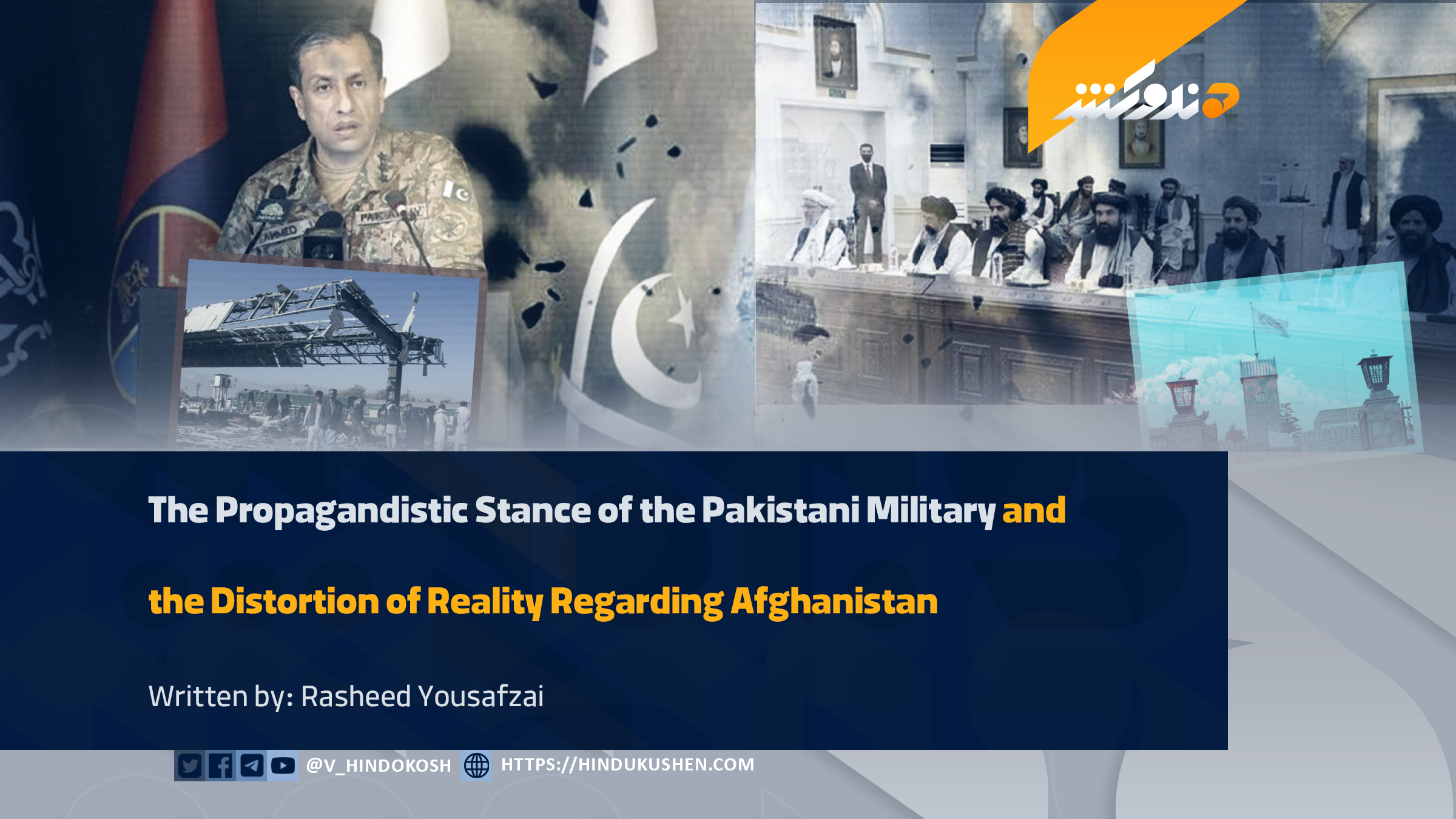
The recent statements made by the spokesperson of the Pakistani military, Sharif Chaudhry, during a press conference about Afghanistan’s governmental and social structure have once again raised the question of why the Pakistani army persistently tries to project its internal failures onto other countries in the region. The claim that there is “no government in Afghanistan,” or that the current government system is “not inclusive,” is not only in clear contradiction with ground realities, but also inconsistent with the standards of a responsible military position. Passing judgment on the legitimacy of another country’s government is neither the role of the military nor beneficial to regional stability.
Afghanistan is currently a sovereign country with an independent government that exercises full authority over its entire territory and is administered under a unified security structure. This is a reality that cannot be altered through propaganda or political pressure. Interference in Afghanistan’s internal affairs, irresponsible statements, and the use of threatening language are not only unacceptable to the Afghan people, but also push relations between the two countries into an even more sensitive phase. Responsible conduct requires that all parties speak within formal frameworks, rather than further inflaming the political atmosphere between the two countries through baseless accusations.
The stance of the Pakistani military also bears notable similarity to the narratives of opposition groups to the Afghan government, which for a long time have been attempting to present a negative image in order to attract the support of foreign actors. This alignment strengthens the impression that certain opposition currents and the Pakistani military are jointly attempting to construct and reinforce specific narratives. If this approach continues, it will prove to be a historic mistake for Pakistan, because neither will such actions resolve its internal problems, nor will Afghanistan abandon its national and economic decisions under such propagandistic pressure.
Pakistan is currently facing serious security challenges; the activities of the TTP, attacks by Baloch separatists, and persistent insecurity, issues whose roots lie in Pakistan’s internal politics, security policies, and social inequalities. These problems cannot be solved by inventing an “external” enemy. History has shown that shifting blame onto others is merely a short-term attempt to conceal failures, not a path that can bring lasting peace to Pakistan.
If the Pakistani military raises the issue of ethnic representation and participation, then this debate should first begin within Pakistan itself. They should be asked: given that Pashtuns constitute a large segment of Pakistan’s population, how many Pashtun ministers are there in the current cabinet? How effective is the representation of Pashtuns, Baloch, and other ethnic groups in parliament? Why are military operations, drone strikes, and harsh security measures mostly implemented in tribal areas, while similar policies are not seen in other provinces? This double standard and approach itself is a major factor contributing to instability and distrust within Pakistan.
The claim regarding the presence of “irresponsible armed groups” and their alleged sanctuaries in Afghanistan is also full of clear contradictions. Routes of movement between Afghanistan and Pakistan have been closed for months, the disputed hypothetical Durand Line is under strict surveillance by the Pakistani military, and armed attacks take place inside Pakistan itself. Given this situation, the question should be asked: how and through which routes do attackers enter Pakistan? Why are these incidents still attributed to Afghanistan? Such claims are unacceptable from both a logical and security perspective.
The Pakistani military’s statements regarding ISIS also do not align with reality. In the past Gregorian calendar year, not a single major deadly attack by this group has taken place in Afghanistan. On the contrary, confessions by some arrested ISIS members, published by the media, reveal that the group’s leadership and training centers are active inside Pakistan, and that from there some militants are sent to Afghanistan to carry out attacks. These confessions raised serious questions at the time; instead of blaming Afghanistan, Pakistan should provide a logical response to these confessions.
Pakistan must understand that stability for the country and the region cannot be achieved through provocative statements and propaganda policies. If Pakistan wishes to emerge from its security and political crises, it must have the courage to accept reality and adopt a path of mutual respect and responsible conduct toward its neighbors, rather than interference. Afghanistan is a sovereign, stable, and capable country, and the Afghan nation will never allow itself to become a victim of others’ failures.
Note: The articles, essays, and comments published by Voice of Hindukush only reflect the views of the authors & writers and do not necessarily represent the agreement of the Voice of Hindukush.

