








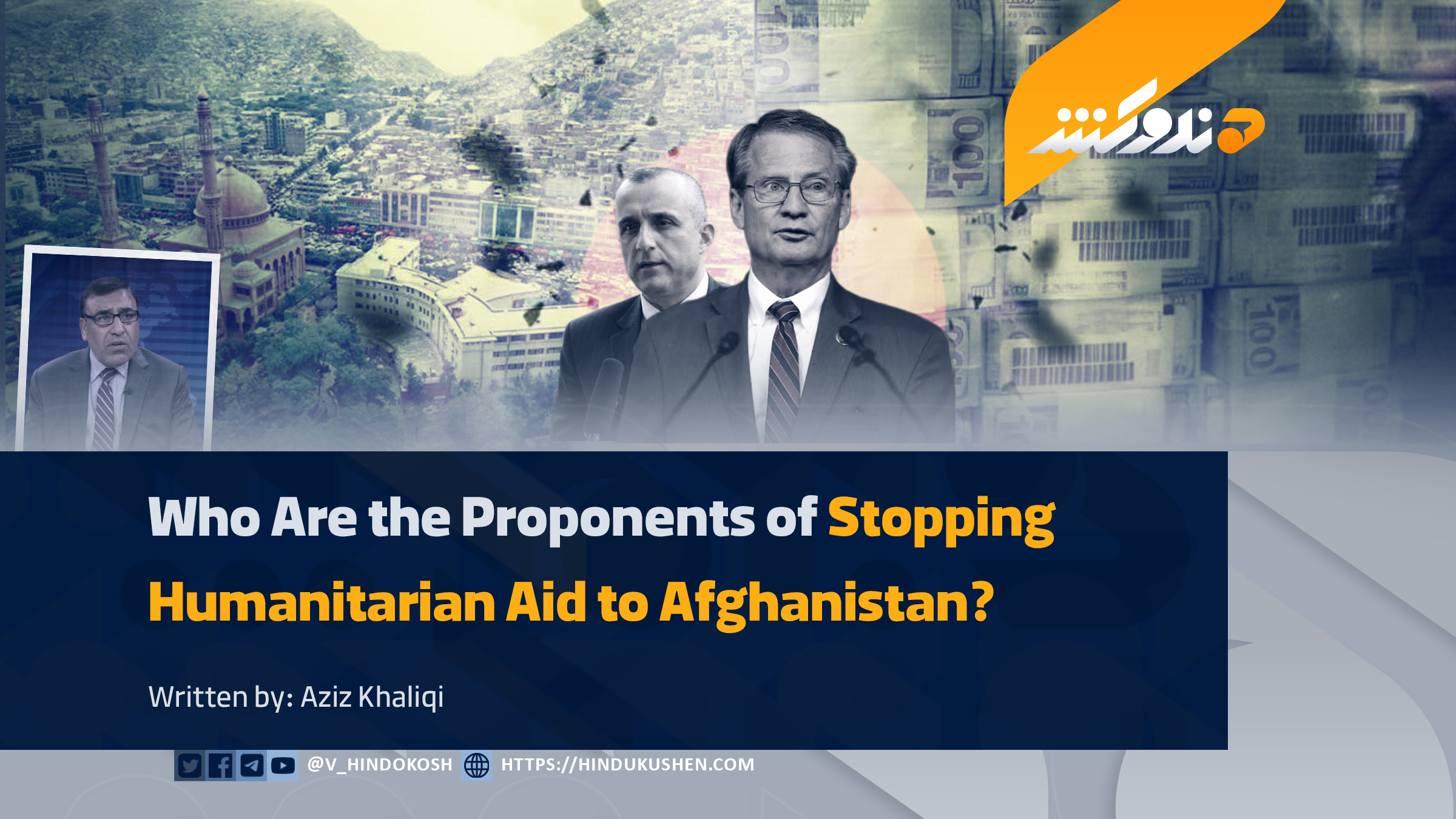
Written by: Aziz Khaliqi
During the twenty-year republic, the people of Afghanistan endured a multitude of pains and hardships at the hands of warlords and other notorious figures involved in the corrupt government of the time, and throughout this period, they did not experience a single day of happiness under their rule.
Finally, the republican regime collapsed, and as a result, the traitors of the homeland also fled. Although the escape of these infamous figures from Afghanistan was expected to end the suffering of the Afghan people, a large number of these individuals still spend their days and nites focused on harming this nation.
Individuals like Amrullah Saleh, a person with a shameful record during the republic, have always tried to exert pressure on the people of Afghanistan, confuse public opinion, and take revenge for their political defeat on a nation by fueling psychological warfare, sanctions, crisis, and instability, not just now, but from the very days after the collapse of the republic.
One of Saleh’s tricks to pressure the Afghan people is his failed attempt to block American humanitarian aid; the same aid that came during the republic, but with one difference: at that time, a high percentage of it went into the pockets of people like Saleh and his co-religionists, but now it alleviates a small part of the people’s wounds; an old wound caused by America and its mercenaries during the twenty years of occupation.
Behind this failed effort lies a specific network of political figures and their foreign supporters who have taken charge of leading the campaign to stop humanitarian aid to Afghanistan. At the head of this network is once again the name of Amrullah Saleh; a person who has repeatedly tried in recent weeks to confuse the minds of decision-making institutions and public opinion by distorting the nature of American humanitarian aid and giving it false names and colors.
Saleh is using this kind of propaganda to try and make it seem as tho these aid packages are not for the people, but rather a political tool that will ultimately reach the Afghan government; a claim that reflects more his political failure and desperation than the realities on the ground in Afghanistan.
Alongside Saleh, US Congressman and supporter of the so-called resistance movement, Tim Burchett, also serves as an official arm of this campaign. By repeating similar claims and presenting a bill to the US Congress, Burchett has attempted to block the path for humanitarian aid to Afghanistan.
However, reports indicate that these efforts have faced opposition from some American figures, including Tom West, the former US envoy to Afghanistan, and have not yet yielded any practical results.
In addition to these individuals, there are also several lesser-known American figures in Saleh’s inner circle who primarily disseminate biased content and sow doubt about humanitarian aid thru virtual platforms such as X.
These individuals, coordinating with each other, speak on the one hand of poverty, unemployment, and the dire economic situation in Afghanistan, and on the other hand, target the very aid that could alleviate part of this crisis; a clear contradiction that reveals the true intention of this campaign.
These shameful actions have also faced numerous reactions, including from Shah Mahmood Miakhail, a former official in the Ministry of Defense during the Republic, who has openly criticized this campaign.
Although he did not directly mention Amrullah Saleh by name, he emphasized that the organizers of such efforts have no genuine concern for the people of Afghanistan and have no family within the country to experience the effects of these pressures. According to Miakhail, such actions are nothing more than the political exploitation of people’s suffering and the exacerbation of the humanitarian crisis in Afghanistan.
In conclusion, it can be said that the campaign to stop humanitarian aid is not out of concern for the people, but rather part of a vengeful project by failed figures of the republic; a project whose goal is not to help Afghanistan, but to hold the people’s livelihoods hostage in order to return to the political stage.
Note: The articles, essays, and comments published by the Voice of Hindukush only reflect the views of the authors & writers and do not necessarily represent the agreement of the Voice of Hindukush.


