








Written by: Ahmad Elham
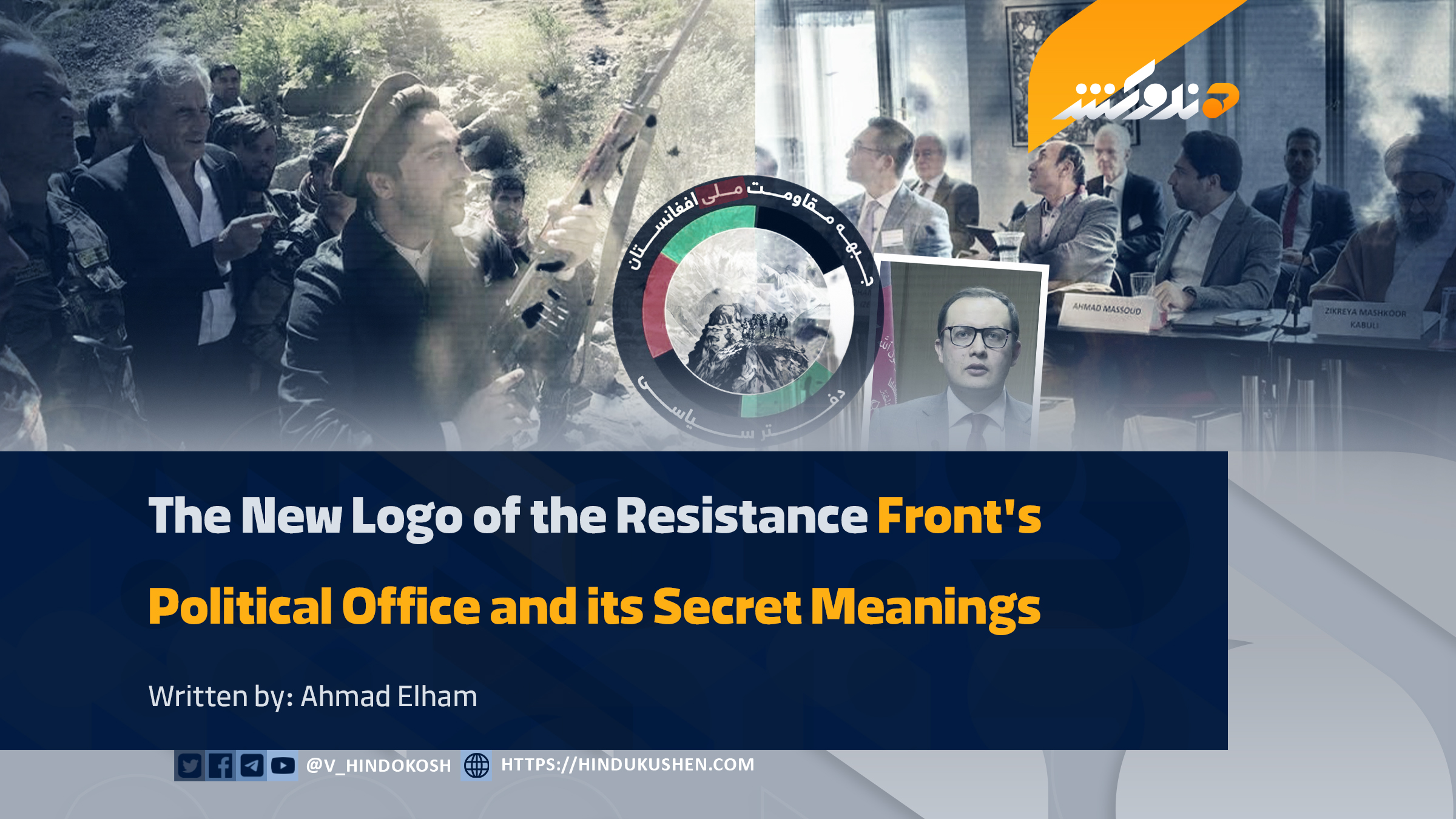
The new logo of the political office of the National Resistance Front, led by Ahmad Massoud, has been released to the media. The logo contains the flag of the National Resistance Front alongside the tricolor flag of the fallen republic, and only one national language is used. This is not just a symbolic change but also carries a clear political message for this group’s supporters.
Symbols represent thought, identity, and future strategy in politics. When a movement declares its political mark, it is essentially trying to declare its core position. The new symbol of the Resistance Front is also like this; it appears simple apparently but is full of meanings and political messages on the inside.
The presence of dual flags and the absence of the Pashto language in this new logo announced emblems are significant points. Pashto is the national language of Afghanistan and a fundamental pillar of national identity. Ignoring a language that is the language of half the population of this land can not be accidental. This action practically conveys the message that this front does not consider itself the representative of all of Afghanistan, but rather the heir to a specific political and linguistic region, and this position has caused concern among Pashtun members and supporters within the Resistance Front.
Another important aspect is that alongside the flag of the fallen republic on the logo, the flag of Rabbani’s era, which is now also the flag of the Resistance Front, has been placed. These two flags represent two different narratives; the tricolor flag is a symbol of a joint formation with other opponents, while the Rabbani flag (which is now the flag of the Resistance Front) carries memories of organizational dominance, exclusionary politics, and internal wars. Combining of two flags shows that the Resistance Front wants to appear closer to other opponents on one hand, and on the other, the Front has not yet emerged from the shadow of organizational thinking and is still under national(!) slogans reproduce the old symbols.
Despite all these signs, some Afghans still support Ahmad Massoud and call him the leader of salvation. This support is not based on Islamic and national thot and political logic but is the result of emotional decisions. This sign from the political office showed that Ahmad Massoud and his inner circle are deeply distanced from the political role of Pashtuns and other ethnic groups. Although this animosity has not yet been openly declared, its signs are evident in the target, language, relationships, and political behavior.
Historical evidence shows that such movements reveal their true intentions only when they come to power, not when they need to gain support. Despite the Resistance Front revealing their true nature prematurely, some blind supporters still fall for the Front’s false slogans and do not separate themselves from their path.
Note: The articles, essays, and comments published by the Voice of Hindukush only reflect the views of the authors & writers and do not necessarily represent the agreement of the Voice of Hindukush.


