








Written by: Arsala Mahdi
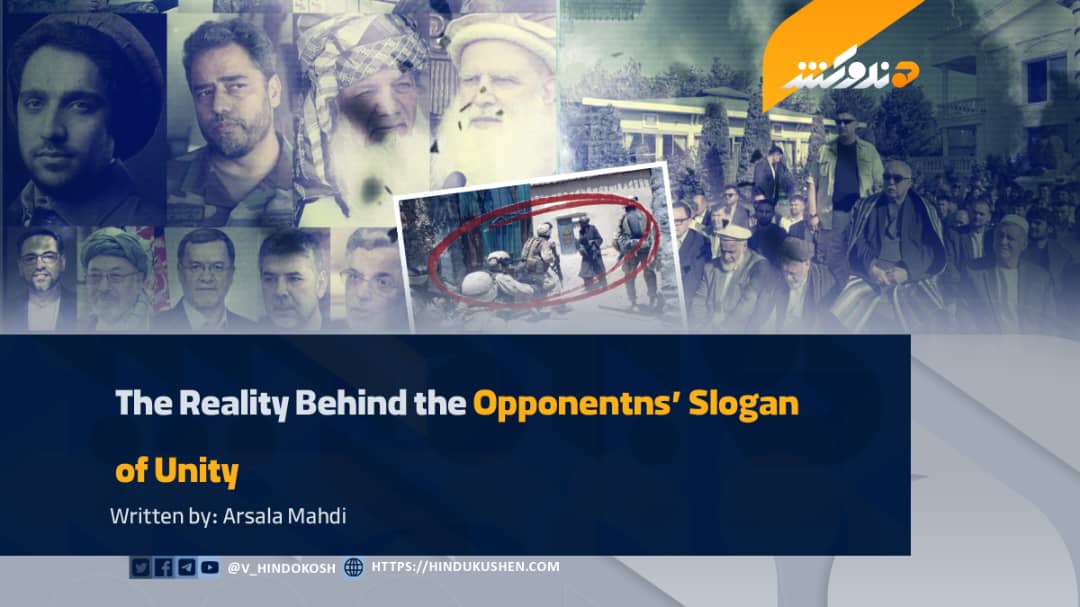
Since the change of power in Afghanistan more than four years passing, while Ahmad Massoud claimed unity among the opponents in his latest propaganda speech, the ground realities are different, and the lack of unity and cohesion among the Afghan government’s opponents remains a topic of discussion. Although there are several political figures, former officials, and parties abroad, they have not yet been able to create a unified political stance or a program that represents all the ethnic groups and political views of Afghanistan. Instead, they are preoccupied with their internal conflicts and the pursuit of personal interests.
The internal divisions among the opponents have caused them to not be considered a strong political force in the eyes of the international community. A major reason for this lack of cohesion is the low level of trust during the past twenty years of the republican regime and the deep rifts among politicians. Many of those who now introduce themselves as opponents are either considered complicit in the failures of the previous regime or operate within the orbit of specific organizational and ethnic interests. The absence of an alternative program from them that offers diverse solutions to the problems has caused the public to remain in an atmosphere of distrust toward the opponents.
Another major challenge in the opponents is the lack of a clear line between “political and military” paths. Some groups are still intent on armed resistance, but in the current situation, they not only face a lack of international support but also the absence of legitimacy and the presence of fear among the people about the repetition of war, which has played a role in preventing this opposition.
Gaining the support of the international community is also another significant challenge for the opponents. The world is currently engaging with the Afghan government and is not looking for an alternative, as the opponents have not yet emerged as an organized political entity. On the contrary, the Afghan government has completed all the stages of recognition. Some opponents expect to play a role in Afghanistan’s future, but they are still victims of their internal conflicts and lack of a common vision, neither internationally credible nor having domestic popular support.
The most important thing is that the opponents seek war and pressure thru foreign intervention to gain power, a choice that in the past sacrificed the country for two decades for the benefit of the invaders. But in the end, these foreign interventions only led to the invaders fleeing and their puppet regime collapsing. The opponents are only thirsty for power and, with the aim of quenching that thirst, they do not want medicine for the people’s pain, a bright future for Afghanistan, or the continuation of an independent Islamic government in Afghanistan.
As an effective alternative path, it is essential for the Afghan government’s opponents to move past previous mistakes and focus on unity for the benefit of the country during this critical time. Stand with the ruling independent Islamic system in Afghanistan, participate in the country’s development, and defend the country’s territorial integrity alongside other compatriots against any foreign enemy.
Note: The articles, essays, and comments published by the Voice of Hindukush only reflect the views of the authors & writers and do not necessarily represent the agreement of the Voice of Hindukush.


