








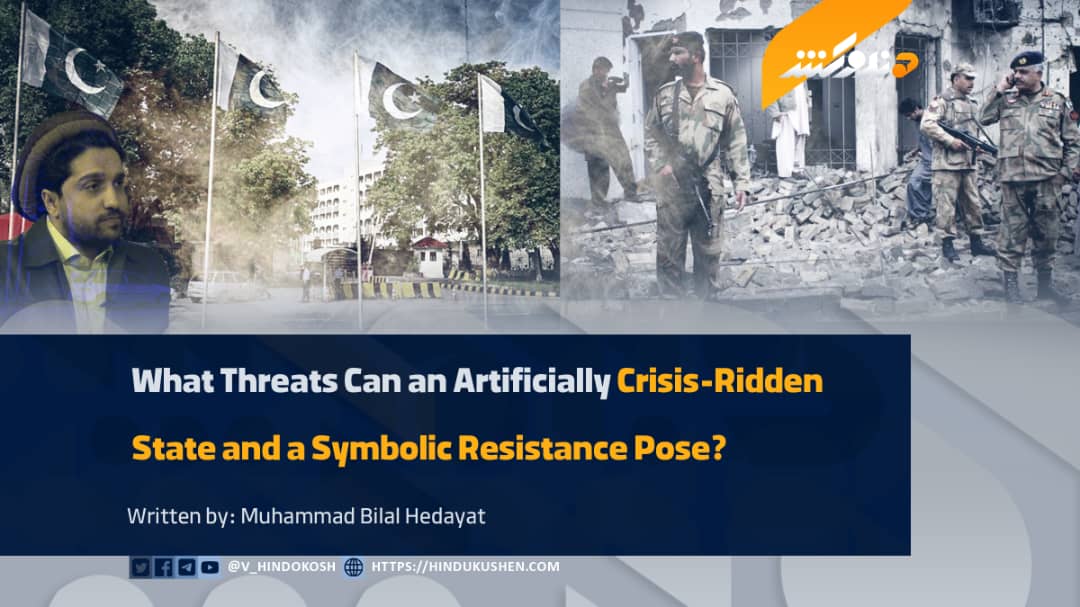
Written by: Muhammad Bilal Hedayat
Afghanistan, a country that, after the dismantling of dependent structures and the collapse of the foreign-imposed puppet regime, has entered a phase of stability, nationwide security, and unity and solidarity; a phase that many consider unprecedented, especially in comparison to past decades. In such an environment, phenomena such as factional wars, severe political fragmentation, and overt intelligence games have completely disappeared, and society, with all its ethnic and social diversity, has come together within a single system.
But this very situation is intolerable for the actors whose political life and interests are defined by the instability of Afghanistan. Those who have fed on war, division, and crisis for years are now faced with a new reality: Afghanistan is no longer an easy playground for external projects. For this reason, the war has shifted from the military field to the field of narratives; a soft, media-driven, and targeted war.
In the meantime, the statements of individuals like some opponents should be analyzed within this framework. The assertion of claims about changing the future map of Afghanistan, or exaggerating the capacity of groups known as the “Resistance,” is more a part of an effort to construct a mental reality than a reflection of a field reality; a reality in which Afghanistan is once again depicted as a crisis-ridden country on the brink of collapse.
But the fundamental question is this: How can a country(Pakistan) that itself is facing internal crises, deep political divides, economic pressures, and regional isolation pose a real threat to a society that has endured decades of war, brought the greatest superpowers to their knees, and has become more sensitive than ever to external projects?
The term “Resistance” in this context has become more of a media concept than a real force on the ground. Movements that have a prominent presence on social media but lack a social and popular base within the country cannot be defined as a threat to a nation armed with the zeal of faith and the support of its people. This is what can be referred to as “paper resistance”; a phenomenon that exists more on screens than in the tangible reality of society.
On the other hand, countries that are viewed with skepticism by many in the region and are sometimes considered as actors dependent on great powers are trying to redefine their internal weaknesses as external threats by producing targeted narratives. This is a well-known pattern in politics: transferring the crisis from within to without.
However, Afghan society has historically shown a different reaction to imposed projects. Not every voice that rises from outside finds reality within, and not every plan designed in external is executable in the field of Afghanistan.
Because the inner essence of the people of Afghanistan, as history has repeatedly shown, is neither changed by propaganda nor brought to its knees by pre-constructed scenarios. This land has been a testing ground for powers that came with all their might, but they could not withstand the will of the people who rose from the depths of hardships.
Any plan built on delusion, distortion, and ignoring the realities of these people will have no fate other than failure and disgrace. This is the essence that, the more it is pressured, the more it is polished; sharper, more cutting, and more decisive than ever.
Note: The articles, essays, and comments published by the Voice of Hindukush only reflect the views of the authors & writers and do not necessarily represent the agreement of the Voice of Hindukush.


