




Written by: Abdullah Abid
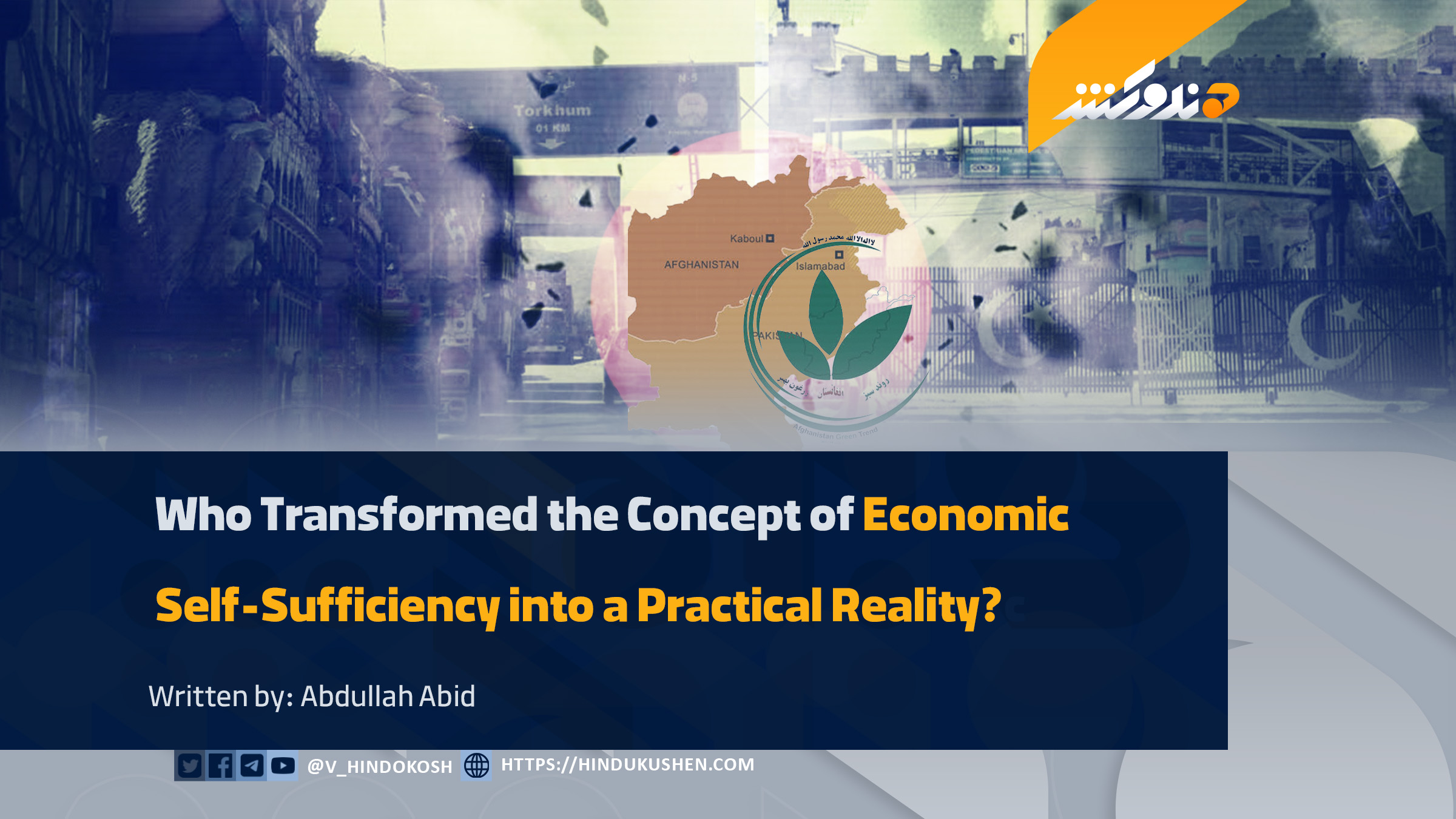
Recently, the “Green Trend” associated with Amrullah Saleh claimed that despite the closure of trade routes with Pakistan, the Afghan people did not face famine, which was due to the “honest and fundamental work(!)” of the previous regime in Kabul. The people are indebted to the sincere and fundamental efforts of the republican regime. In this same paragraph, it also states that the closure of trade routes with Pakistan will most severely affect vulnerable, rural, and urban populations.
There is a clear contradiction in this paragraph. Initially, it states that despite the closure of Pakistan’s trade routes, the Afghan people are safe from the threat of famine, and this is the result of the previous regime’s efforts. However, it immediately adds that these closures are harming the disabled, rural, and urban populations. These two statements are in direct conflict because if the people are safe, how can they be harmed!? This contradiction shows that this propaganda address only satisfies its own complex, misrepresents issues and simultaneously evades the truth.
In another paragraph, it states that rural Afghans have no alternative market for their agricultural products and that Pakistan was the largest market for Afghanistan’s seasonal fruits and vegetables. If Afghans have no other alternative market and the Green Trend is calling on people to consider themselves indebted to the Republic’s efforts, how is that logical? Here, someone claiming to be in the political mainstream doesn’t even understand the logical flow of their own words, and adopts a kind of mystical ignorance toward the people, as if the people are completely unaware of the evils of the republic. During the twenty-year occupation and the institutions built under its shadow (the fallen republic), no one, from the president to the mercenaries, could take such a decisive and resolute stance against Pakistan.
So now Afghans are practically experiencing a command. The will of the people is present in this ban, markets, transactions, and all aspects of life are proceeding normally. The Afghan people witnessed the rule of the fallen republic, when the Torkham gate would be closed, no one could fulfilll the basic necessities of life, even protests would start, slogans would be raised against the regime, and they would demand the opening of the gate. However, now every citizen of the people praises and welcomes this kind of policy toward Pakistan.
Conversely, this is the first time in Afghanistan’s economic history that the demand for the opening of the gates is coming from the people of Pakistan, and their government is making various direct and indirect efforts to create reasons or ways to convince the Afghan government to reopen.
The level of damage to Pakistan has reached unprecedented heights, with fruits and vegetables being swept into rivers, and reports of losses rather than gains from land crops. In fact, the Afghans themselves found alternative routes and markets thru the efforts of the current government of Afghanistan. Now they have no problems related to exports and imports. All routes except for Pakistan are open, and the people’s problems have been resolved thru them.
Regarding the Karachi port issue, Pakistan is trying to pressure the Afghan government thru Afghan traders to show that it is the Afghan government’s responsibility that your commercial goods are stuck, and is attempting to absolve Pakistani authorities from blame and criticism in this way. Amrullah Saleh is leading the war of Pakistan against Afghanistan. In his think, there is a reflection of the Pakistani regime’s policies.
The port of Karachi is first and foremost an economic and technical issue. The public’s mind should not be sacrificed to complexes, political failures, and one-sided analyzes. Sound analysis is that which examines facts separately, causes accurately, and results impartially, not that personal stances are presented in the name of public pain.
Note: The articles, essays, and comments published by the Voice of Hindukush only reflect the views of the authors & writers and do not necessarily represent the agreement of the Voice of Hindukush.