




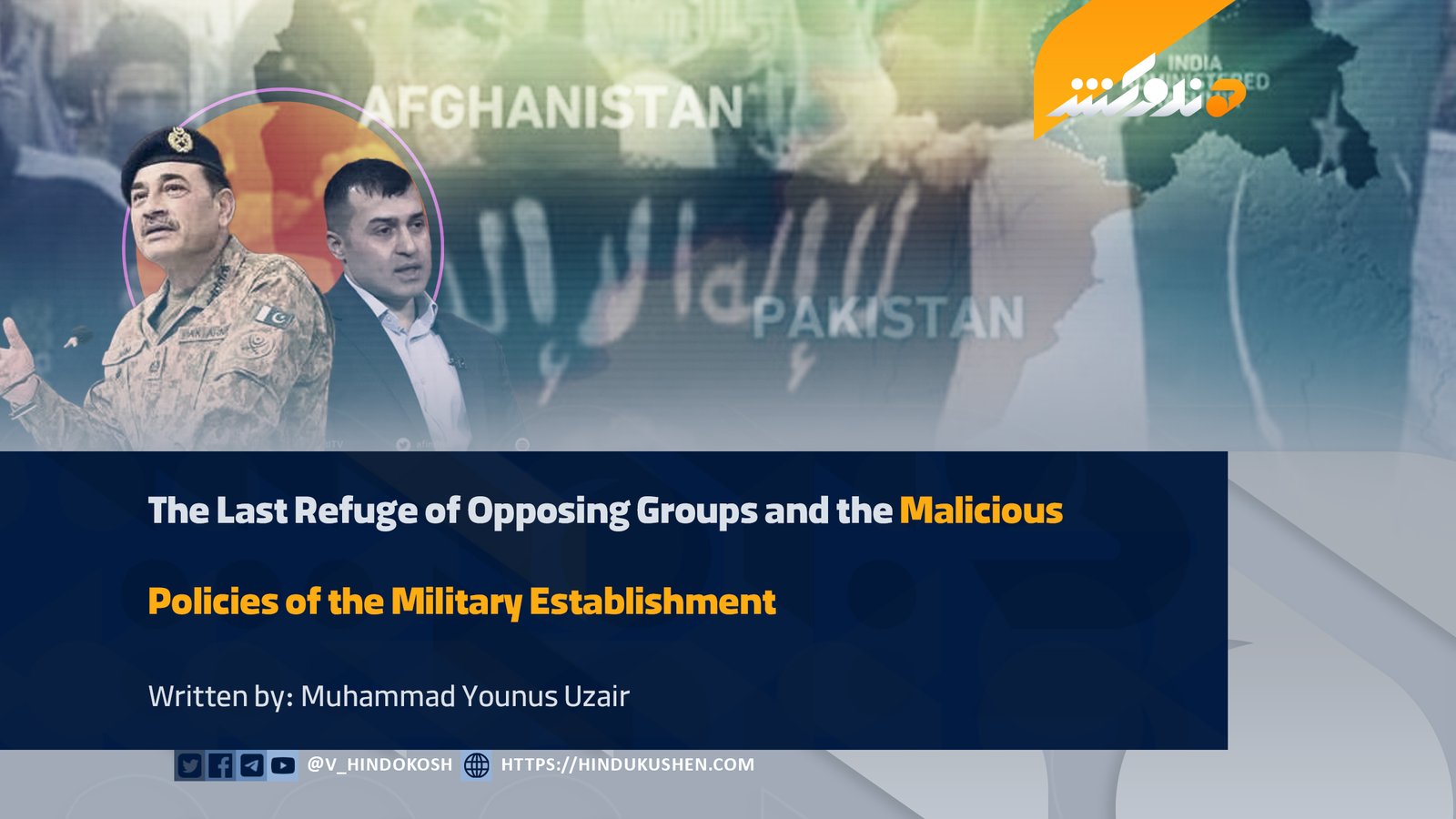
Written by: Muhammad Younus Uzair
Recently, the so-called fronts have once again intensified their disputes and are revealing the secrets and matters they previously shared during their friendship. On the other hand, the countries where they have sought refuge do not view them as true opponents either; rather, they are gradually being expelled from each country and their chances of remaining are being taken away.
The stance of many countries in the region and the world is also not positive toward the opponents. Now, only Pakistan remains for the opponents, but it also only benefits from them for its own purposes and uses them against Afghanistan; otherwise, their presence holds no benefit for other countries, and this burned pawn is no longer usable.
Time will show that they will have no place to seek refuge in the future, because Pakistan, which has given these groups shelter, will eventually realize that this game is ultimately against its own interest.
In the military-controlled Balochistan, Turkey has captured a leader of the ISIS group named Oghur Bahadur during an operation and transferred him to Turkey. This is not the first time, as members of the ISIS group have previously been captured by Turkey in this region, raising significant questions. The important question is, who is behind these groups? And has Pakistan really provided the conditions for the activities, training, and hideouts of ISIS and other irresponsible armed groups? These are the questions that the countries in the region must seriously consider and understand the realities.
On one hand, Pakistan makes unfounded accusations against Afghanistan, but on the other hand, the activities of irresponsible armed groups under the control of the military regime are significant, directly and openly threatening Afghanistan and the region, putting their security at risk.
The Pakistani military regime must understand that training, using, and threatening other countries with armed groups will not yield any good results for them. The military regime has always tried to achieve its goals through deceit, trickery, and double-faced policies; but now it is gradually suffering heavy losses from the consequences of these policies.
Pakistan, instead of solving its internal problems, interferes in the affairs of other countries or adopts a policy of pressure on others, so it should evaluate the consequences, because internal problems inevitably lead to military circles. Not only in Afghanistan, but the policy of military encirclement against the entire region is a harmful policy.
The military regime recently closed the border with Iran, but when it realized the value of its economy and commercial market and understood how important trade relations with Iran were, it resolved the issue through negotiations and reopened the border. All these actions indicate that Pakistan’s politics largely revolve around its short-term interests. They try to create problems with others, but when it comes to solving their own problems, they still rely on those very countries.
On the other hand, Pakistan’s actions and policies regarding Afghanistan provide the Afghan government with the opportunity to strengthen its position in terms of independence, security, and national sovereignty. These harmful policies of Pakistan are not detrimental to Afghanistan in one respect; rather, in some areas, they have led to increased unity among the Afghan people and greater support for their government.
The true face of the so-called opponents groups has been exposed to the world, and it has become clear that these groups are now fighting solely for the military regime’s intelligence interests. Just as these groups have become detested among the people, they will also become detested in the remaining countries, and their phase of extinction will begin.
Note: The articles, essays, and comments published by the Voice of Hindukush only reflect the views of the authors & writers and do not necessarily represent the agreement of the Voice of Hindukush.