




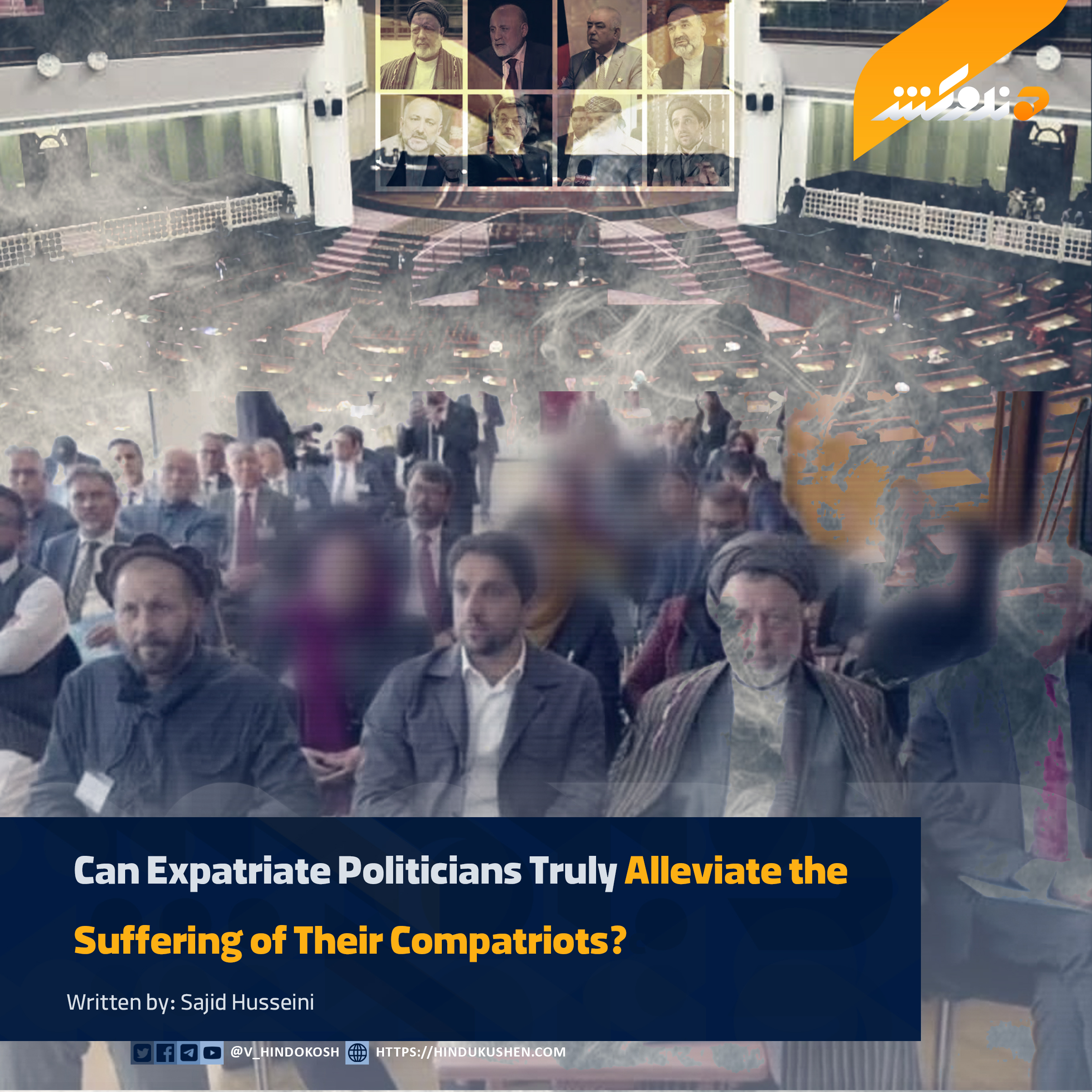
Written by: Sajid Husseini
The story of the migration and displacement of the people of Afghanistan is not a tale of today or yesterday; rather, it dates back many years. It began when Afghanistan was occupied by the Soviet Union, followed by the period of devastating internal wars, and subsequently the twenty years of the Republic; a time when people were forced to leave their homeland to protect their lives and property and sought refuge in foreign lands.
In the meantime, some, after the collapse of the Republic regime, preferred to flee rather than face justice due to their disgraceful records, escaping to other countries; perhaps in this way, they could continue their humiliating lives for a while, away from justice.
In recent days, some of these figures, such as Halim Fadai, have stated that Afghans did not migrate of their own free will, but rather that reasons and constraints forced them to do so. Therefore, an independent ministry should be established for expatriate Afghans to encourage them to invest, educate, and progress.
Before addressing the demands of these individuals and their seemingly compassionate remarks, it should be noted that currently, Afghans living outside of Afghanistan can be broadly divided into two categories: some have gone to other countries due to poverty and destitution, the pursuit of better income, or the insecurity during the Republic era; and others left Afghanistan after the collapse of the Republic and sought refuge with their patrons.
Without a doubt, the Afghan government has done everything within its power for the first group mentioned, and we witness its daily activities aimed at providing better services to the migrants; unlike the notorious figures who held key positions in the previous government and fled after its fall, and who now, not only do not take any steps for the benefit of their people and country, but like when they were in power, they recognize no red lines in securing their personal interests and sacrifice everything.
Now the question is whether these individuals, by making such slogans, are thinking of healing the pains of the people of Afghanistan or not; is there a bitter truth hidden behind these seemingly beautiful words? A question that can be easily answered by examining the past of each of these individuals, comparing their claims and actions.
Truly, how do those figures, each of whom, during their time in power, not only did not seek to heal the nation’s pain but were the main cause of its suffering, now present themselves as the nation’s sympathizers?
Wasn’t it during the rule of these very people that millions were forced to emigrate and leave the country? In an era when a young person could be executed for the slightest offense, weren’t there many traders who, fearing for their lives and property, fled to other countries, and by withdrawing their investments from Afghanistan, not only suffered themselves but also caused hundreds of other young people to lose their jobs and livelihoods?
Now, how do these individuals present themselves as the sympathizers of the migrants and beat the drum of benevolence? While they themselves were the cause of this situation and until the last moments of their rule over Afghanistan, they had no concern other than securing their personal interests.
Ultimately, it must be said that the claim of establishing an independent ministry for migrants outside Afghanistan, although it may seem compassionate at first glance, when voiced by those who were part of the system that caused millions to flee, resembles more of an attempt to restore their image and justify their presence abroad than a sincere proposal for the public good.
Without a doubt, those who once held power and did not want to prevent the people’s misery cannot today play the role of savior with beautiful words; rather, real hope lies in the hands of the people who, despite all hardships, strive for the glory of the homeland, both inside and outside the country, not in the hands of those whose past is a testament to distrust.
Note: The articles, essays, and comments published by the Voice of Hindukush only reflect the views of the authors & writers and do not necessarily represent the agreement of the Voice of Hindukush.