




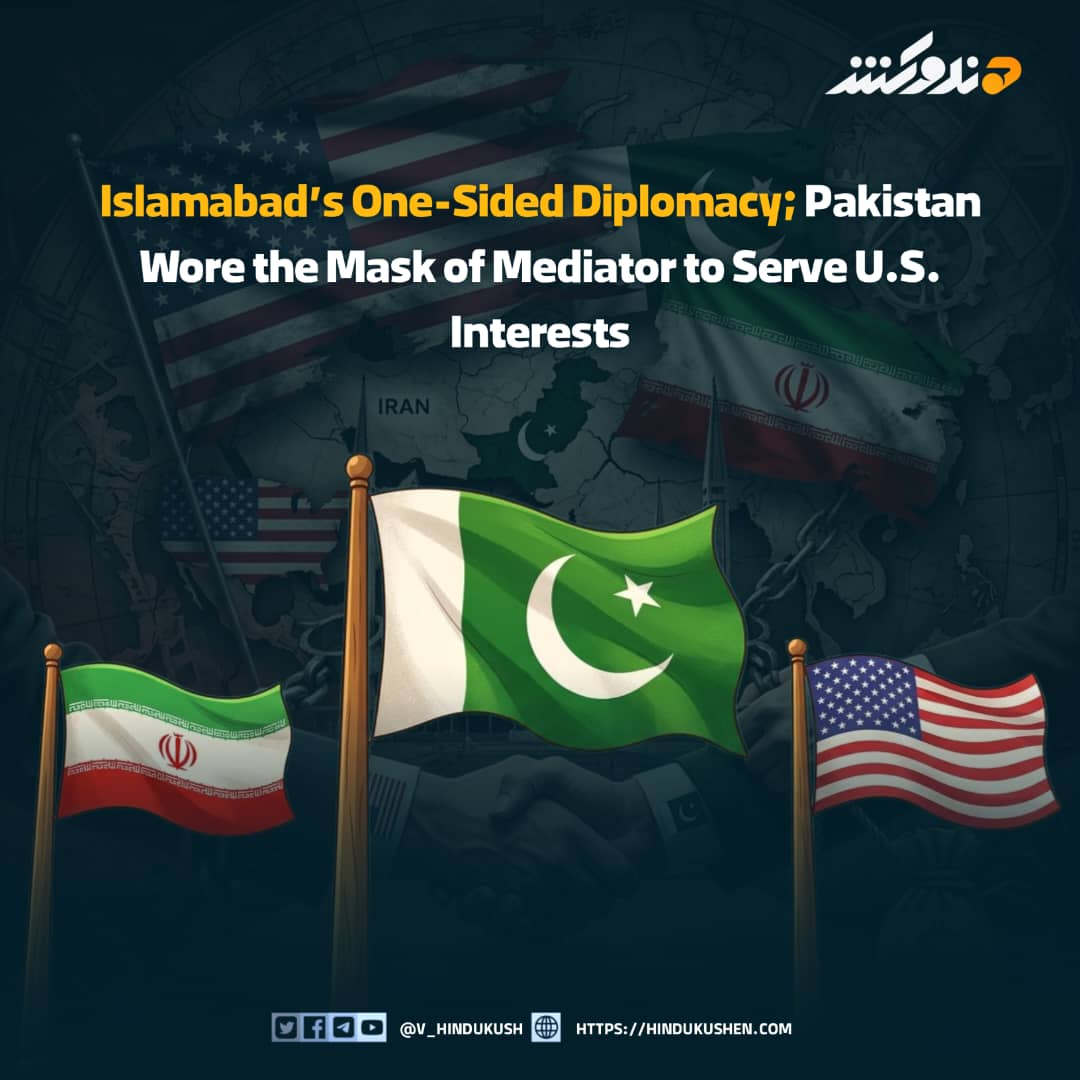
The 21-hour failed negotiations between Iran and the United States, held in Islamabad under Pakistan’s mediation, instead of contributing to regional stability, raised serious doubts about Pakistan’s role, suggesting it acted not as a neutral mediator, but as a covert messenger for Washington.
According to analysts, Pakistan’s approach during the Islamabad talks was clearly influenced by U.S. demands. Rather than maintaining a balance between both sides, Pakistan largely exerted pressure on Tehran to accept the conditions proposed by the United States.
Experts believe that Pakistan’s severe economic situation and its dependence on loans from international financial institutions such as the IMF compelled the country to side with Washington instead of remaining neutral in these negotiations.
Pakistan’s exaggerated claims that the talks had saved the world from a major war now appear to be nothing more than hollow assertions, aimed at buying time for Washington. The negative outcome of the negotiations made it evident that Islamabad was not pursuing a genuine resolution, but rather staging a “performative calm” to serve U.S. strategic objectives.
The failure of the 21-hour talks highlights not only the weakness of the mediator’s capabilities but also the one-sided nature of the agenda. It became clear that Pakistan’s proposals were largely based on U.S. “red lines.” The mediating party offered no practical guarantees regarding Iran’s legitimate concerns, such as the lifting of sanctions, and Pakistan’s role appeared not as an independent mediator, but as an instrument of U.S. pressure.
This failure demonstrates that Pakistan, due to its political and economic constraints, cannot remain impartial in such sensitive matters. The “one-sided effort” in Islamabad shows that unless a mediator is free from the financial and political influence of major powers, its efforts will merely benefit one side (the United States) while leading to the frustration of the other.
In conclusion, the collapse of the Islamabad talks reflects the reality that Pakistan attempted to please the United States at the cost of its own credibility. This situation not only undermined Iran’s trust but also proved that at the Islamabad table, the priority was not regional security, but the interests of external powers.