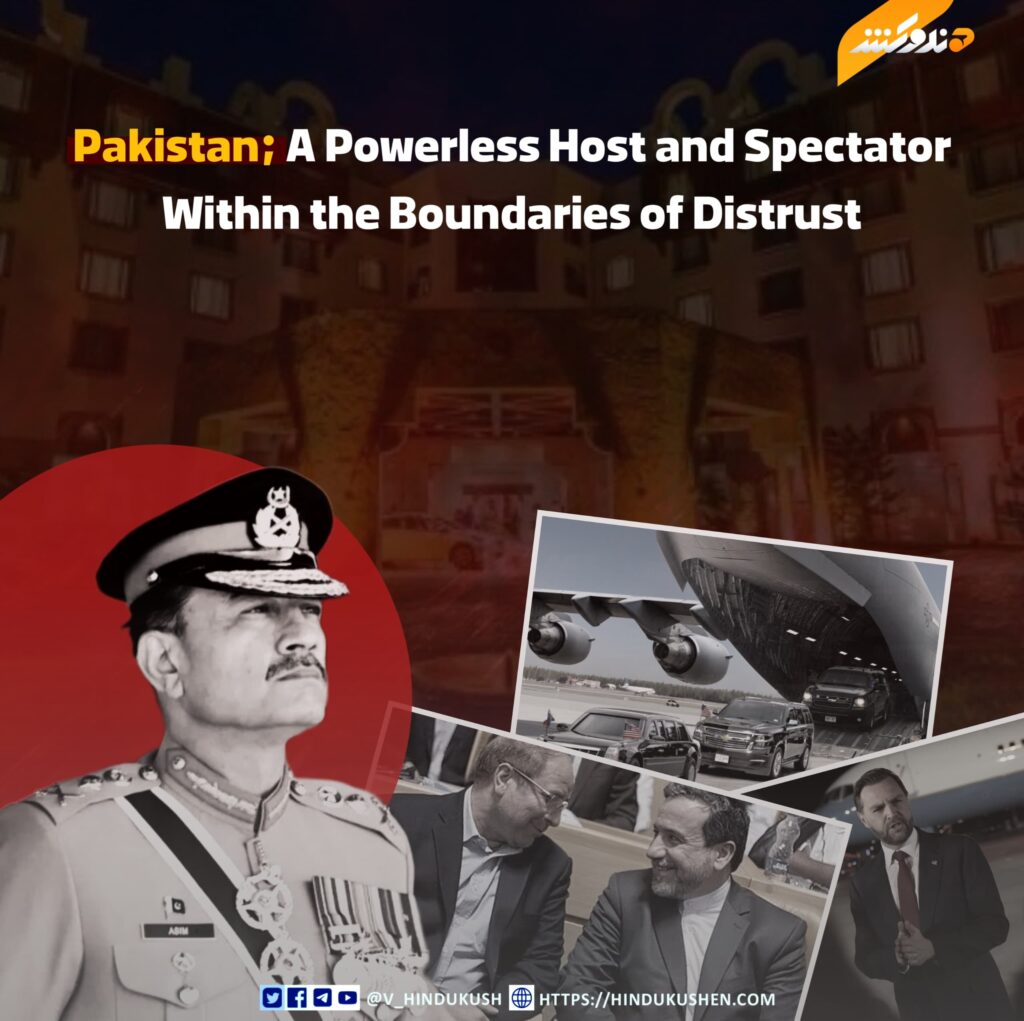
Islamabad will soon host important negotiations between the world’s two fierce rivals, the United States and Iran, but this hosting is overshadowed by a historical mistrust. Although the Pakistani government is trying to showcase this meeting as a major diplomatic success, the ground realities tell a different story. The choice of Islamabad for the meeting between the American and Iranian delegations was not due to the stability of the country, but rather because it is a “neutral and unaligned geography,” where both sides rely on their own security teams and equipment instead of trusting the host’s security and intelligence capabilities.
The unprecedented measures taken by the United States for these negotiations are a clear indication of Washington’s deep distrust in Pakistan’s security institutions. The United States, not only relying on local security forces for the safety of its diplomats, has also sent its own armored vehicles, advanced ambulances, and even electronic countermeasure devices directly from Washington to Islamabad thru large logistical aircraft. The fact that American security teams take full control of the negotiation locations and routes sends a message that Washington is facing the fear of infiltration within Pakistan’s security ranks and the leakage/disclosure of sensitive information, and does not view its host as a protector and guarantor.
Islamabad’s famous Serena Hotel has now taken on the form of a military camp, where entry is prohibited for Pakistani citizens and even regular security personnel. The complete evacuation of the hotel and the removal of Islamabad’s police and ordinary soldiers from the area show that international powers want only those whose loyalty has been proven to them to be present at the negotiation table within a few hundred meters. This unprecedented security atmosphere, in which the role of Pakistani forces is limited to distant observation and traffic control, has seriously questioned Islamabad’s sovereignty and shown that in this sensitive matter, Pakistan is merely a tenant.
On the other hand, the senior Iranian delegation also views the Pakistani military regime with suspicion, and their presence is only tied to China’s political guaranty and the direct commitment of the Pakistani army chief. Mohammad Baqer Qalibaf and his accompanying team prefer to stay within the diplomatic compound of their embassy rather than at the Serena Hotel, in order to be safe from potential intelligence traps and espionage by the host country. The Iranians, like the Americans, have brought their own special guards and technical experts to prevent any information theft by the host; this means that Tehran also sees Islamabad as a player who might trade the secret details of negotiations with other countries for its own interests.
The technical warfare is a significant aspect of distrust in the atmosphere of Islamabad, where both sides have nearly paralyzed all communication frequencies in the region by deploying their independent jamming technical systems. The fact that the U.S. and Iran do not trust Pakistan’s technology and space and use their electronic defensive shields indicates that the host is not even allowed to control its own frequencies. In an environment where guests view the host’s food, internet, and security with suspicion, trust means nothing more than a diplomatic lie!
This historic meeting of the current year carries a bitter truth for Pakistan; remaining as a geopolitical pawn whose land is used for the world’s major games, yet still not being recognized as a “reliable partner” at the negotiating table. The fact that both the United States and Iran manage their security, logistics, and communications independently clearly indicates that Pakistan is recognized globally as an unreliable intermediary, seeking to salvage its shattered economy and credibility merely by offering its territory. These negotiations might either bring a ceasefire to the region or another wave of conflict, but the lesson for Islamabad will be that diplomatic success lies not just in sitting two parties down, but in gaining genuine international trust.