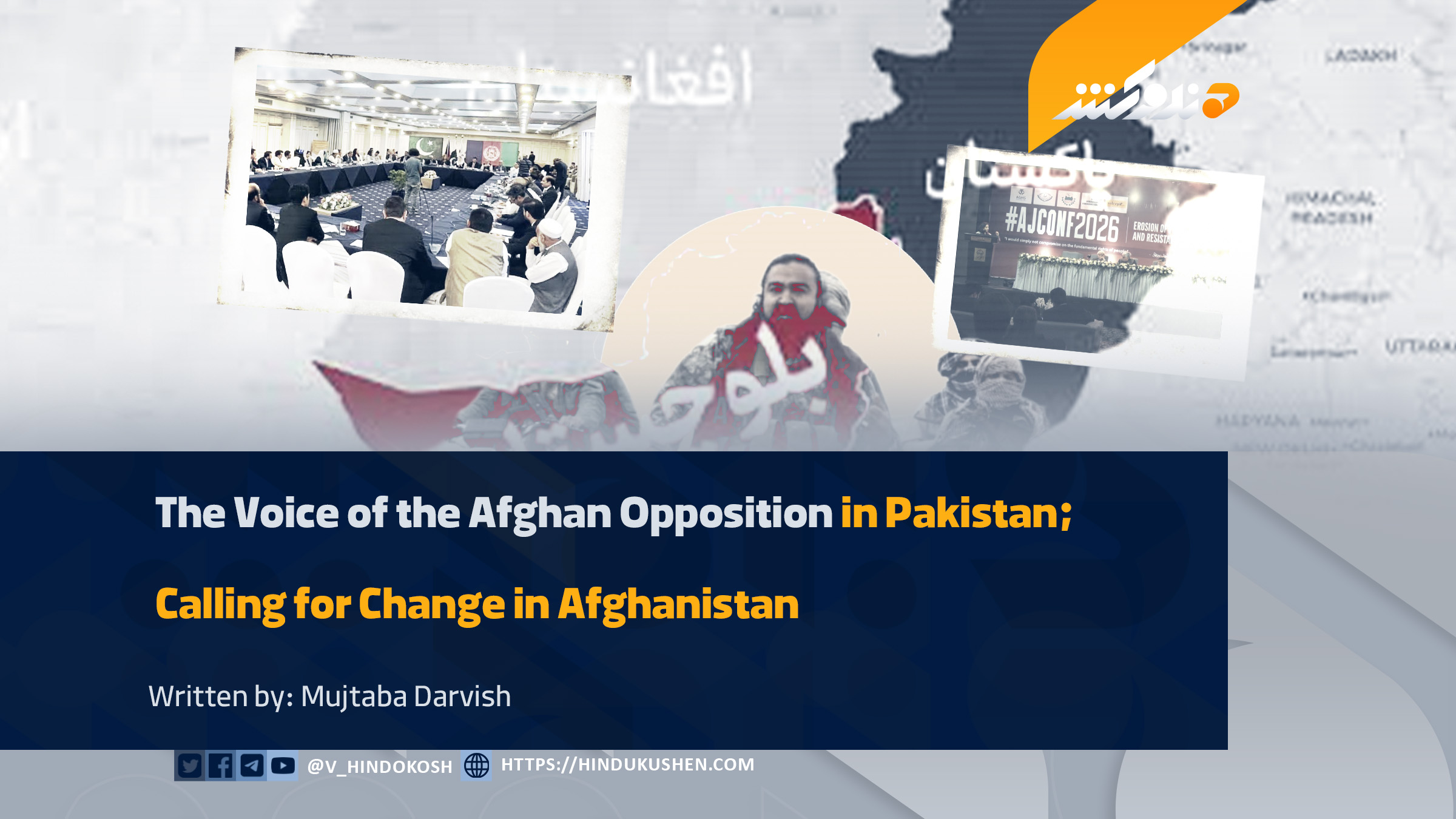
Recently, Pakistan hosted the sixth annual “Asma Jahangir Conference” in Lahore; a meeting that ostensibly carried the slogan “Erosion of Fundamental Rights and Transnational Resistance,” but in practice, once again turned into a scenario for presenting political stances against Afghanistan.
In this meeting, Fawzia Koofi also attended. She called Pakistan’s three-decade policy toward Afghanistan a mistake and considered Islamabad’s current engagement with the current government a repetition of the same error. Koofi also urged the Pakistani government to support anti-government movements so that regional and international pressure on Kabul increases. Then, in an interview with Pakistani media, she claimed that the people of Afghanistan are in a state of “hostage-taking” and that the world has forgotten them.
The mentioned conference, with these programs and titles, is being held in Lahore while human rights and the rights of minorities in that country are widely violated and trampled upon. The deprivation of the Baloch and Pashtun communities of all their basic rights and their ruthless killings by the Pakistani army is a small glimpse of the thousands of behind-the-scenes crimes and human rights violations in that country.
However, one must first ask: What position does Pakistan hold to convene such a meeting? A country that has faced widespread criticism for years regarding its treatment of religious, ethnic, and political minorities; a country where Baloch and Pashtun activists speak of detentions, disappearances, and security restrictions; a country where journalists and political critics face overt pressures—how does it present itself as a defender of “fundamental rights” for the region?
If this conference truly cares about human rights, why were the voices of protesters and minorities within Pakistan not reflected in it? Why, instead of addressing internal crises, was the focus placed on the Afghanistan issue and the invitation of notorious and fugitive figures from Afghanistan? This choice is not accidental; rather, it shows that the discourse of human rights in such meetings is more of a tool than a principle and has taken on a political function.
In this context, the presence of Fawzia Koofi is also questionable. Fawzia Koofi, who before the rise of the new government in Afghanistan engaged in the most dangerous international illegal activities and was known as the largest mafia and drug trafficker, how does she sit today in the seat of human rights defense and weave rights and entitlements for other nations!? This question is not just a political debate; it pertains to the issue of the credibility and legitimacy of the human rights discourse in such gatherings. When figures with controversial and criticized backgrounds assume the role of claimants of ethics and justice, it is natural for public opinion to doubt the true objectives of these gatherings and perceive them not as an impartial effort, but as a directed and political movement.
Ultimately, it should be noted that Afghanistan is an independent country with political, economic, and security stability. Pakistan, instead of trying to tarnish the true image of Afghanistan and inviting its notorious fugitives, should focus on its own political, economic, and social problems and respect the rights of minorities and religions instead of discussing human rights violations.
Note: The articles, essays, and comments published by the Voice of Hindukush only reflect the views of the authors & writers and do not necessarily represent the agreement of the Voice of Hindukush.