




Written by: Ahmad Sahebi
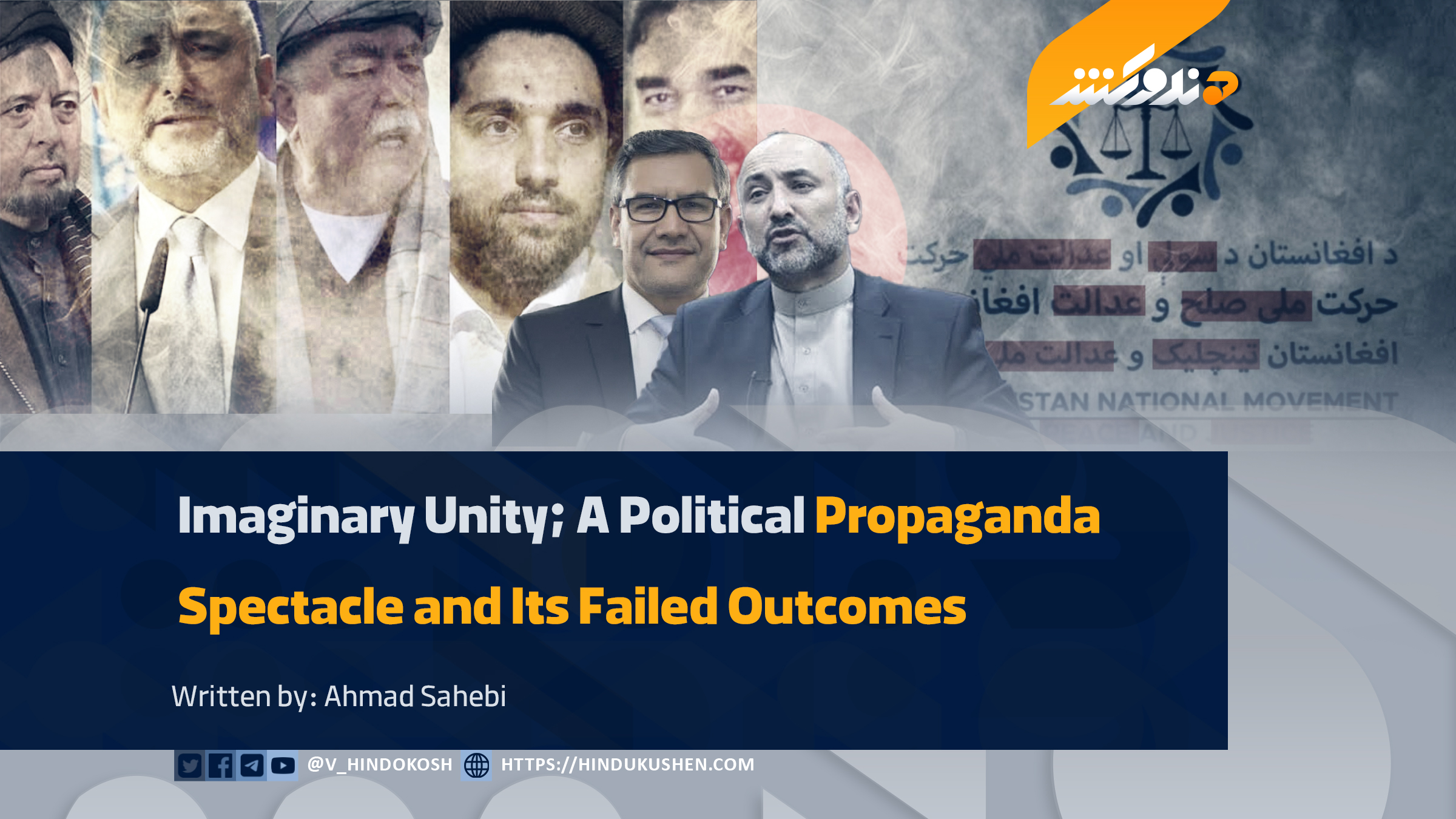
A few months ago, fugitive figures stirred up a commotion after a staged gathering on social media, suggesting that political figures opposing the Taliban had come together and that there were no differences among them. After the publication of this news, many media outlets, which did not have a precise and thorough understanding of their nature, fully accepted and reflected these claims, creating the illusion that a cohesive and coordinated front was forming.
But, “Voice of Hindukush” from the very beginning, considering the background and track record of these individuals, regarded this alliance more as a propaganda slogan than a lasting reality, and spoke of the deep hidden differences among them.
In those days, the slogan “Unity for Salvation(!) Of Afghanistan” was widely repeated on social media. There was talk of convergence, moving beyond the past, and setting aside historical differences, and an effort was made to present a new image of a cohesive and harmonious movement. But these slogans had more of an advertising flavor than a practical and structured program because neither a clear common charter was presented nor a specific strategy for the future was outlined.
Now that a few months have passed since that staged gathering, signs of discord are becoming apparent one after another. What was denied yesterday is being admitted in their own words today. For example, Hanif Atmar has officially announced that due to serious internal conflicts, five out of the seventeen members of the Peace and Justice Movement (!) They have parted ways. This confession is just a glimpse of the rifts that existed from the beginning but were kept hidden under the guise of unity slogans.
The reality is that these figures do not have deep and lasting intellectual, political, or even personal commonalities. Each of them has entered the scene with different and sometimes opposing backgrounds, and their political pasts are filled with competition, distrust, and even direct confrontation with each other. How can we expect those who have competed against each other in the political arena for years due to their personal interests to suddenly achieve a stable and honest alliance?
One of the main reasons for their inability to get along with each other is personal gain. Many of these individuals, rather than thinking about a national goal, are more concerned with maintaining their personal status, name, and influence. In such circumstances, any collective decision is accepted only when it serves their personal interests; and as soon as they feel their desired share or role is diminished, they choose the path of separation.
Another factor is the lack of a common and defined goal that can unite everyone around a real axis. Merely opposing a regime cannot, by itself, be the foundation of a stable coalition. Unity makes sense when it is based on a shared program, values, and vision; whereas in this group, which we occasionally hear about uniting, each faction is seeking to serve a power and fill its own pockets.
Alongside these factors, a sense of selfishness, ambition, and competition for leadership has also deepened the divides. Each one considers themselves more deserving than the other to lead the movement and is unwilling to remain in the shadow of the other. Therefore, what was yesterday called a “historic union” with great fanfare has today turned into a list of separations and admissions of differences. The experience of these past few months has shown that an alliance without honesty, without a plan, and without a common goal is more of a short-term media spectacle than a political reality.
Note: The articles, essays, and comments published by the Voice of Hindukush only reflect the views of the authors & writers and do not necessarily represent the agreement of the Voice of Hindukush.