




Written by: Anas Majidi
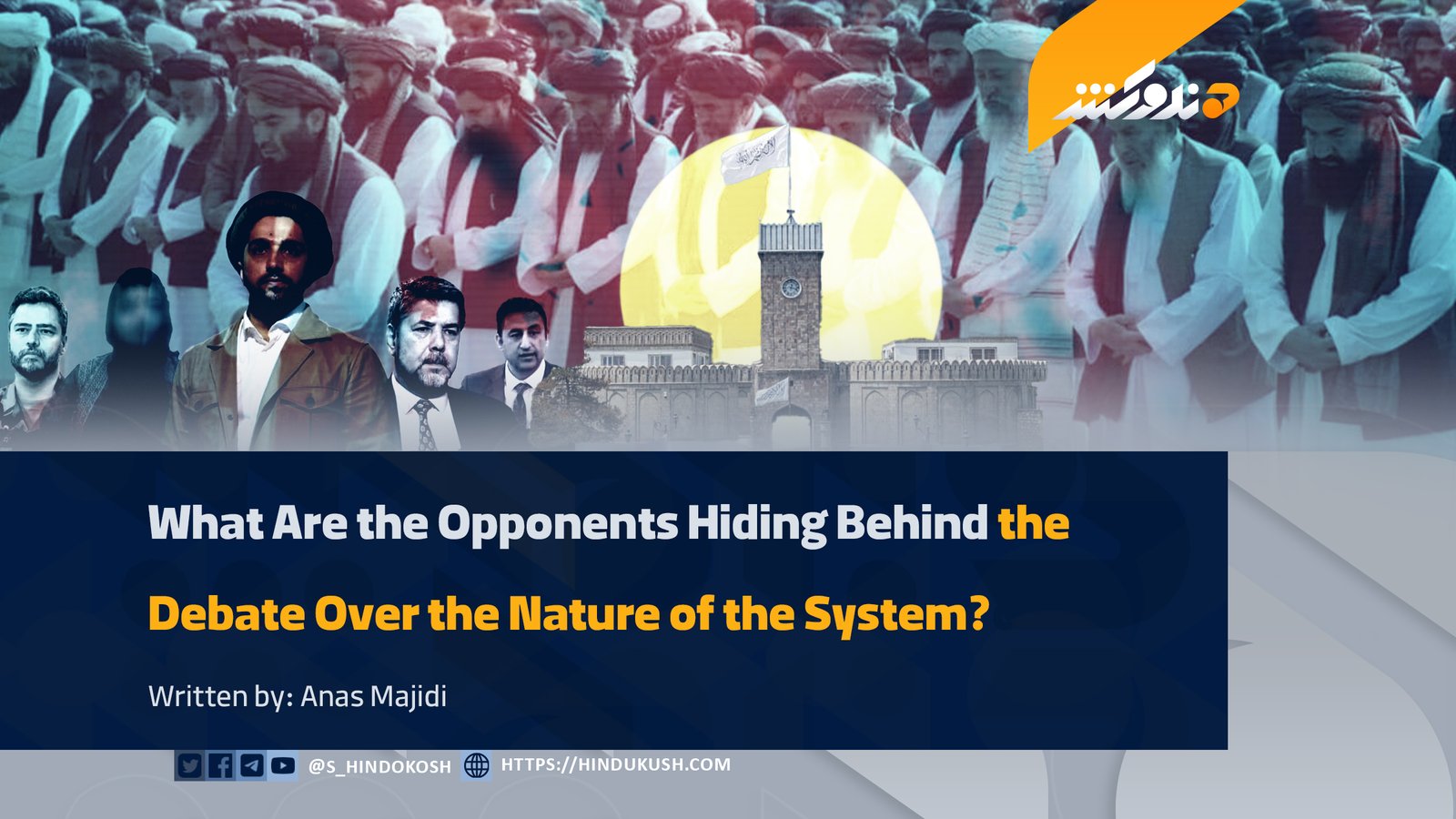
Political opponents based abroad, particularly the so-called Resistance Council, have repeatedly called for conditional negotiations with the Afghan government and claimed that the main issue between the two sides is the type of future political system. Although to some the structure of the system and the distribution of power seem to be a fundamental discussion, when one looks closely at the past actions of these groups, their deep internal differences, and their current dynamics, it becomes clear that there is a significant logical contradiction between the slogans being raised and the actual realities on the ground. A deep investigation into this contradiction reveals that the main focus of the issue is not the type of system, but rather the struggle for political destiny and influence.
The first and biggest logical obstacle to the claims of these groups is the lack of consensus and a unified vision among themselves. In the past nearly five years, the Afghan government opposing factions have never been able to organize a comprehensive and joint meeting, including all factions, that would at least be credible for themselves. When such proxy groups lack the capacity for joint work in their internal relations and do not gather with their like-minded individuals on a common agenda, their claim to manage and lead a stable political system for the entire country becomes logically baseless and questionable.
Another fundamental gap is that the opponents have not presented any comprehensive, clear, and definite alternative plan for the current system during this entire period. They talk about the type of politics and system without presenting anything new among themselves or clarifying the frameworks of potential events. The lack of a practical and consensual plan proves that their discussions about the system are limited to general and slogan-like terms, such as democracy or federalism, in order to cover up their empty hands and the absence of a program.
On the other hand, the unprecedented increase in new parties, councils, and fronts abroad recently indicates that, instead of a shared goal and direction among the opponents, the demand for personal gains is much higher. This fragmentation, instead of representing a great cause, presents an image where every warlord and every small group tries to assert themselves separately in order to obtain new financial and political projects from foreign countries and intelligence sources. At the expense of national interests, this expectation and nurturing of foreign projects have resulted in neither domestic public trust remaining for them nor the international community viewing them as a serious and credible alternative force.
Therefore, it can be confidently stated that the main point of contention between the Afghan government and its opponents is not the form of the system, but rather the desire for a share of power and the preservation of personal political survival. Those warlords who today criticize the current government’s structure were themselves in the highest positions of power over the past twenty years, but they failed to establish a justice-centered and genuine popular system. For them, the type of system is merely a tool for political pressure and transactions, to pave the way for regaining their former privileges in the new structure of power.
The stances of the Afghan government’s opposing factions will not gain weight in the scales of history until they have practically abandoned their personal and factional interests. The discussion about the type of Afghanistan’s future political system can only be logical and legitimate when its proponents first provide practical evidence of genuine unity, a unified plan, and liberation from foreign projects among themselves. As long as this fundamental change has not occurred, their claims will remain confined to private meetings and press releases in foreign halls and will have no positive impact on the actual situation in the country.
Note: The articles, essays, and comments published by the Voice of Hindukush only reflect the views of the authors & writers and do not necessarily represent the agreement of the Voice of Hindukush.