




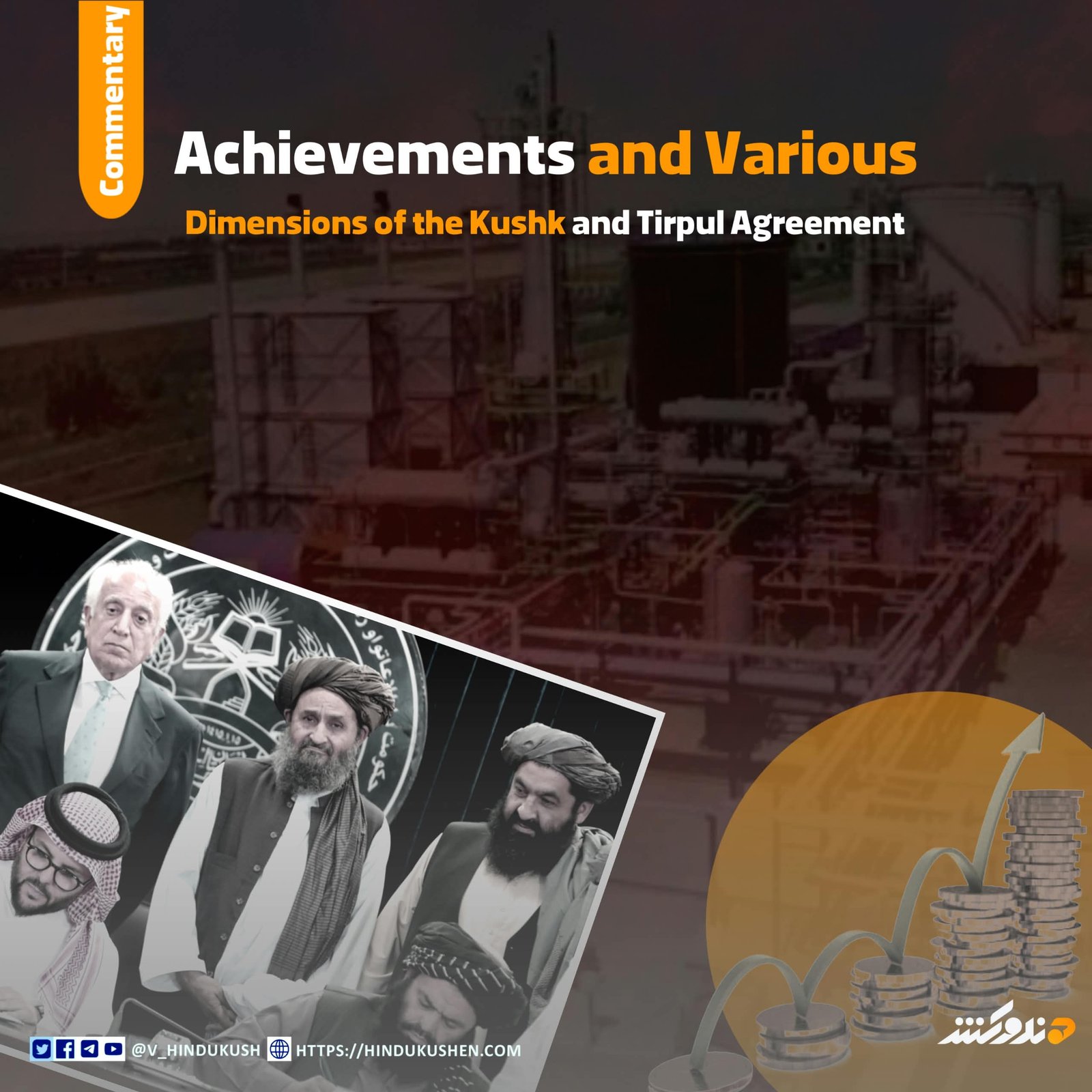
The agreement between the Ministry of Mines and Petroleum and Saudi Arabia’s Delta International Energy Company for gas extraction and pipeline construction is an important development in the country’s economy and energy sector. Under the agreement, the major Saudi company will undertake the exploration, assessment, and extraction of natural gas in the 22,000-square-kilometre Kushk and Tirpul area between Herat and Badghis provinces.
From a security perspective, this agreement can be regarded as evidence of security in Afghanistan. Saudi Arabia also maintains good relations with other countries in the region and engages in various forms of military cooperation with them; however, it has not been willing to make such large-scale investments there because those countries lack security. Afghanistan is currently one of the countries in Asia where nationwide security has been established, encouraging foreign investors to enter into long-term investment agreements.
From an economic perspective, the agreement can be considered a tangible indication that a path is opening for international investment in Afghanistan’s energy resources. The initial investment of $200 million, with the potential to expand to as much as $10 billion over a period of ten years, could help Afghanistan reduce its dependence on imported gas and external energy sources. The extraction of natural gas will not only provide electricity and energy to the Herat Industrial Park and surrounding economic areas, but will also create new and professional employment opportunities for thousands of Afghan young people.
From a political and geopolitical perspective, the substantial investment by a reputable private Saudi company indicates the beginning of a new chapter in Afghanistan’s economic relations and diplomacy. The presence of influential figures at the signing ceremony of this memorandum of understanding, as well as the attention of Gulf countries, demonstrates that important countries in the region seek to establish formal and long-term economic and commercial relations with Afghanistan. To a considerable extent, this can strengthen Afghanistan’s international relations and engagement, increase indirect political confidence, and send a positive signal to foreign investors.
This achievement can play a significant role in increasing Afghanistan’s national domestic revenue and advancing self-reliance. The professional exploration of the country’s natural resources can place national treasury revenues on a more stable footing. The signing of the nearly 25-year agreement between the Ministry of Mines and Petroleum and Delta Energy represents a fundamental step in Afghanistan’s economic development and helps remove obstacles to its economic transformation.
With proper technical management, transparency, and effective implementation of this historic economic agreement, the country’s natural resources can be utilized appropriately and play a fundamental role in national reconstruction. This, in itself, is a reassuring step toward transforming Afghanistan from a recipient of foreign aid into an economy that relies on sustainable investment.