




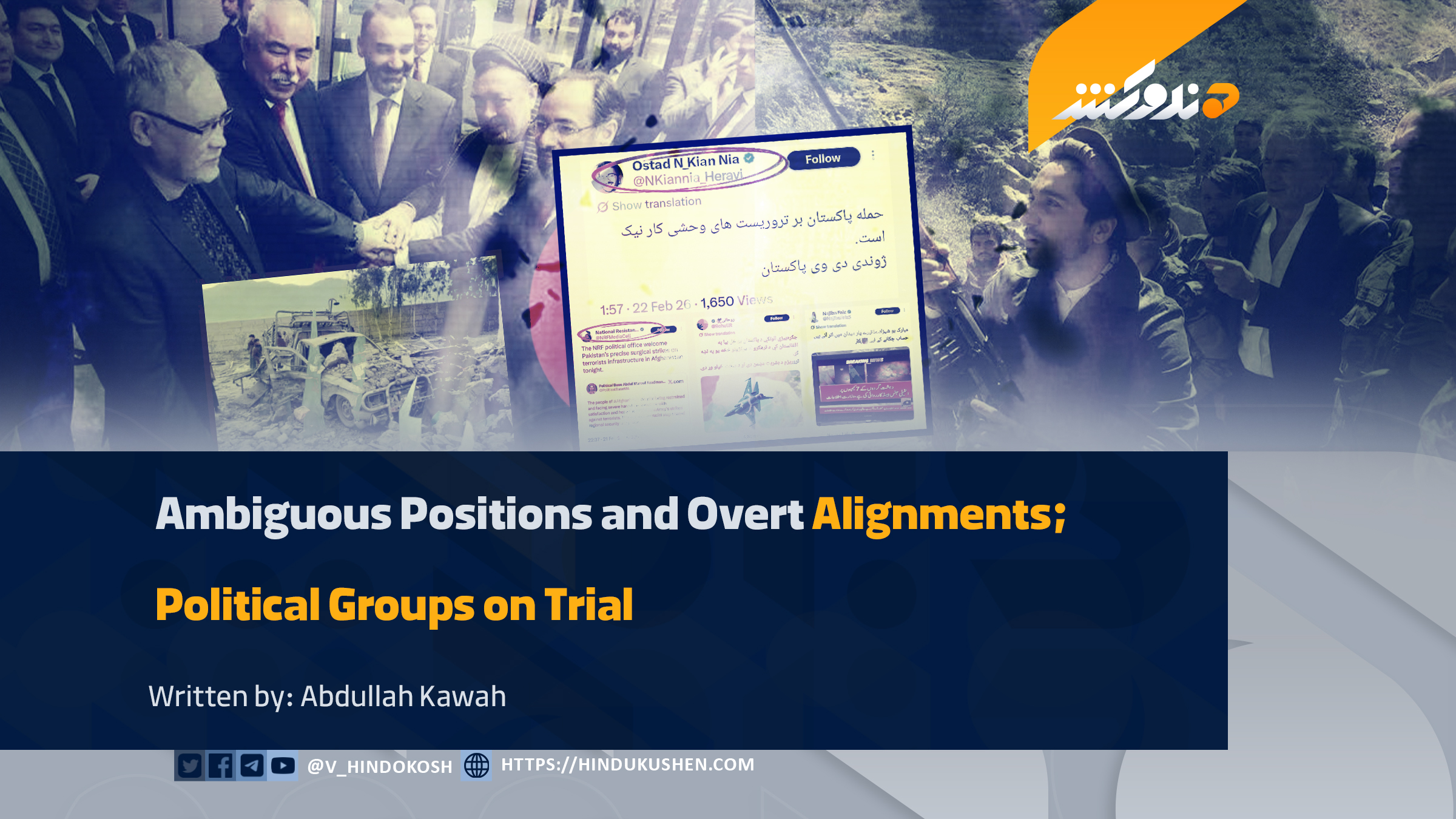
Written by: Abdullah Kawah
Pakistan has recently been facing severe security, economic, and political instability. Despite closing all routes with Afghanistan, the activities of various armed groups within that country have increased unprecedentedly, posing serious challenges to its security and intelligence agencies. However, the Pakistani military regime, in an attempt to conceal its failures, continues to place the blame for all these incidents on Afghanistan. In this context, late at night on February 21, it used fighter jets to bomb civilian targets and a religious school in Paktika and Nangarhar provinces, and then openly and proudly accepted responsibility for these criminal attacks against sacred sites and ordinary people.
Nearly all Afghans reacted to this crime, unanimously condemning it and calling on the Afghan government to carry out retaliatory strikes and on the international community to take action against this crime. Meanwhile, the stance of members and supporters of the so-called Resistance Front is also noteworthy. Members of this group, who operate on social media under various names, not only now but even previously praised and supported the criminal attacks of the Pakistani military regime.
Media outlets and pseudonymous addresses affiliated with the Pakistani army and intelligence agencies also support and amplify the propaganda activities of this front. These actions are not ordinary but rather indicative of deep ties between the resistance front and Pakistan. Some time ago, pressure also increased on members of the resistance front in Iran, coinciding with the beginning of their transfer to Pakistan. Some members of the front have settled in Pakistan, which has compelled them to defend Pakistan’s interests.
On the other hand, the ambiguous stance of certain other political groups and coalitions regarding this crime by Pakistan raises the question: on what principle is their political identity based? Are Afghanistan’s Islamic and national interests important to them, or Pakistan’s interests and their relations with that country? In contemporary politics, disagreement is natural; however, when a clear position is not taken in the face of foreign military action, further doubts arise about such political groups and coalitions. The public has now realized that these movements are willing to compromise on the issue of national sovereignty and remain silent in exchange for political privileges.
These movements and coalitions must understand that political legitimacy is not achieved solely through opposition, but is strengthened through a responsible stance on national issues. Those groups that seek to present themselves as a future alternative now have their claims questioned, because on the issue of territorial integrity and public security, they appear ready to make any kind of deal with Pakistan and other countries that provide them shelter or support. These political and propaganda groups have subordinated their positions to foreign relations, short-term advantages, and propaganda calculations, and this is their dark reality.
Note: The articles, essays, and comments published by the Voice of Hindukush only reflect the views of the authors & writers and do not necessarily represent the agreement of the Voice of Hindukush.