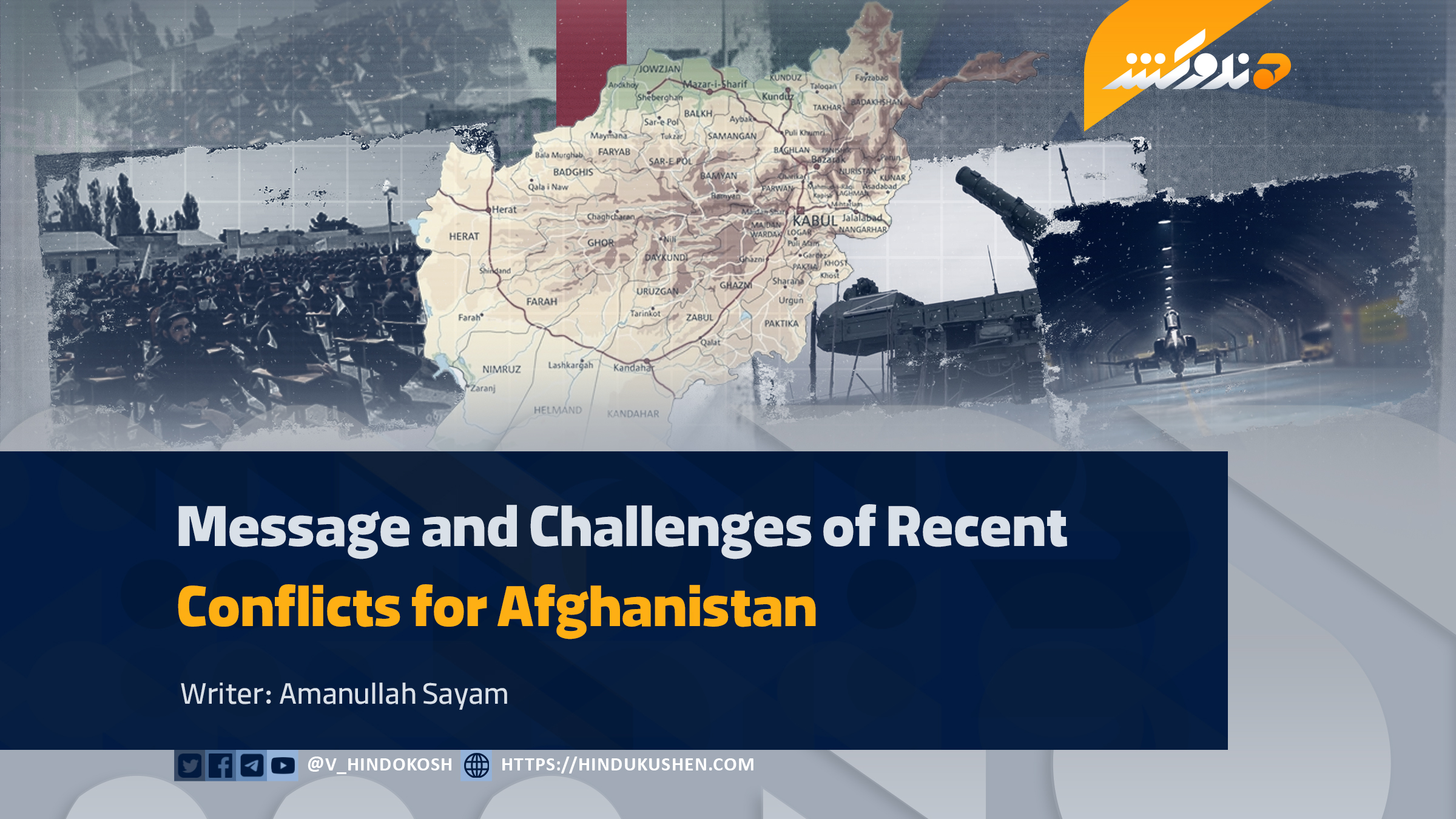
In the modern era, global politics is a complex arena of competition, conflict, and survival, where states strive to safeguard their security, power, and influence. According to the theory of Neo-Realism, every state seeks its own survival—because weakness may lead to its extinction.
Modern warfare today is no longer conducted solely with soldiers and artillery, but increasingly through drones, Scud missiles, ballistic projectiles, long-range launchers, and naval missiles. These elements are transforming the balance of power in warfare and are evolving with each passing day.
On one hand, the ongoing technological war between Iran and Israel, where neither side has yet deployed ground troops, offers a critical lesson for weaker nations: the nature of war has changed. Countries must adapt to current conditions and keep pace with modern warfare.
Although the caretaker government does not yet possess the capacity to develop strategic weapons or long-range missiles, nor the ability to neutralize advanced weaponry used by major powers, there are still essential and effective measures it can take. Ignoring these measures would be a significant negligence against the country and its people.
Globally, major powers focus heavily on constructing underground tunnels, caves, and subterranean military facilities to protect their strategic weapons, ballistic missiles, drones, tanks, military equipment, and leadership during nuclear warfare. These underground locations are considered the safest shelters against missiles, drones, and bombings and are suitable for storing sensitive weapons (nuclear, chemical, missile, etc.).
China, for instance, has developed an “Underground Great Wall” project consisting of 3,000–5,000 kilometers of underground tunnels to be used during intense wartime and to prepare for retaliatory strikes. Likewise, Russia, the United States, Iran, India, Pakistan, and other countries employ similar tactics. It is a common practice for nations to protect their military assets and leadership and deceive enemies by concealing key targets during conflict.
Since the caretaker government has no military alliance or support from Islamic countries in terms of defense cooperation or military training, it should not depend on others. Instead, it must focus on building small and medium weapons, mines, missiles, surveillance/suicidal drones, and developing the military-industrial sector. This will help raise the technical capacity building of Afghan youth and promote domestic self-sufficiency.
It is common practice among global intelligence agencies to recruit experts—especially in military industries—from other countries, offering them high salaries and full living amenities, to utilize their knowledge for national interest. Afghanistan’s caretaker government should also discreetly identify and recruit such experts from abroad, facilitate their relocation, and engage them in training Afghan youth.
Given Afghanistan’s mountainous terrain, which is ideal for constructing underground tunnels and caves for key military facilities, command centers, and weapons storage, the government should prioritize creating secure shelters beneath the mountains for storing high-value military equipment and for protecting key political, military, and intelligence leaders.
Furthermore, the caretaker government should consider constructing metro-like tunnels connecting the operational locations of major security institutions (intelligence, Ministry of Defense, Ministry of Interior, and other top-ranking officials). This would allow for the safe and secure movement of high-ranking personnel during sudden wars or other emergencies.
History has shown that even a technically weaker nation can achieve success through wisdom, strategic planning, and intelligent action. While the caretaker government may lack access to strategic weapons and critical technologies, it still has the opportunity to implement wise and timely measures. By taking advantage of this opportunity, the government must begin executing the aforementioned strategies.
Note: The articles, essays, and comments published by the Voice of Hindukush only reflect the views of the authors & writers and do not necessarily represent the agreement of the Voice of Hindukush.