




Written by: Amin Kavah
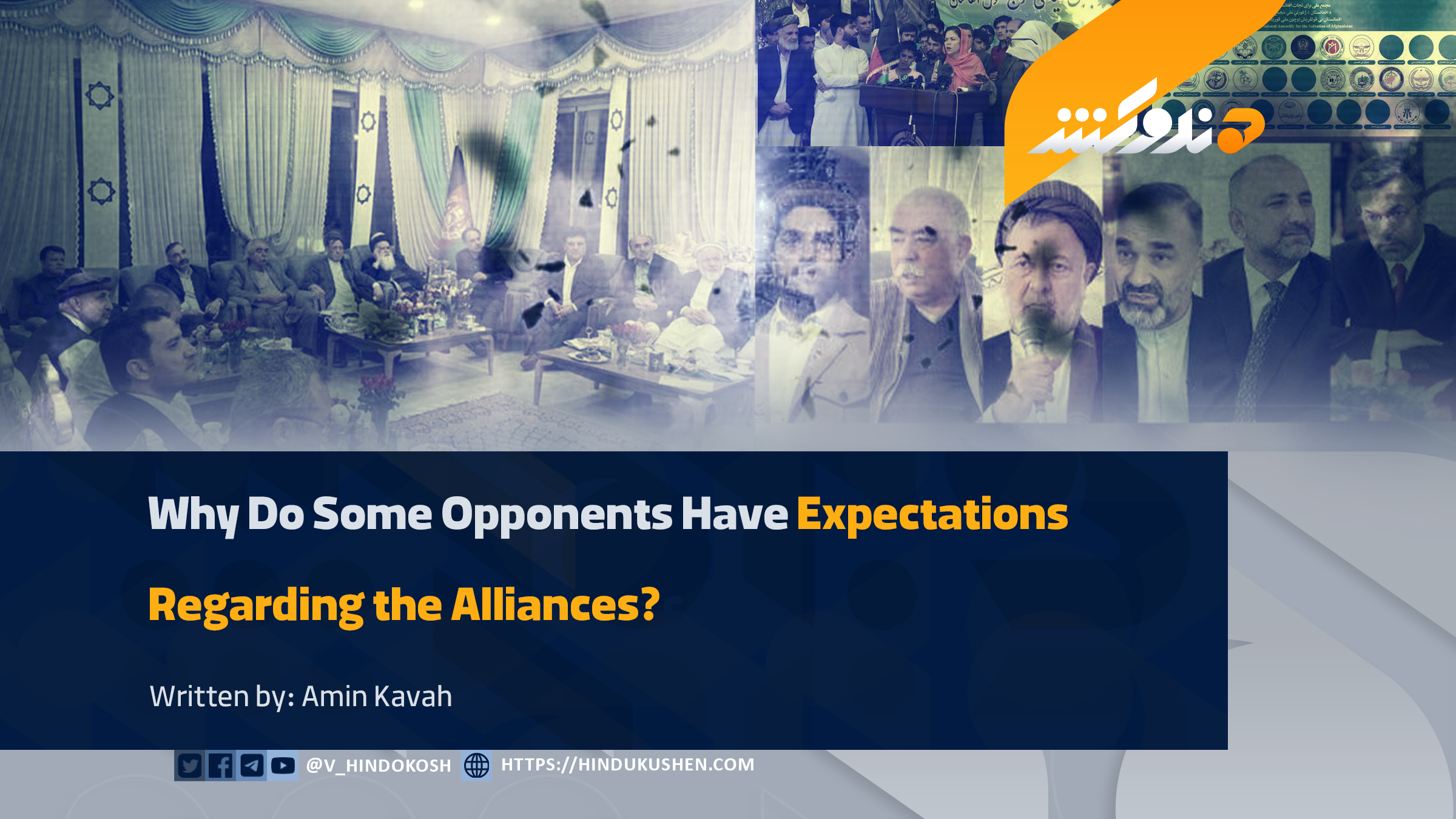
Since the collapse of the republic, numerous alliances have been formed by warlords and recurring figures, aiming to unite this disparate group of controversial figures; a goal that resembles an unattainable dream more than a reality.
Yes! New alliances and movements have not only failed to unite these notorious figures but have also further deepened the divisions among them, to the point where even some of these figures are now tired and disillusioned, unable to launch a new alliance.
However, some are still optimistic about these alliances, and despite the fact that the multitude of alliances and parties indicates the depth of the current Afghan government’s opponents’ inability, they consider their marginal role vital, just like Fawzia Koofi’s recent statements calling these ineffective, foreign-dependent figures one of the main parties in the Afghan issue.
Interestingly, these same women were deprived of their most basic rights during the twenty years of the republic. They were used solely as political tools to advance the nefarious goals of the politicians of the time, and no other use was made of them. In practice, nothing was accomplished.
Even recently, Mohammad Mohaqiq, one of the leaders of these sham alliances, stated in a speech in Iran that the Afghan government should negotiate with “political leaders” (warlords), not with women or representatives of civil society organizations.
In fact, what is presented today under the name of a coalition, front, or political movement, rather than carrying a coherent and forward-looking program, is a reproduction of the same worn-out structures that led Afghanistan to misery and misfortune during the twenty years of the republic.
Undoubtedly, figures whose records are filled with failure, corruption, wheeling and dealing, and dependence on foreigners cannot regain their lost legitimacy by changing their names and slogans, because Afghan society has not yet forgotten the sufferings and wounds inflicted by these infamous figures of contemporary history.
What is clear and evident is that deep intragroup divisions, personal rivalries, and self-seeking have rotted these alliances from within so that every new current creates new and deeper rifts. This reality shows that the problem lies in the nature and mindset of the self-proclaimed leaders who still consider themselves the center of Afghan politics.
Consequently, it can be said that the insistence of some figures, such as Fawzia Koofi, on calling the diminished role of these groups vital, more closely resembles an attempt to keep personal political capital alive than a genuine defense of the people’s interests.
The mention of women and civil society by those who did not practically believe in women’s rights during the twenty years of the republic is nothing but instrumental exploitation; an approach that has doubled the deep public distrust of these currents.
However, some still emphasize the vital role of these groups, while such insistence only reveals the baselessness of these views and their deep distance from the true will of the people. Emphasizing the importance of these ineffective figures, rather than benefiting the people, merely lends superficial legitimacy to notorious currents that, in practice, have brought nothing but corruption and ruin to the people of Afghanistan.
Note: The articles, essays, and comments published by the Voice of Hindukush only reflect the views of the authors & writers and do not necessarily represent the agreement of the Voice of Hindukush.