




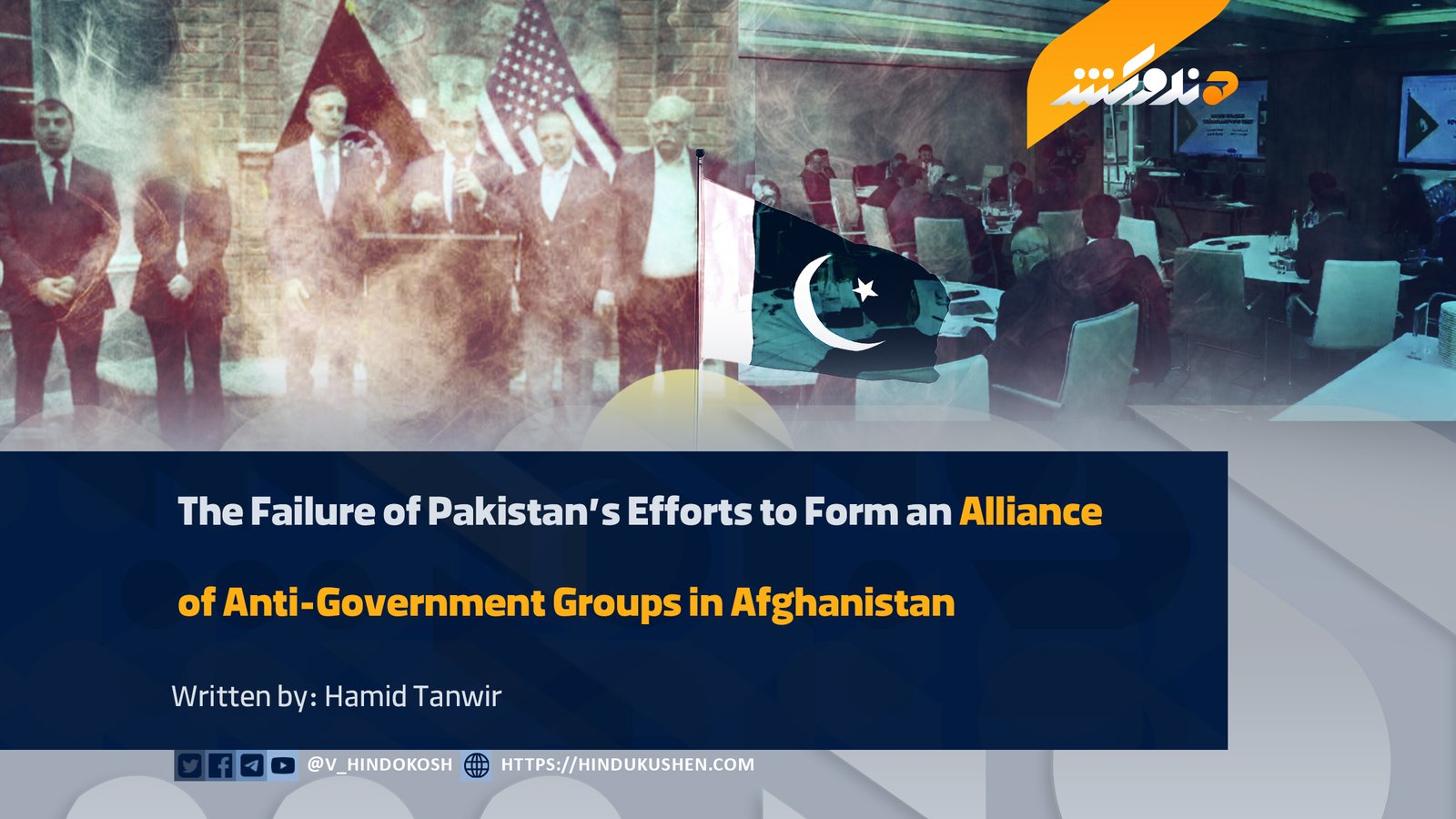
Recent political and intelligence-related movements have shown that Islamabad is once again attempting to create a new alliance of opposition figures and groups against the current government in Afghanistan. Obvious meetings held in Islamabad in 2025, follow-up gathering in London in 2026, and earlier secret meetings with representatives of Pakistan’s intelligence agency (ISI) in Türkiye and other countries are all part of this plan. Although these activities are portrayed as a parallel and genuine threat to Kabul, a deeper analysis of the developments shows that these efforts are facing fundamental obstacles and have so far failed to take the shape of a unified and effective alliance.
The biggest reason for the failure of this project lies in the internal contradictions among the opponents of the Afghan government and the differences in the sources of their affiliations. While one section of these opposition figures has effectively become direct proxies and mercenaries of Pakistan’s intelligence apparatus, another section has historical hostility or sensitivity toward Islamabad and serves the interests of other regional and international intelligence organizations. Bringing together such contradictory and foreign-dependent groups under one leadership umbrella, one that must obey Pakistan on one hand while not violating the demands of other sponsors on the other, is an impossible mission for Pakistani intelligence.
On the other hand, even if Pakistan were to temporarily finance and militarily support a small segment of these groups, they still lack the ability to destabilize Afghanistan’s security situation at present. The best example proving this claim is the failure of the ISIS project in the region. Pakistani intelligence attempted to use ISIS as a tool to weaken Afghanistan, but due to the serious and calculated operations of Afghan security forces, the project suffered a major defeat inside the country. This experience demonstrated that the Afghan government has a high capacity to neutralize military threats and that opening new fronts of war is not an easy task for Pakistan.
Because of the failure of these intelligence projects, Pakistan’s strategy has now shifted from practical and physical threats toward psychological and propaganda warfare. For example, the recent targeted killings of prominent religious scholars inside Pakistan and the claims accusing Kabul of involvement are part of this propaganda campaign. Islamabad is using these incidents as propaganda tools in order to distort the facts, accuse the Afghan government of sheltering irresponsible armed groups, and at the same time shift the blame for its own domestic security failures onto others. The so-called “resistance” groups, instead of being a military threat, have now turned into instruments of Pakistan’s media warfare.
Another major challenge depriving these opposition groups of legitimacy and success is their lack of public support. Although these figures portray themselves as representatives of certain segments of Afghan society based on ethnic, linguistic, or regional claims, in reality they have lost all social influence because of their past failures, financial corruption, dependence on foreign countries, and their constant slogans of war. They cannot even represent the ethnic groups in whose name they raise slogans, because the Afghan people understand that the activities of these groups are not for the national interests of Afghanistan, but rather for implementing the political agenda of Pakistan’s military establishment.
Pakistan’s intelligence efforts to unite the opponents of the Afghan government are less of a serious and strategic threat and more of a diplomatic and propaganda pressure tactic. The fragmented state of the opposition, the contradictions in their allegiances, the defeat of the ISIS project inside the country, and the absence of grassroots support all prove that Pakistan lacks the ability to bring about a military or political change in Afghanistan that could seriously threaten the current government. The outcome of these efforts remains limited to media and intelligence channels alone.
Note: The articles, essays, and comments published by the Voice of Hindukush only reflect the views of the authors & writers and do not necessarily represent the agreement of the Voice of Hindukush.