




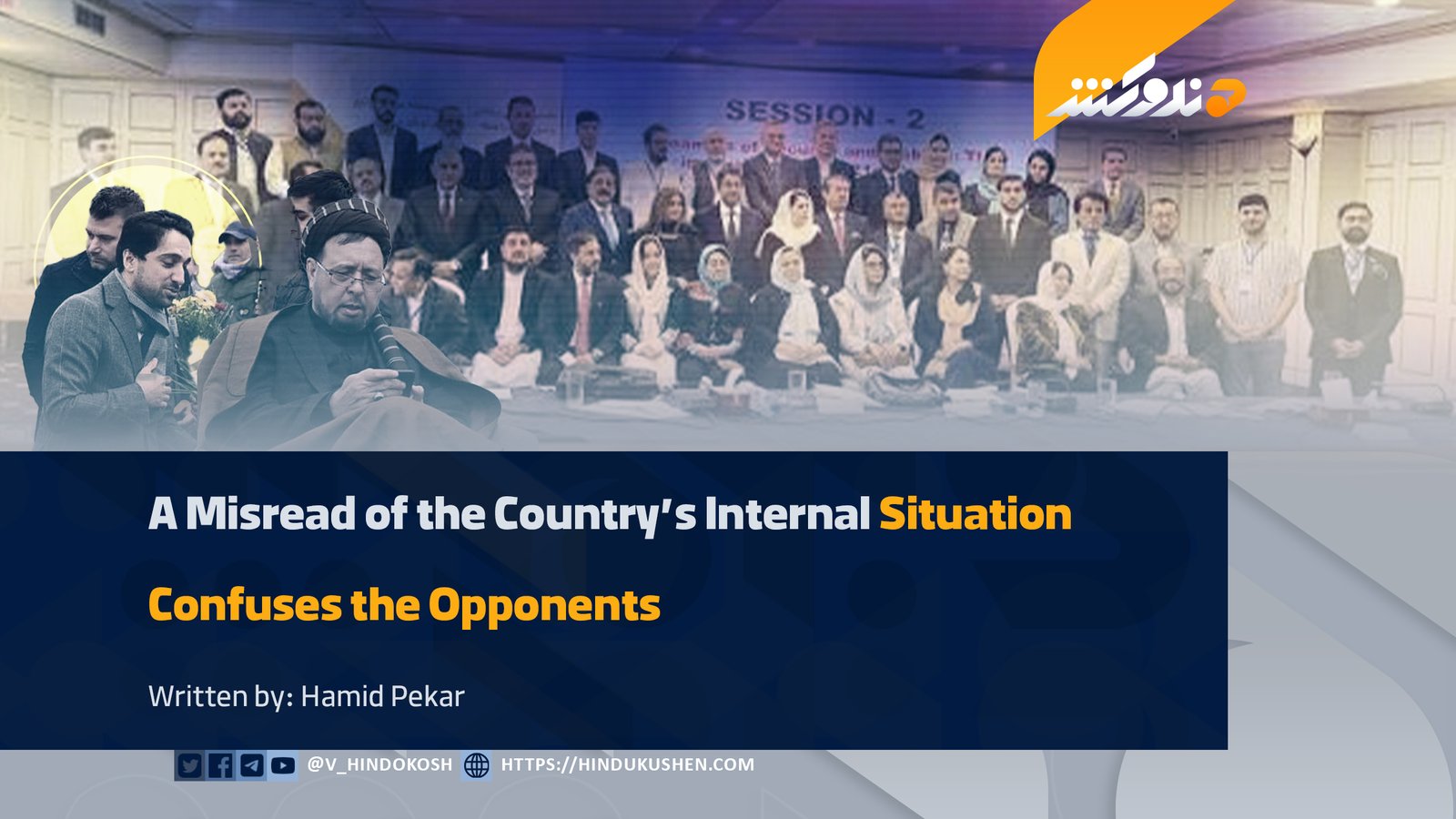
Written by: Hamid Pekar
One of the greatest mistakes of Afghanistan’s opponents, both in the past and in the current situation, has been that they have never evaluated realities based on objective evidence and field observations; rather, they have always viewed the country’s situation through the lens of personal desires, subjective interpretations, and political calculations imposed on them by foreigners.
In the past, they did not perceive Afghanistan as it truly was, but rather as they wished it to be. In the pursuit of their foolish desires, the blood of the people, the wealth of the people, and even the lives of innocent individuals were the least valuable costs they were willing to pay for their political goals. In fact, their ideological and political model was more influenced by non-Islamic political schools and power-centric thoughts than by human values and Islamic teachings; schools that justify the pursuit of power, the preservation and consolidation of sovereignty, even at the cost of sacrificing thousands of innocent lives, without considering the suffering of orphaned children, widowed women, and grieving families in their calculations.
This is while Islam opposes such inhumane and power-centric views. In the logic of Islam, the life, property, honor, and dignity of human beings hold a high status, and politics and power should serve to preserve public interests, ensure justice, and protect people’s rights, rather than allowing individuals and groups to sacrifice humans for their ambitions and political aspirations.
Today, the fleeing opponents, after their ideas and political calculations failed and they were unable to confront the realities on the ground and the will of the Afghan people, have once again resorted to launching flashy but empty and unrealistic propaganda from outside the borders, with the same previous mindset. They are trying to restore their lost political reputation on one hand by spreading one-sided narratives and misleading propaganda, and on the other hand, to create the conditions for returning to the same aspirations and goals that they have repeatedly failed to achieve.
But this truth must be clearly reminded to them that repeating past claims will never change today’s realities. They must understand that the gap between their political perceptions and the realities of Afghan society remains unchanged, and no amount of media propaganda can conceal this gap.
These factions must understand that the people of Afghanistan have not forgotten the bitter experiences of the past. A society that has felt the consequences of war, power struggles, and foreign interventions for years with its flesh and blood will not easily be deceived by repetitive slogans and vague plans. Today, people need stability, security, peace, and the preservation of their religious and national values more than ever, and they are not willing to become pawns in the political games and calculations of foreigners once again.
Therefore, those who have borrowed their political ideas from foreigners and continue to evaluate Afghanistan’s internal realities through the lens of personal desires and external calculations must understand that before making any claims of return and change, it is necessary to learn from their past failures; because their political experience has been tested against the Afghan people, and now more than anything, they need a serious reevaluation of their thoughts, approaches, and calculations.
Note: The articles, essays, and comments published by the Voice of Hindukush only reflect the views of the authors & writers and do not necessarily represent the agreement of the Voice of Hindukush.