




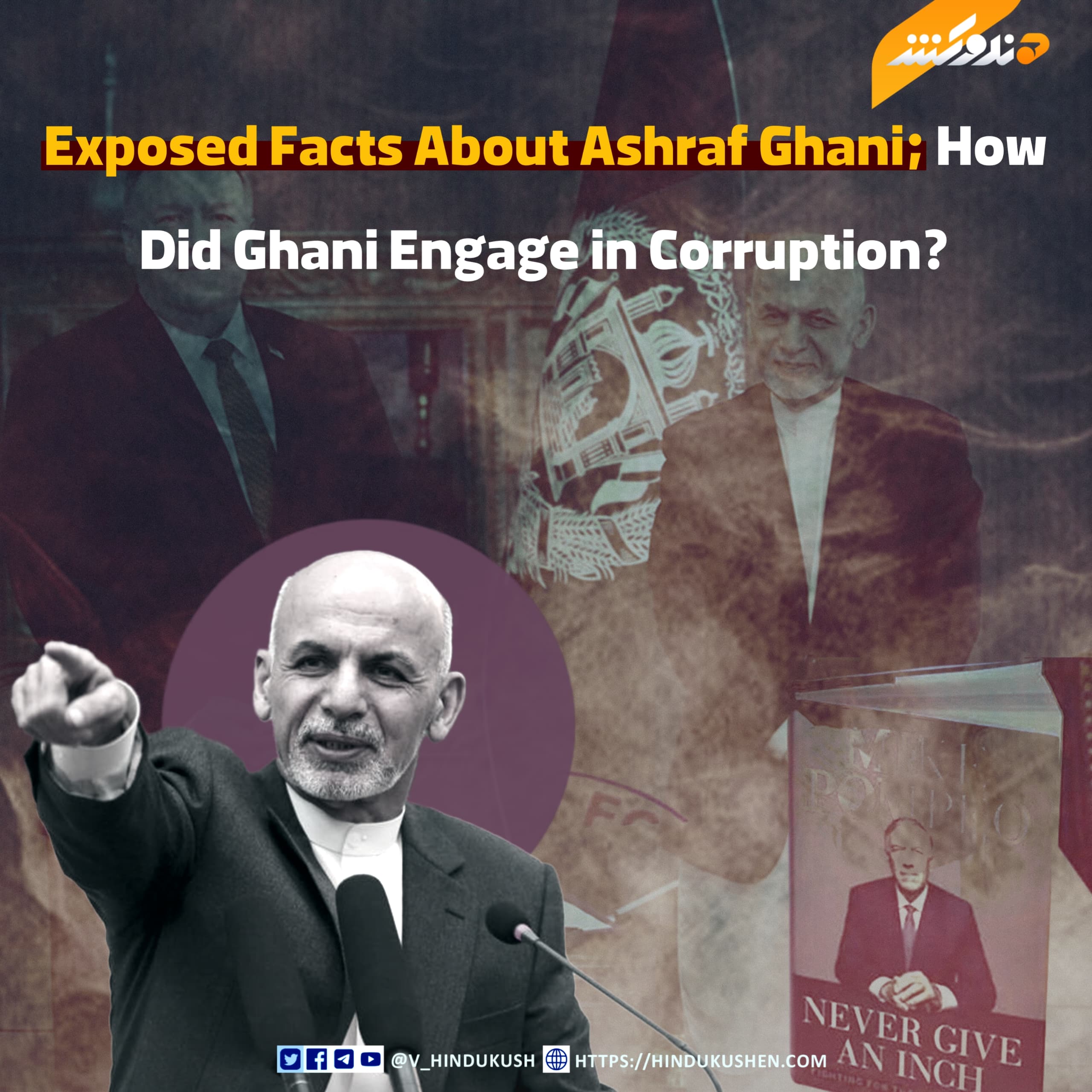
Former U.S. Secretary of State Mike Pompeo, in his recent statements, has once again unveiled the behind-the-scenes realities about the situation in Afghanistan and has called Ashraf Ghani one of the most corrupt leaders in the world. Pompeo has made it clear that Ghani had no genuine intention to resolve Afghanistan’s crisis and was only satisfied with the existing situation because it allowed him to secure his personal power and financial interests. Pompeo’s remarks point to the systemic failures of the fallen republic that Ghani and his close triangle (which included Ghani, Fazl Mahmood Fazli, and Hamdullah Mohib) had created in the Arg to monopolize power.
In one side of this triangle, Fazl Mahmood Fazli, thru the Administrative Affairs Directorate, had created a mafia-like chain of appointments, where every senior position was distributed not based on professionalism but on loyalty to the Ghani triangle, personal connections, and acceptance of personal demands. Fazli had created a network under the guise of administrative reforms that placed only those loyal to the Arg circle in key positions. This practice eradicated the spirit of accountability in government institutions and turned the Arg into a center for controlling large financial contracts, where the revenues would only reach a limited and corrupt circle.
On the other hand, Hamdullah Mohib, as an advisor to the National Security Council, had paved the way for the embezzlement of the defense budget thru unprecedented interference in security institutions. Under Mohib’s management, the presence of phantom soldiers in the army and police, and extensive embezzlement in the security sector’s logistical contracts were the factors that weakened the republic’s overall defense force from within. While the soldiers lacked vital supplies and food, the members of this triangle exploited the war budget for their political games and financial gains, resulting in the regime’s security pillars collapsing at a very critical time, leading to the downfall of the Republic.
As the head of this triangle, Ashraf Ghani had brought all of the country’s financial resources under his direct supervision thru the National Procurement Commission, so that he could personally advance and maintain power and corruption. He brazenly utilized the contingency budgets of codes 91 and 92, using the state treasury to purchase loyal activists and sycophants, for personal affairs and the political campaigns of his close associates. Ghani spoke against corruption in slogans, but in practice, he empowered individuals who were merely members of the triangle for his political survival and financial monopoly instead of upholding the rule of law.
Mike Pompeo also clarified these facts in his book in 2023. He had referred to Ghani as a deceiver in that book and stated that both Ghani and Abdullah were involved in high-level corruption, which hindered the orderly withdrawal of the United States. Pompeo even compared Ghani to the world’s most hardline leaders and said that he, in his quest to maintain power, put the lives of thousands of people and the future of a nation at risk; something that led to the collapse of the republic.