




Fourteenth Part
Written by: Ismail Yaqobi
As we mentioned in the previous sections of this series, although a significant portion of Dostum’s financial and moral crimes and corruption remained hidden and undisclosed during the twenty years of the republic, even the small amount that was revealed is so extensive that it cannot be fully recounted. Therefore, in this series, we will mention the most important ones.
Continuing the exposure of Dostum’s dark side, we arrive at this individual’s moral corruption; a corruption that is rarely seen even among warlords and infamous figures of the Republic. This incident not only ruined Dostum’s reputation but also further damaged the credibility of all warlords.
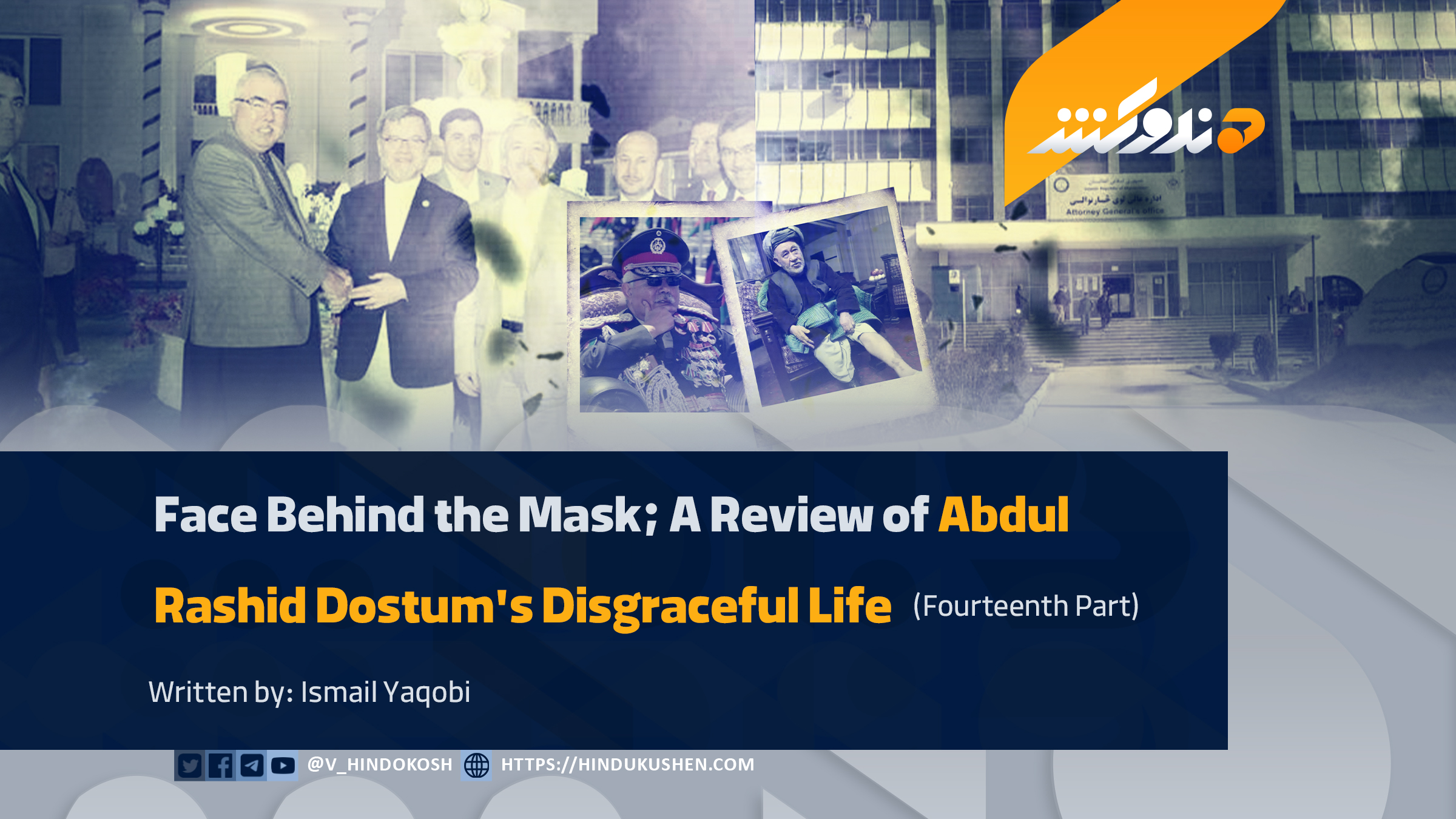
Ahmad Eishchi, the former governor of Jawzjan and a longtime commander of the National Islamic Junbish Party, was a fierce rival of Abdul Rashid Dostum in the north for many years. In 2016, after a Buzkashi match in Jawzjan, he went to Dostum’s house in the Sherpur area of Kabul, apparently at Dostum’s peaceful invitation.
As soon as he arrived, the Eishchi was disarmed by dozens of Dostum’s armed militiamen and then taken to the basement. He was trapped in this basement for five days; five days during which bitter events occurred for him, which later led to his and Dostum disgrace.
Although this incident was initially concealed, Ahmad Ishchi finally said thru tears during a press conference, “They chained me, beat me with cables, pipes, and kicks until I could no longer stand. General Dostum came several times in person, cursed at me, and hit my back with a stick. I was raped several times with the barrel of an AK-47.
Although some tried to portray Ischchi’s claims as a fabrication against Dostum and deny them, there was undeniable evidence: published photos of bruises on her back, thighs, and arms; a forensic medical report confirming signs of heavy blows and injuries to his pubic area; and the testimony of several of Dostum’s bodyguards and drivers, which was later repeated in court.
This conference marked the beginning of Dostum’s downfall. Following these claims, the Afghanistan Human Rights Commission sent a fact-finding team and published a 70-page report that held Dostum “directly responsible.” The Attorney General’s Office opened the case in 2016 and arrested nine of Dostum’s guards. Eight of them were sentenced to 8 to 12 years in prison in 2018, but none of them dared to testify against Dostum.
In 2017, when the Supreme Court issued his arrest warrant after the crime was proven beyond any doubt, Dostum fled to Turkey by private plane the next day. At that time, the Ghani government initially claimed he had “gone for treatment,” but everyone knew it was a self-imposed exile, not a normal trip.
After about 14 months, Dostum returned to Afghanistan in July 2018 with the mediation of Turkey and the United States. However, the widespread corruption of the previous government and the US support for this notorious figure led to his case being permanently closed in the Attorney General’s office, and he was never held accountable.
This incident showed above all that in the collapsed republican regime, the criterion was not right and justice, but influence within this corrupt system. Therefore, Dostum escaped punishment even when there was forensic evidence, photographs, the testimony of the accused, and pressure from the international community, and was promoted to the rank of marshal by the same Ashraf Ghani just two years later.
Note: The articles, essays, and comments published by the Voice of Hindukush only reflect the views of the authors & writers and do not necessarily represent the agreement of the Voice of Hindukush.