




Written by: Abid Sarwari
Nearly five years have passed since the end of the American occupation in Afghanistan and the establishment of the new Afghan government, during which external threats to Afghanistan have also been controlled. The remaining American weapons have been secured and are only used to ensure Afghanistan’s security, although they are still not sufficiently modern. Moreover, Pakistan is still trying to blame its internal security failures on Afghanistan and considers the remaining U.S. weapons as a threat to itself. This is the policy that Pakistan has been pursuing against Afghanistan for years, using it as an excuse and a form of pressure.
In today’s world, the nature of warfare has changed; wars are no longer fought solely with conventional weapons, but rather thru cyber, technological, intelligence, economic, and other forms of warfare, which are more effective, productive, and play a crucial role in modern conflicts. Advanced technology, drones, and cyber attacks have become the main weapons of modern wars, while many of the weapons left by the Americans do not fully align with the standards of today’s modern warfare.
Another important point is that the active militant groups in Pakistan do not rely solely on old weapons; rather, the nature of their attacks, the organization of their operations, and the use of technology indicate that they have found new methods and tools and are successfully conducting operations against the Pakistani army. These weapons do not come from Afghanistan, as they are not widely available there, and their transfer is almost impossible. Instead, these arms and equipment are obtained within Pakistan by the militant groups opposing the country.
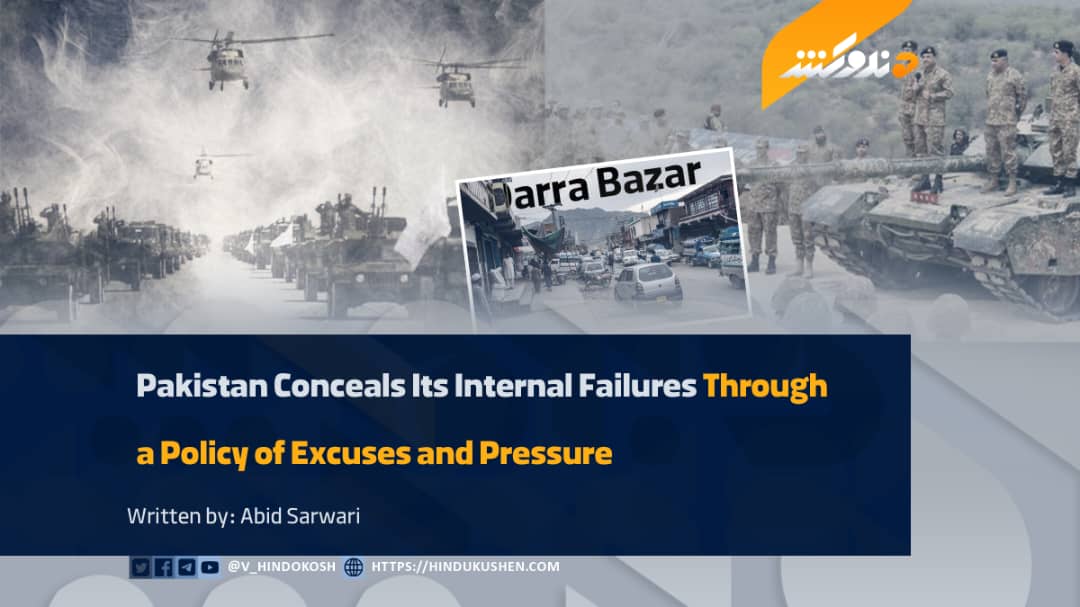
As an example, there has been a well-known center for the production and sale of weapons in the Darra Adam Khel market of Peshawar for years, where not only replicas of old weapons are made, but also modern and American weapon replicas. This fact refutes Pakistan’s claim that the threat to Pakistan comes from Afghanistan due to the presence of American weapons in that country.
An important fact is that America, even during its withdrawal, transported these weapons thru Pakistan; Pakistan also assisted in their removal, at a time when Afghanistan had not yet been liberated from American occupation. On December 20, 2020, the U.S. inspection website published a report about the withdrawal of American weapons from Afghanistan.
Official reports from the U.S. Department of Defense show that thousands of military equipment were removed from Afghanistan thru the retrograde process before the U.S. withdrawal. Similarly, official U.S. reports indicate that with the withdrawal of American forces, they completely destroyed many sensitive and modern weapons to prevent their use by Afghan forces or the current Afghan government after their departure. Information about these destroyed or removed weapons can also be found in SIGAR reports.
If the problem is only about weapons, then why has Pakistan failed to control its internal resources and markets? The answer is simple; Pakistan’s main problem is not weapons but internal security, economic, and political instability, and widespread distrust between the people and the government. Economic crisis, political differences, and the widespread distrust between the people and the government are the factors that have caused insecurity in Pakistan. Since they cannot ensure their internal security and their people have risen against them, they are trying to shift the blame onto the Afghan government with such baseless claims, in order to divert the attention of the Pakistani people and make someone else responsible for their country’s insecurity.
To further clarify this issue, it should be noted that international research institutions have also emphasized that insecurity in Pakistan is largely the result of internal factors rather than foreign weapons. Reports from the United States Institute of Peace and the International Crisis Group indicate that Pakistan’s security issues are related to political instability, past connections with non-state armed groups, and contradictions in government policy. These analyzes show that the military regime’s mention of Afghanistan is merely a political and propaganda tool.
Behind Pakistan’s interference in Afghanistan, this country wants to portray itself to the world as a victim, as if it is the victim of wars and terrorism، and receive aid and loans under one pretext or another. Thru this, they want to exert political pressure on Afghanistan and force it to accept their unjust demands, while also trying to absolve themselves of responsibility for their internal insecurity and failure with such baseless claims and excuses; which in no way fulfills the military regime’s responsibility, but is truly an escape from responsibility.
The truth of the matter is that ensuring security is not achieved thru excuses, but rather thru complete transparency, strong internal management, and cooperation with politicians and the public. However, the current regime in Pakistan is hostile toward its politicians and the public, separating and distancing itself from them under one pretext or another. As long as Pakistan does not honestly resolve its internal issues, mentioning Afghanistan will only serve as a temporary propaganda tool instead of a solution to the problem.
Note: The articles, essays, and comments published by the Voice of Hindukush only reflect the views of the authors & writers and do not necessarily represent the agreement of the Voice of Hindukush.