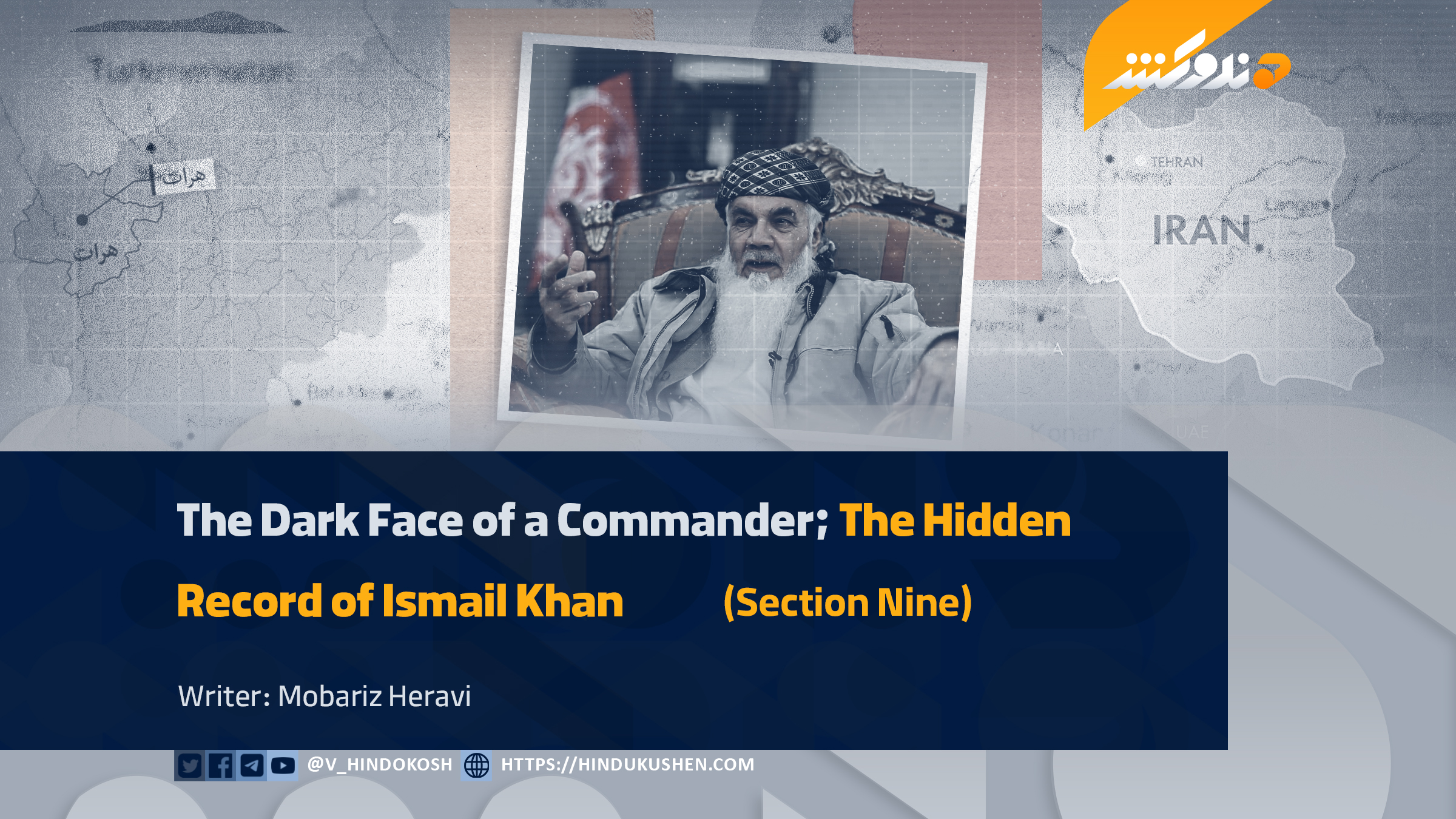
The Silent Links Between Ismail Khan and Iran “Cultural Invasion; The Hidden Wound of Herat”:
In recent decades, Afghanistan and its suffering people have witnessed various forms of occupations; from military and political invasion to intellectual and cultural assault.
In the meantime, one of the bitterest and darkest chapters in contemporary Afghan history is the period of Ismail Khan’s rule over Herat province; a time when the southwest of the country, especially the ancient city of Herat, was struggling under the boots of the American military occupation and its allies, while also burning from within due to cultural invasion.
Ismail Khan, who regained power after escaping from the Taliban prison with the direct support of the Iranian government, always maintained close and tight-knit relations with Iranian intelligence and cultural institutions; relations that soon paved the way for the expansion of Iranian cultural influence in Herat, an influence that had taken root among the people in schools, educational institutions, media, and mosques.
One of the main signs of Iran’s cultural invasion in Herat was the promotion of the Persian language with Iranian accents and vocabulary; at that time, many private schools and cultural centers taught Iranian textbooks and gradually eliminated the local dialect and accent of Herat, raising a generation that spoke with Iranian words, phrases, and tone.
The televisions, radios, and newspapers that became active during this period were mostly either financially supported by Iran or imitated the media model of the Iranian government; a deadly tool that had brought Iran’s cultural invasion into the homes of the people of this region during the self-proclaimed emirate of Ismail Khan.
The publication and broadcasting of series, films, religious programs, and Iranian cultural content with specific themes, during the reign of Ismail Khan, directed public opinion towards Iranian culture and lifestyle.
Alongside the linguistic and media aspects, the religious dimension of Iran’s cultural invasion also expanded unprecedentedly in Herat; mosques, husseiniyahs, and religious centers were built with direct funding from Iran, and the promotion of a specific definition of Shiism and Iranian mourning culture, especially during the days of Muharram, became widespread in an unprecedented manner.
This issue not only highlighted the religious differences in the Herat community but also laid the groundwork for religious conflicts and sowed the seeds of discord in the united Herat society, causing harm to the peaceful coexistence of ethnicities and religions that had lived together in harmony for years.
During this period, Iran’s cultural policies, under the guise of religious activities, effectively became a tool for political influence and targeted the social unity of the people of Herat.
The simultaneous cultural invasion of Iran with the military invasion and occupation by the United States and its allies deprived the people of the opportunity for cultural resistance; because the majority of society was focused on security and military issues, the cultural invasion received less attention and was strengthened by the silence or even collaboration of some notorious figures of the time, such as Ismail Khan.
In conclusion, it must be said that the era of Ismail Khan’s rule in Herat not only marked the beginning of a new phase of Iranian influence in Afghanistan but also imposed a new and inauthentic identity on the new generation; an identity rooted in foreign cultures and beliefs, which was in conflict with the traditions, values, and historical authenticity of the people of this land.
To be continued…
Note: The articles, essays, and comments published by the Voice of Hindukush only reflect the views of the authors & writers and do not necessarily represent the agreement of the Voice of Hindukush.