




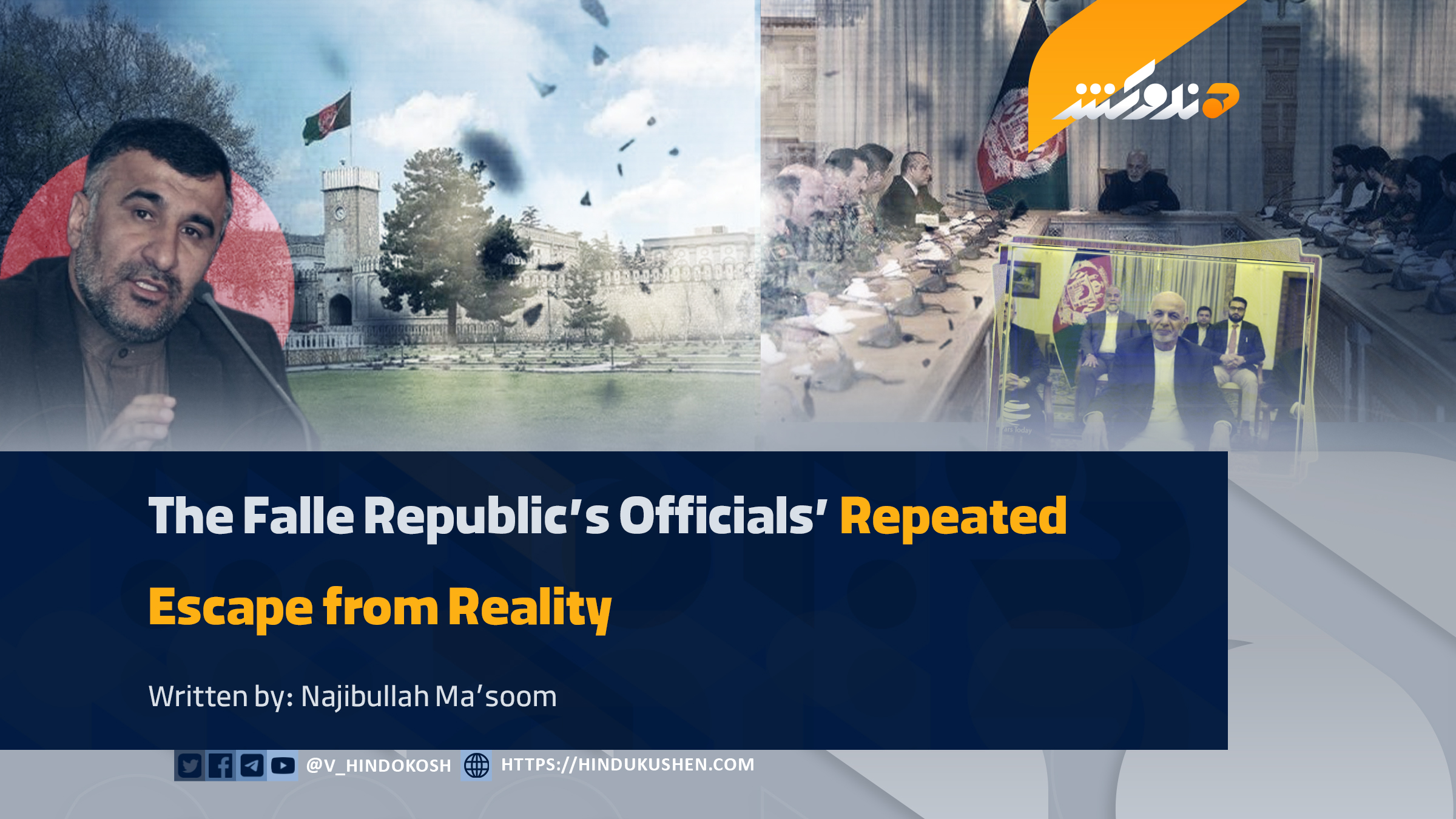
Written by: Najibullah Ma’soom
Some officials from the fallen republican regime are still trying to blame others for their failure and escape responsibility. The recent statements by former Khost governor Halim Fedaee, who considers democratic governments in the region a strategic opportunity for Afghanistan and the regimes of neighboring countries the root of the problems, are a continuation of this imaginary escape. Such statements are largely an attempt to whitewash oneself rather than describe reality.
Undoubtedly, most countries in the region do not have democratic systems, but this is only one aspect of the problem, not the entire reality that opponents use to escape historical responsibility by presenting it. The main question is why the system that ruled for twenty years under the banner of “democracy” was unable to satisfy its people, maintain its government, and save the regime from collapse? The collapse of the republic was not a direct consequence of neighboring regimes but rather the logical outcome of internal corruption, inefficiency, personal monopolies, and actions against the will of the people.
The Republic under Ashraf Ghani was built on individuals rather than institutions, decisions were made by a limited circle and a triangular coalition, criticism was considered hostility, and national interests were sacrificed for personal gain. In such circumstances, neither the army had the will to defend, nor the institutions had the ability to resist, nor did the people have the motivation to save the regime. These are the realities that former officials today refuse to mention or even escape.
The countries of the region are pursuing their interests; this has now become an immutable principle of politics. Only countries that are weak internally fall victim to interference from others. A legitimate, accountable, and people-centered system can withstand any kind of regional pressure. The republic did not possess these characteristics, which is why it collapsed despite its twenty-year rule, foreign support, and force.
The problem of Fedaee and his political allies is that they still see themselves in a position of analysis and guidance, while the people expect answers from them, not the repetitive evasions they have been repeating for over four years. If democracy had true value, why did the officials of the fallen republic leave the people alone? Why did senior officials flee before the regime fell? These questions are not related to the region’s systems but rather to the leaders and officials of the republic, and they are directed toward them.
Until the officials of the fallen republic openly admit their failure and give a true account to the people, criticizing neighbors and regional regimes can only be considered another form of self-deception. Afghanistan needed committed officials and a responsible system, and thank Allah that need has been met. Now, there is no need for those imaginary slogans that are filled with an escape from responsibility.
Note: The articles, essays, and comments published by the Voice of Hindukush only reflect the views of the authors & writers and do not necessarily represent the agreement of the Voice of Hindukush.