




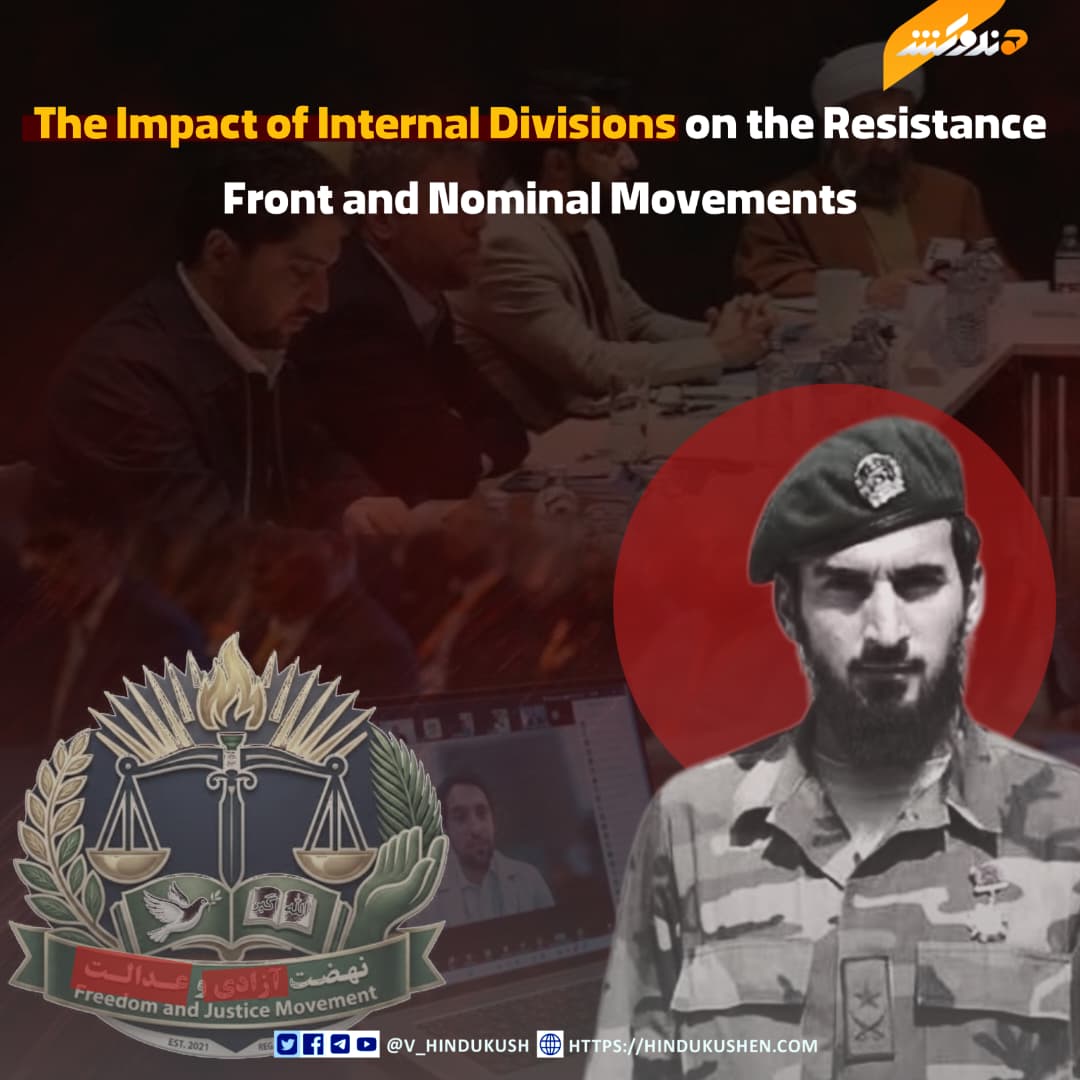
The so-called Resistance Front’s former member Hamid Sifi has been formed a new movement, under the banner of freedom(!) and justice(!); the establishment of this movement once again proved that the opponents of the Afghan government, instead of having a unified plan and grand goal, are immersed in personal interests and internal conflicts. This recent split has occurred at a time when they have no significant presence on the ground, but have only been giving grand slogans in some online meetings under the shadow of the Resistance Front in European countries so far.
This is not the first split in the Resistance Front where key individuals separate from the Front and declare a separate faction; with each of these splits, the core circle of the Resistance Front is fractured, and the Front becomes even more isolated. The fragmented state of the Afghan government’s opposing factions revives the history of the former warlords’ groups, which led Afghanistan to ruin for personal interests after the victory of the 8th of Saur. Even now, when someone is sidelined from one faction, they immediately announce a new name and set a new strategy, without bringing any change in the ground realities or being effective.
The split of Hamid Safi from Ahmad Massoud’s group sends the message that these factions do not even have the capacity to protect their close associates, which is why their defeated forces are being further scattered under new names. These newly formed nominal movements and groups only operate on social media and from there shout for freedom (!). The texts of their statements, filled with lofty slogans, do not align at all with their practical ineptitude.
These extensive differences among the opponents and the formation of new groups have brought their political credibility to zero on the international stage. The world no longer sees those who are embroiled in internal conflicts over power and fame and form sectarian groups as an alternative to the Afghan government. These divisions, instead of being a threat to Afghanistan, reassure the real Afghans that their opponents are so fragmented and weak that they are more focused on defeating each other than anyone else.
The announcement of Hamid Seifi’s new movement can also be considered another political disgrace for the claimants of Resistance. This series shows that their leaders are thinking about their personal gains and the expansion of their groups instead of the fate of the people, in order to receive money from foreigners in exchange for chaos and to strengthen their personal wealth, but this endeavor is now just a fantasy. As long as these groups are hosts to divisions, their fate will be limited to mere social pages and they will never emerge as a serious and influential force in Afghanistan’s political equation.