




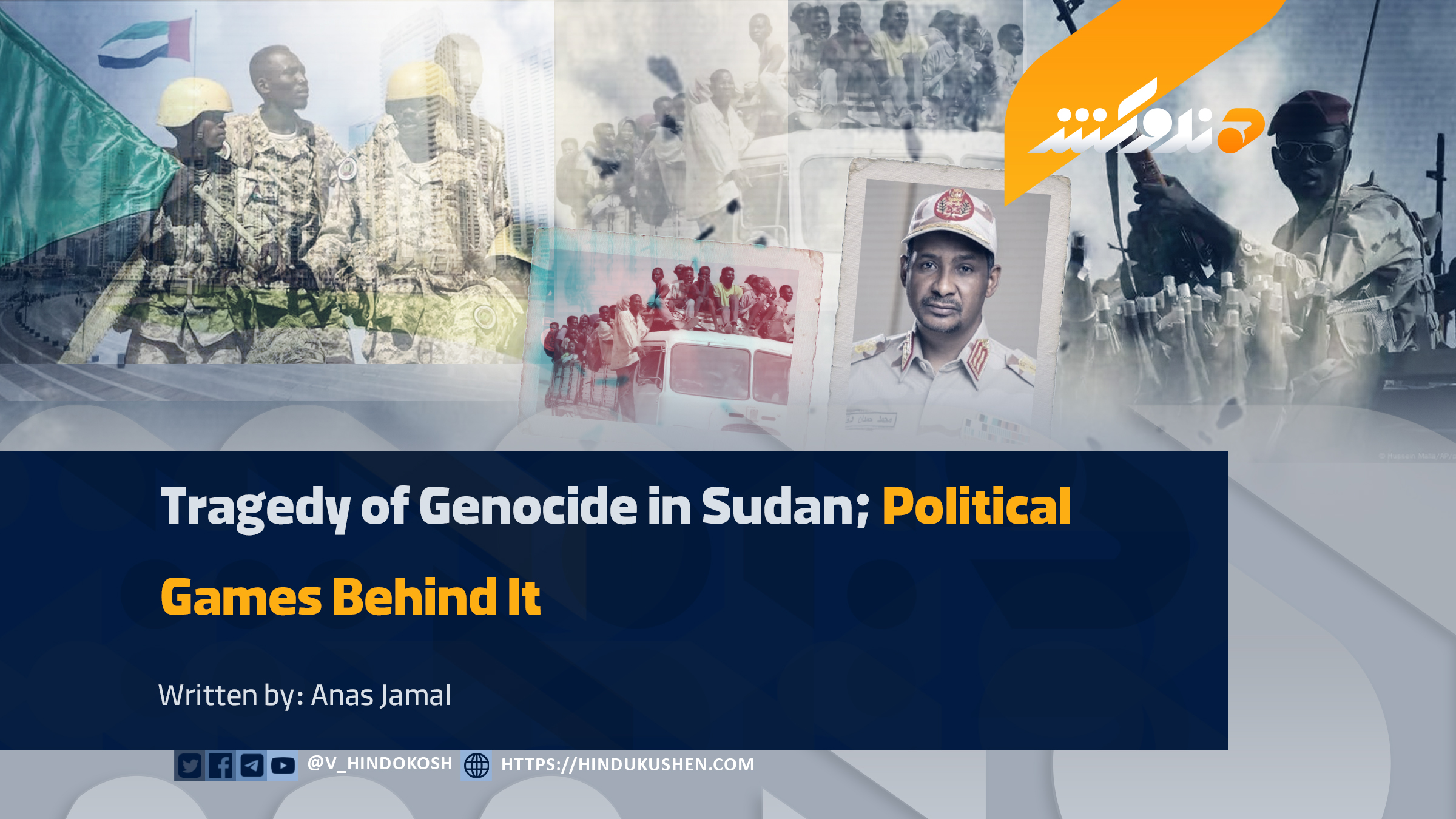
In Sudan, when the war in Darfur began in 2003, it was between two groups: the Sudan Liberation Movement and the Justice and Equality Movement. These groups rebelled against Omar al-Bashir, the then President of Sudan, forcing him to create another army, called the Janjaweed, in addition to the government’s military, to prevent the rebellion. This group included members from many Sudanese tribes because at that time, the government’s opponents were very strong, and the Sudanese government wanted to defeat them with the support of the people.
The Rapid Support Forces, who are now committing genocide in Sudan, were the most important members of the same Janjaweed group. In 2013, the government separated Rapid Support Forces from the Janjaweed group and officially started operations under the supervision of the Ministry of Communications. They were infected with support for the government, or Omar al-Bashir, and were engaged in fighting government rebels in Darfur, Kordofan, and other areas.
When protests against Sudanese President Omar al-Bashir began on December 18, 2018, and he resigned in the following months, the Sudanese military took control of the government. Ahmed Awad bin Auf declared a state of emergency, and within 24 hours, Ahmed Awad handed over his position to Abdel Fattah Burhan, who was the Minister of Defense, and he became the interim president.
At that time, the leader of the Rapid Support Forces, Mohamed Hamdan Daqlo, known as Hemedti, became the deputy of the transitional government at that time. Hamidati took advantage of this situation to expand the Rapid Support Forces and give them even more influence.
Why did the Rapid Support Forces Rebel?
There are different views on the Rapid Support Forces rebellion from the Sudanese government, but one thing they have in common is that the Sudanese government wanted to integrate the Rapid Support Forces into the army and dissolve them, which led to the Hamidati rebellion. Some say that Hamidati, the leader of the Rapid Support Forces, said that the supreme commander of the army should not be the president but a common person. Anyway, in 2023, the Rapid Support Forces rebelled against the Sudanese government and fought against the government in Khartoum until the war expanded day by day and even reached Darfur.
In those same battles, 250 people were killed and 1,000 were injured, but UN reports doubled that claim, stating that people were in a very bad condition at the time and the exact number could not be determined.
Subsequently, the Rapid Support Forces accused the government of bombing their people and army with the help of foreigners. They accused each other until the war became even longer and deeper.
Rapid Support Forces, which had besieged Darfur for the past 18 months, finally entered Al Fasher on October 26th and brutally killed 2,000 people, mostly women and children, in various locations across the city within a single day. The Saudi hospital in Al Fasher had a maternity ward where they entered and killed 450 children, including women, in the hospital. Research shows that the number of Rapid Support Forces soldiers reaches up to one hundred thousand, and they are all armed.
According to dozens of news reports and investigations, Rapid Support Forces(RSF) is supported by the United Arab Emirates and Israel. Videos of Hamdati’s repeated meetings with Mohammed bin Zayid and the United Arab Emirates’ planes being shot down by the Sudanese army in Sudan are proof of this.
Why does the United Arab Emirates Support the Rapid Support Forces?
According to research, the United Arab Emirates has smuggled hundreds of tons of gold from Africa in the past decade, and Sudan is one of the most important African countries with gold reserves. They also support the Rapid Support Forces so that they can smuggle gold.
Note: The articles, essays, and comments published by the Voice of Hindukush only reflect the views of the authors & writers and do not necessarily represent the agreement of the Voice of Hindukush.